
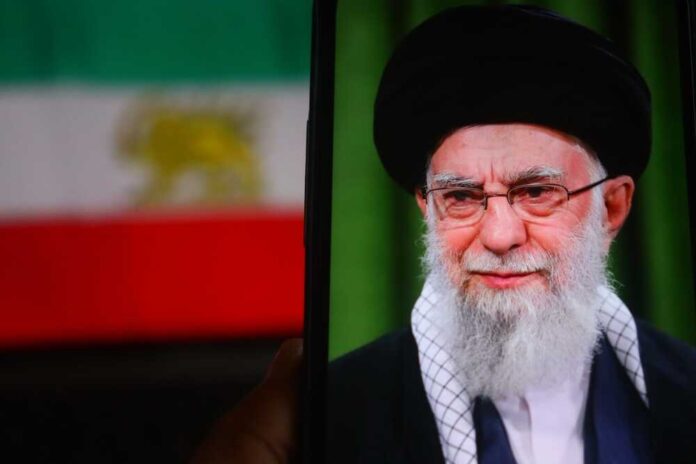
Reports are swirling that Iran’s Supreme Leader—yes, the same Ayatollah Khamenei who has spent decades railing against the West—now spends his days sleeping, getting high, and letting his inner circle run the country, according to a Mossad-linked social media account, leaving Iran’s future and its people in chaos.
At a Glance
- Mossad-linked account claims Khamenei is incapacitated, spending his days sleeping and using drugs
- Iranian regime insiders and the IRGC are allegedly taking over national decision-making
- Iran faces internal crises, economic collapse, and mounting public unrest
- Allegations could be psychological warfare, but regime secrecy fuels doubts about official statements
Mossad-Linked Allegations Throw Iran’s Leadership Into Question
A Farsi-language X (Twitter) account, allegedly tied to Israel’s Mossad, has unleashed a series of bombshell claims: Iran’s Supreme Leader, Ayatollah Ali Khamenei, is so checked out he spends his days sleeping and getting high while Iran’s real decisions are made by a handful of regime insiders.
The Mossad-linked Farsi language account alleged that Ayatollah Ali Khamenei spends his time sleeping or inebriated on various substances. https://t.co/Hd9IGEkDYE
— The Jerusalem Post (@Jerusalem_Post) July 26, 2025
If true, this means the man who’s spent decades threatening America and crushing dissent at home is now little more than a figurehead, and the IRGC—the regime’s military muscle—has seized the reins. These allegations have been amplified by Iranian opposition media, who claim Khamenei has suffered a mental breakdown and is being excluded from sensitive national security decisions. The regime, of course, is stonewalling, refusing to confirm or deny anything, while Khamenei makes carefully staged public appearances to project stability. For a regime that punishes drug offenses with death, the irony is staggering.
The timing is no accident. Iran is reeling from direct military clashes with Israel, the assassination of top IRGC commanders, and domestic disasters—chronic shortages of water, electricity, and essential goods have pushed public frustration to the boiling point. The regime’s iron grip on information means rumors and speculation fill the void, leaving the Iranian people in the dark about who is truly in charge. The Mossad-linked account, meanwhile, keeps the pressure on, releasing satirical and sometimes mocking claims about Khamenei’s health and the regime’s secrets, all while the IRGC is rumored to be consolidating its hold on the country’s strategic decisions.
Iran’s Power Struggle: IRGC and Insiders Take Control
With Khamenei reportedly incapacitated, Iran’s Supreme National Security Council and the IRGC are said to be steering the ship.
Mojtaba Khamenei, the Supreme Leader’s son, is rumored to be a key player in succession planning, while senior IRGC commanders are emerging as the true decision-makers. The stakes couldn’t be higher: Iran is facing internal and external crises, and the regime’s survival depends on keeping a tight lid on dissent and succession drama. The Iranian public, suffering under economic collapse, rolling blackouts, and government neglect, is fed up—and the regime knows it. Every move by the IRGC and Khamenei’s inner circle is calculated to maintain control and crush any sign of weakness.
Credible reporting from opposition outlets and Western sources supports the idea that Khamenei’s influence is waning, but the regime’s obsessive secrecy means hard evidence is scarce. Khamenei’s recent public appearances—carefully choreographed and closely guarded—are meant to project continuity, but even these do little to ease the doubts swirling through the country. The regime’s critics, including Mossad’s alleged social media mouthpiece, are exploiting every crack in the facade, fueling public skepticism and international concern about what comes next for Iran.
Psychological Warfare or Regime Meltdown? The World Watches
The battle over Iran’s leadership is playing out on multiple fronts: in the streets, on social media, and behind the closed doors of the Supreme National Security Council. Some analysts believe the Mossad-linked account’s campaign is classic psychological warfare—designed to undermine the regime’s legitimacy, erode public trust, and destabilize the power structure from within. Others point out that, given the regime’s notorious secrecy and history of suppressing bad news, these reports could be closer to the truth than Tehran would ever admit. Either way, the Iranian people are paying the price: economic misery, spiraling inflation, and a government that seems more interested in infighting than solving real problems.
Experts agree that Iran’s future now hinges on who emerges as the next Supreme Leader and how much power the IRGC can grab before the dust settles. If the Mossad-linked claims are true, Iran could be on the brink of a major power shift, with the military elite calling the shots and succession battles threatening to plunge the country even deeper into chaos. For America and its allies, this is no time to let up the pressure on the regime that has spent decades exporting terror and threatening our interests in the region. The world is watching—and so are the Iranian people, desperate for signs of hope amid the darkness.