A top international prosecutor is forced to step aside after judges find his family ties to the defense team threaten the integrity of a major crimes-against-humanity investigation involving Venezuela’s Maduro regime.
Story Snapshot
- The International Criminal Court (ICC) ordered Chief Prosecutor Karim Khan to recuse himself from the Venezuela case over conflict of interest concerns.
- The decision comes after revelations that Khan’s sister-in-law, Venkateswari Alagendra, is representing Venezuelan President Nicolás Maduro at the ICC.
- The Arcadia Foundation, a U.S.-based human rights group, initiated the complaint that led to the recusal order.
- The ruling underscores growing scrutiny over the impartiality of international justice institutions.
ICC Orders Chief Prosecutor to Step Aside in Venezuela Investigation
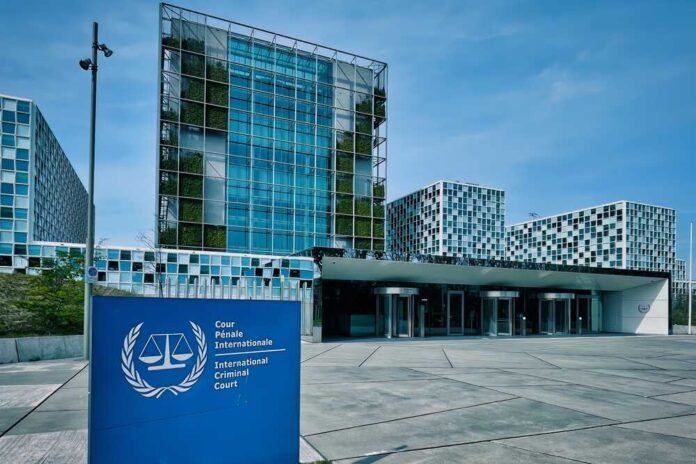
The International Criminal Court’s Appeals Chamber has directed Chief Prosecutor Karim Khan to recuse himself from the ongoing investigation into alleged crimes against humanity by Venezuela’s government under President Nicolás Maduro. This rare move follows a formal complaint from the Arcadia Foundation, a Washington-based NGO, which cited a conflict of interest due to Khan’s familial relationship with a member of Maduro’s defense team. The ICC’s five-judge panel determined that this relationship creates an appearance of bias, threatening the court’s integrity and the presumption of impartiality required under the Rome Statute.
The complaint that triggered the recusal was filed in November 2024, after reports surfaced that Venkateswari Alagendra, Khan’s sister-in-law and an experienced international criminal lawyer, had joined Maduro’s legal team. Civil society organizations and legal experts have long warned about the need for strict impartiality in international criminal proceedings, and this case marks one of the few instances where a top ICC official has been compelled to step aside over a direct family connection to a defense team in an active case.
Arcadia Foundation Drives Accountability Push
The Arcadia Foundation’s role in the complaint highlights the influence of civil society in international legal matters. The NGO, which has focused heavily on human rights abuses in Venezuela, argued that Khan’s continued participation in the investigation violated both the letter and spirit of the court’s rules regarding conflicts of interest. “The mere appearance of bias is enough to undermine the confidence of the public, victims, and the international community in the ICC,” said Robert Carmona-Borja, Arcadia co-founder, referencing the court’s own standards.
This intervention by a U.S.-based advocacy group underscores how American legal and civic organizations continue to shape the global pursuit of justice, especially in cases involving authoritarian regimes. For conservative readers, this development is a stark reminder of why strong, transparent legal systems—and vigilant oversight—are necessary to hold corrupt foreign governments accountable and to protect international norms from being exploited by bad actors.
Political and Judicial Fallout: Implications for Venezuela and the ICC
The ICC’s decision has immediate and far-reaching consequences for the investigation into Venezuela’s Maduro government, which has been accused of widespread political repression, torture, and extrajudicial killings since 2017. With Khan ordered to step aside within three weeks as of August 1, 2025, the court’s investigative efforts could face delays or even risk being derailed if prosecutorial leadership is not quickly reestablished. Maduro’s legal team is expected to seize on the recusal order to question the probe’s legitimacy, potentially emboldening the regime and discouraging further international scrutiny.
For the ICC, the episode draws renewed attention to concerns about the court’s impartiality and effectiveness. Critics, including some U.S. lawmakers and constitutionalists, have long argued that the ICC’s record is marred by selective enforcement and political bias. The Venezuela case, already a political flashpoint, now stands as a test of the court’s willingness to enforce its own standards and restore public confidence. Legal observers point out that while recusal requests are not unheard of, they are rarely granted on the basis of family relationships between court officials and defense attorneys, making this ruling both significant and precedent-setting.
Broader Impact on International Justice and U.S. Interests
The case sets a new benchmark for conflict-of-interest safeguards at international tribunals, with long-term implications for global legal standards. Experts say the court’s handling of the complaint may prompt other institutions to reevaluate their own rules to prevent even the appearance of bias. For American conservatives, this ruling is a positive step toward transparency in international governance and a warning against the creeping influence of global bureaucracies that too often escape real accountability.
On the ground, Venezuelan civil society groups and victims’ advocates now face uncertainty, as the ICC’s investigation will likely be delayed until new prosecutorial leadership is confirmed. Meanwhile, the Maduro government may use the controversy as ammunition to deflect criticism and resist external pressure. The episode also illustrates the importance of American engagement in international legal affairs, both to uphold the values enshrined in the U.S. Constitution and to counter the influence of regimes that threaten freedom and justice worldwide.
Sources:
Formal Complaint by Arcadia Foundation (PDF)