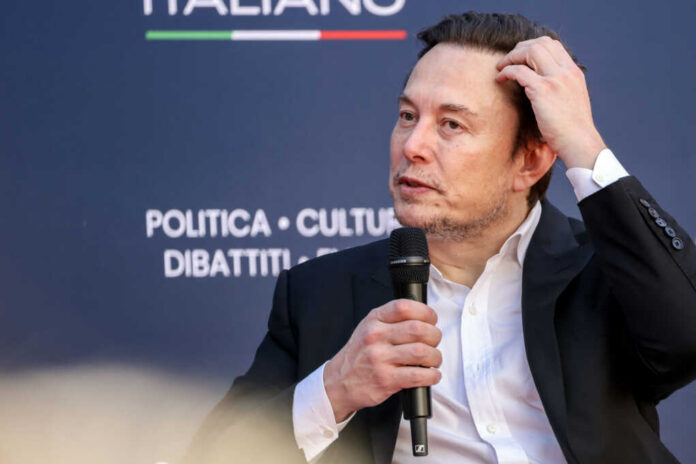
Every single cofounder who helped Elon Musk launch xAI has now abandoned ship, and the man himself admits the products they built together simply failed.
Story Snapshot
- All 11 original xAI cofounders departed between February 2025 and April 2026, with the final two exiting after SpaceX acquired the company at a $250 billion valuation
- Musk publicly declared xAI was “not built right first time around” and is rebuilding from scratch using Tesla and SpaceX engineers
- The exodus mirrors Musk’s past workforce purges at Twitter and Tesla, but AI’s talent-competitive landscape poses unique risks
- Tesla shareholders are suing over the $2 billion investment in xAI, claiming Musk diverted funds while the AI startup hemorrhages billions
- Ross Nordeen, Musk’s right-hand operator and presumed loyalist, had his systems access abruptly cut before posting a cryptic “Touching some grass” message
The Anatomy of a Total Cofounder Collapse
When xAI launched in 2023, Musk assembled a dream team of 11 AI researchers to build products like Grok chatbot, Grok Code, and Grok Imagine. By early April 2026, that team stood at zero. The departure of Ross Nordeen and Manuel Kroiss marked the final chapter of a cofounder exodus that accelerated dramatically after SpaceX acquired xAI in February 2026. Nordeen’s exit shocked insiders who considered him Musk’s handler, someone who would “go down with the ship.” His abrupt system cutoff and social media silence spoke volumes about organizational turmoil that transcended typical startup growing pains.
The Admission That Validated Every Exit
On March 13, 2026, Musk offered a rare public confession: xAI’s products were not competitive and needed complete reconstruction “from foundations up.” This admission came amid cascading departures of project leads responsible for those very products. Tony Wu announced his exit on February 10, followed within 24 hours by Jimmy Ba amid reported tensions over model performance. Toby Pohlen, Zihang Dai, and Guodong Zhang soon followed, abandoning their leadership roles on computer use teams and coding tools that Musk now openly acknowledged as failures. The timing was brutal but honest, confirming what departing researchers already knew about products struggling against superior rivals like Anthropic’s Claude Code.
The Tesla Connection Raises Fiduciary Red Flags
Tesla invested $2 billion in xAI’s January 2026 Series E round at a $230 billion valuation, then watched the SpaceX acquisition push that number to $250 billion a month later. Tesla shareholders responded with lawsuits alleging Musk breached fiduciary duties by funneling investor capital into a company he now admits was fundamentally broken. The Macrohard project, once an xAI initiative, became a joint venture with Tesla after stalling, raising questions about whether Tesla was subsidizing Musk’s AI ambitions. With xAI reportedly bleeding billions and no commercial success to justify the astronomical valuation, those shareholder concerns carry weight grounded in basic financial accountability rather than speculative risk-taking.
Why AI Talent Refuses the Musk Treatment
Musk’s playbook worked brilliantly at Tesla and Twitter, where he slashed headcount and demanded relentless iteration in hardware-focused industries with limited talent mobility. AI operates under different rules. Top researchers command premium salaries and enjoy abundant alternatives at OpenAI, Anthropic, Google, and well-funded startups that don’t publicly declare their work substandard. The research-driven nature of AI development resists the manufacturing intensity that Musk perfected with rockets and electric vehicles. When Christian Szegedy departed in February 2025, it signaled early cultural friction. Greg Yang’s January 2026 exit suggested a pattern. By the time eight cofounders fled within two months, the message was clear: AI talent won’t tolerate organizational chaos, regardless of who’s signing checks.
The SpaceX IPO Complicates Everything
SpaceX is preparing what could become history’s largest initial public offering while simultaneously absorbing a money-losing AI subsidiary that just lost its entire founding research team. The February 2026 acquisition integrated xAI with SpaceX and X (formerly Twitter) under one corporate umbrella, theoretically creating synergies. In practice, it created an IPO roadshow nightmare where potential investors must reconcile SpaceX’s rocket success with xAI’s acknowledged product failures and talent hemorrhaging. Musk is now rebuilding xAI with Tesla and SpaceX engineers, betting that hardware expertise translates to AI leadership. History suggests that pivot works in emerging markets like electric vehicles circa 2010, not saturated fields where competitors already dominate with proven technology and stable research teams.
The Vintage Musk Pattern Meets Its Match
Calling this shakeup “vintage Elon Musk” is accurate but incomplete. Yes, it mirrors the 80 percent workforce reduction at Twitter and Tesla’s periodic purges during Musk’s attention splits across ventures. Those disruptions ultimately delivered results in industries where Musk’s manufacturing obsession and tolerance for chaos created competitive advantages. AI rewards different skills: patient research iteration, talent retention, and incremental improvement rather than dramatic rebuilds. Musk’s March admission that xAI was built wrong validates every cofounder’s decision to leave, but it also exposes a fundamental mismatch between his turnaround methodology and AI’s requirements. The real test isn’t whether Musk can rebuild xAI with loyal engineers from other companies. It’s whether that rebuilt version can compete against teams led by the very researchers who just walked away, taking institutional knowledge to competitors who won’t publicly trash their own work.
Sources:
Business Insider: Elon Musk xAI Cofounder Exits SpaceX IPO
The Next Web: xAI All Cofounders Departed Musk SpaceX Rebuild
TechCrunch: Elon Musk’s Last Co-Founder Reportedly Leaves xAI
Business Insider: xAI Cofounder Ross Nordeen Leaves Musk Preps SpaceX IPO