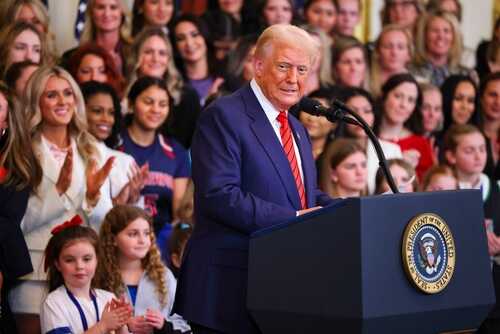
President Trump’s recent proposal to consider using high-crime cities as potential training locations for U.S. military exercises has prompted debate among policymakers and legal experts about urban safety, constitutional authority, and the limits of federal intervention.
Story Snapshot
- Trump proposes military training in cities with high crime rates, challenging conventional urban and military policy.
- Democratic leaders, including Hakeem Jeffries, immediately push back, calling the idea unprecedented.
- The proposal spotlights concerns over federal intervention, local authority, and constitutional protections.
- Media and political circles are sharply divided as the nation considers the potential impact on community relations and military doctrine.
Trump’s Proposal: Military Readiness Meets Urban Crisis
On September 30, 2025, President Donald Trump revealed a bold new plan: designate certain high-crime “dangerous cities” as active training grounds for the U.S. military.
Trump suggests using 'dangerous cities' as military training grounds #Shorts https://t.co/RG3DMOmqId #usa #feedly
— Music World 360 (@MusicWorld360x) September 30, 2025
The proposal marks a dramatic shift from the traditional practice of keeping military exercises confined to controlled, purpose-built environments. Supporters argue the plan could strengthen military preparedness and draw attention to ongoing public safety challenges in certain cities. Conservative commentators such as Victor Davis Hanson of Hoover Institution and Rep. Jim Banks (R-IN) have claimed that Democratic-led cities have struggled with rising crime rates, though official FBI data shows mixed trends depending on the city.
Historically, the U.S. military has relied on simulated urban environments or overseas deployments to train its forces for urban combat. The idea of using real cities, currently struggling with crime and disorder, as live training sites is virtually unprecedented in American policy. The move is being framed by the Trump administration as a necessary evolution in both military readiness and urban intervention, framing it as a response to what Trump administration officials describe as ineffective urban policies under Democratic leadership. Critics of the proposal, including urban policy analyst Dr. Richard Florida, argue that crime trends are influenced by multiple economic and social factors rather than partisan governance alone.
Political Reactions and Constitutional Questions
The reaction from Congress was swift and divided. House Democratic Leader Hakeem Jeffries led the opposition, calling the proposal an “overreach of federal power” and raising alarms over possible violations of the Posse Comitatus Act, which limits the use of federal troops in domestic law enforcement roles. Supporters of Trump argue that persistent crime in certain cities justifies extraordinary measures. Senator Tom Cotton (R-AR), for example, has previously advocated for stronger federal involvement in addressing violent crime. They point to longstanding frustrations among conservatives over constitutional rights being eroded by activist judges and progressive officials, especially concerning gun rights and local autonomy.
Legal scholars such as Professor Mary McCord of Georgetown University Law Center warn that labeling cities as ‘dangerous’ could stigmatize residents and create tension between federal and local authorities, complicating community-police relations. Some experts also question whether such exercises could blur the line between military preparedness and domestic policing, potentially leading to government overreach—an issue conservatives have repeatedly warned about in the context of previous administrations’ policies.
Impact on Federal-Local Relations and Urban Policy
If implemented, Trump’s plan would require unprecedented coordination between the federal military and local governments. Mayors and city councils would face difficult decisions about consenting to or resisting federal military activities within their jurisdictions. The proposal may also spark new debates over federalism and the rights of states and cities to govern themselves without excessive Washington intervention.
There is also a strong possibility that cities designated as “dangerous” might feel increased pressure to address crime and governance failures to avoid further federal scrutiny. While the Trump administration frames this as an opportunity for reform, opponents voice concerns about the risk of stigmatization and unrest among urban populations already wary of heavy-handed federal actions.
Military Doctrine, Community Concerns, and the Road Ahead
This policy could fundamentally alter the U.S. military’s approach to urban warfare training. Military leaders would be tasked with balancing the need for realistic, effective training with respect for civilian life and constitutional constraints. Community leaders and civil rights advocates are expected to closely monitor any implementation, wary of the potential for increased militarization of civilian spaces.
Trump suggests using 'dangerous cities' as military training grounds #Shorts https://t.co/RG3DMOmqId #usa #feedly
— Music World 360 (@MusicWorld360x) September 30, 2025
While media coverage and political debate continue to intensify, the Trump administration’s proposal underscores a broader conservative frustration with how leftist policies have shaped American cities over the past decade. The full impact will depend on further policy details, congressional negotiations, and the willingness of local governments to cooperate or resist. For now, Trump’s call to use “dangerous cities” as training grounds stands as a symbol of both his commitment to law and order and the enduring national divide over the balance between federal authority, constitutional liberty, and community self-determination.
Sources:
Trump suggests using ‘dangerous cities’ for military training (USA Today)
Trump admin live updates (ABC News)