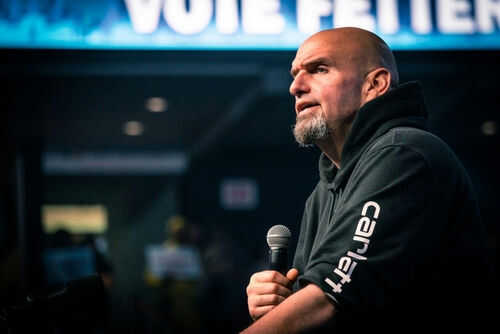
When a pivotal Senate race is upended by a sexual assault allegation, the real stakes extend far beyond one candidate’s fate: it exposes how American politics now adjudicates deeply personal claims in the absence of courts, with voters, parties, and media all making judgment calls under intense moral and partisan pressure.
At a Glance
- A detailed sexual assault allegation against Maine Democrat Graham Platner sits at the center of a broader record of “unsettling” behavior toward women, but there is no criminal case or physical evidence so far.
- Platner categorically denies any non-consensual conduct, acknowledging alcohol misuse and PTSD while insisting the most serious accusations are false and politically driven.
- Democratic elites have begun withdrawing endorsements and weighing replacement options, reflecting research showing their voters penalize accused candidates more than Republicans do.
- The evidence pattern—corroborated but largely private documentation, delayed disclosure, and conflicting partner accounts—mirrors how many high-stakes #MeToo-era allegations surface and are contested.
From Personal Allegation to Political Crisis
The turmoil in Maine’s Senate race begins with a single, vivid story: Jenny Racicot, a 41‑year‑old Maine Democrat who dated Graham Platner on and off between 2019 and 2021, has told Politico and CNN that he raped her in late 2021. In her account, she sent messages making clear she did not want him to come over, yet he arrived intoxicated, entered her home without invitation, and climbed on top of her on a couch as she repeatedly said no and tried to push him away. When she moved to her bedroom to escape, she says he followed and again forced sex despite continued objections, alternately apologizing and persisting. The next morning, she recalls, he said he did not remember what happened, which she took as confirmation of his heavy intoxication.
These are not off‑the‑record whispers. Racicot’s claim rests on three on‑the‑record interviews with Politico, contemporaneous emails to her therapist, and messages to a confidant warning about Platner, which the outlet says it reviewed. That kind of private documentation is common in sexual assault cases, where survivors often disclose to therapists or trusted friends long before speaking publicly. There is, however, no police report, forensic evidence, or third‑party witness on the public record so far; the dispute is being litigated in media and politics, not in court.
The Broader Pattern: “Unsettling” Relationships and Toxic Dynamics
Racicot’s allegation landed atop an already thick file on Platner’s personal conduct. Months before the rape claim surfaced, the New York Times and other outlets reported concerns from former girlfriends about his behavior over roughly the last decade. Three women described relationships they saw as emotionally tumultuous, at times “toxic” and “unsettling,” including heavy drinking, demeaning remarks, and episodes they experienced as physically intimidating.
The most specific of those earlier accounts came from Lyndsey Fifield, a Virginia conservative operative who dated Platner around 2013–2015. She says he regularly grabbed her shoulders hard enough to leave marks, pulled her by the wrist out of a taxi during an argument, and on one occasion twisted her arm behind her back, shoved her into a bedroom, and held the door shut until she calmed down. She also recalls him talking casually about killing people he viewed as threats and characterizing rape as a demonstration of power. These details, while not adjudicated in court, build a portrait of a man whose former partner saw him as willing to use physical force and sexualized violence in his rhetoric.
Importantly, not all of Platner’s ex‑partners share this view. The Times also interviewed several former girlfriends who described him as a caring partner with whom they felt safe, and his campaign facilitated those interviews. That divergence is common in assessments of intimate relationships: behavior that feels controlling or threatening to one partner may be interpreted as intense but nonthreatening by another. It does not, by itself, resolve the question of assault—but it explains why the public record looks “nuanced” rather than uniformly damning.
Platner’s Denial and Partial Admissions
Faced with the new allegation, Platner has responded in two distinct registers. On the core question—whether he ever engaged in non‑consensual sexual behavior—his language is unequivocal. In a prepared video statement and campaign communications, he calls Racicot’s accusation “troubling, serious and false” and says “any accusation of non‑consensual behavior is categorically untrue.” He has not, as of the reporting summarized here, provided a point‑by‑point rebuttal of Racicot’s timeline, her description of his intoxication, or the content of her therapist emails. His defense is categorical rather than evidentiary.
At the same time, Platner has acknowledged parts of the broader pattern that worry Democrats. He has admitted to heavy drinking and untreated post‑traumatic stress disorder after combat tours in Iraq and Afghanistan, describing those years as “very dark” and himself as a “bad boyfriend.” He has also conceded that, early in his 2023 marriage, he sent sexually explicit messages to multiple women, even as he disputes the highest numbers reported by former staff. In interviews, he has tried to draw a line between regrettable but consensual misconduct—sexting, infidelity, emotional volatility—and what he frames as false, politically motivated claims of physical intimidation and assault.
That distinction matters. Voters regularly punish hypocrisy and infidelity less severely than they do violence or coercion. Platner’s strategy is to concede enough to appear honest about a troubled personal history while insisting that the most serious allegations cross into fabrication, particularly when they originate from a Republican operative or arrive at a politically sensitive moment.
Evidence Without a Courtroom: How Credibility Is Being Assessed
Because no criminal charge has been filed, the Graham Platner case is being evaluated through the mechanisms of journalism and partisan politics rather than the rules of evidence in a courtroom. That shifts the standard from “beyond a reasonable doubt” to something closer to “credible enough to affect support.” To understand why the allegations have had such immediate impact, it helps to look at what we know about false accusations and delayed reporting.
Across ten years of reported sexual assault cases in one widely cited study, only 8 of 136—about 5.9%—were coded as false, with the broader research consensus placing false allegations in the 2–10% range. This does not prove any particular allegation is true, but it does anchor public debates in empirical reality: most accusations are not manufactured. Meanwhile, delayed disclosure, like Racicot’s, is common. Survivors often avoid reporting for years due to shame, fear of being defined by the assault, or, in Racicot’s case, political alignment with the accused candidate. Her explanation—that she did not want to be “known as a rape victim” and initially supported Platner’s politics—is consistent with patterns documented in clinical and legal research rather than an outlier.
The evidentiary posture here is typical of high‑profile cases: a detailed narrative, private documentation that can potentially be authenticated (therapist notes, contemporaneous messages), and corroboration of broader behavioral traits (heavy drinking, volatile relationships), matched against a firm but general denial. Objective records that could shed further light—building access logs, security footage, medical records—have not been publicly produced. That leaves parties and voters making credibility judgments from incomplete information.
Democrats, Republicans, and the Politics of Sexual Misconduct
Platner’s situation is not happening in a vacuum; it sits squarely within the #MeToo‑era collision between sexual misconduct and partisan identity. Survey research on voter behavior finds that, on average, Americans are less likely to support a candidate accused of sexual assault or harassment, but Democrats penalize such candidates much more sharply than Republicans do. Republicans, especially when the accused is a Republican office‑seeker, are significantly less likely to withdraw support, treating allegations as either partisan warfare or a private failing.
That asymmetry shows up vividly in the Maine race. Within days of Racicot’s story, high‑profile national Democrats like Rep. Ro Khanna and Sen. Ruben Gallego rescinded their endorsements, calling sexual assault a “red line” and labeling the allegations “serious and credible.” Strategists on CBS and Fox described the new accusation as qualitatively different from prior controversies over Nazi‑like tattoos, sexting, and online comments; rape, they argued, is where tolerance ends.
At the same time, some progressive voices emphasize due process and warn against reflexively ending a campaign over an allegation alone. Rep. Debbie Dingell, a longtime advocate for survivors, has stressed the tension between her refusal to “ever accept sexual violence” and her insistence that Platner’s fate be decided by Maine voters rather than national pressure.[JUST IN transcript] More populist commentators on social platforms go further, calling the story a “fake sexual assault charge” and a “sloppy hit job,” but those claims are political rhetoric, not backed by counter‑evidence comparable in specificity to Racicot’s account.
How Maine’s Senate Race Is Being Reshaped
Electorally, the fallout is stark. Platner had already won the Democratic primary and, in some polling, led Republican incumbent Susan Collins by a small margin. His campaign touted the largest volunteer base in Maine’s history and record primary turnout, arguing that his insurgent candidacy channeled frustration with establishment politics.[Forbes transcript] Now, discussions inside the party center on withdrawal deadlines and replacement procedures. Maine law gives a limited window for a nominee to step aside and for the party to name a new candidate, almost certainly someone who did not run in the primary.
Strategists worry that swapping in a non‑primary candidate could depress Democratic turnout and hand Collins a path to reelection. They also recognize that maintaining Platner on the ballot under the cloud of an unresolved rape allegation could alienate independent and moderate women, voters central to any Democratic path in Maine. In other words, the party faces a forced choice between moral risk and procedural risk: stay with a candidate whom some leaders now see as disqualified, or override primary voters to salvage the seat.
What This Case Reveals About Allegations in High-Stakes Politics
Stepping back from the personalities, the Platner story illustrates several durable features of sexual misconduct allegations in modern politics. First, the evidentiary structure—one detailed accuser, private corroboration, a mix of negative and positive former partner accounts, and a firm denial—is closer to the norm than the exception. Few such cases ever reach criminal trial; many are adjudicated informally, through press vetting and party decision‑making.
Second, there is a clear partisan gap in how allegations translate into consequences. A sitting president has been found liable for sexual assault in civil court and retained his party’s loyalty; by contrast, Platner faces mass elite defection based on an accusation and a documented pattern of troubling behavior. This is not because Democrats are uniquely virtuous, but because their voters, as research shows, weigh sexual misconduct heavily in candidate evaluation.
Third, the Maine case underscores how unresolved allegations can become structural threats to democratic choice. If Platner withdraws, Maine voters may end up choosing between an incumbent Republican and a Democratic replacement they never had the chance to vet in a primary. If he stays, they must decide whether to entrust an office of immense power to a man whose private life is, at best, deeply troubled, and at worst, marked by serious violence against women.
None of this resolves the underlying factual dispute between Racicot and Platner; absent new evidence, that may never be fully settled in public view. What the available record does provide is a coherent, corroborated account of an alleged assault, a candidate’s categorical denial without specific counter‑documentation, and a political system forced to act on probabilities rather than certainties. For voters who care about both justice for survivors and fairness to the accused, Maine’s Senate race is a case study in how difficult those values are to reconcile once private harm becomes public power.
According to Gemini (at this moment):
"Traders on Polymarket give Maine Democratic U.S. Senate nominee Graham Platner an implied probability of roughly 55% to 69% of dropping out following recent sexual assault allegations." https://t.co/gyA9RtkRNz
— 🪖 LTC Hunter (@LTC_Hunter) July 7, 2026
Where Voters’ Judgment Now Matters Most
Ultimately, the Platner controversy is not just a referendum on one man’s past, but on how we expect democratic institutions to respond when serious personal allegations collide with collective political goals. The evidence landscape—low base rates of false accusations, common patterns of delayed reporting, and the absence of a formal legal process—leans many observers toward taking Racicot’s claim seriously, even while acknowledging unresolved questions. The party’s rapid recalibration suggests leaders are doing the same, weighing the cost of abandoning a hard‑won nominee against the ethical and electoral liabilities of pressing ahead.
For Maine’s voters, the decision will hinge on more than policy positions or partisan allegiance. It will require a judgment about character under conditions of uncertainty: whether to treat a detailed, corroborated allegation and a history of troubling relationships as disqualifying, or to accept Platner’s assertion that they are distorted fragments of a painful but non‑criminal past. In an era when the #MeToo movement has pushed private misconduct into the center of public life, that kind of judgment is becoming a defining feature of citizenship itself.
Sources:
independent.co.uk, nytimes.com, youtube.com, facebook.com, cnn.com, wsj.com, mlkrook.org, politico.com