When gunfire tore through the Bite of Seattle festival, it did more than end three lives and grievously injure a toddler; it exposed how quickly ordinary public spaces can turn into lethal frontlines when armed disputes erupt in crowded city centers.
Key Points
- Three people were killed and four others wounded, including a 2‑year‑old boy, when gunfire broke out at the Bite of Seattle food festival near the Space Needle.
- Seattle police say the shooting began as an exchange of gunfire between two people, with bystanders struck in the crossfire.
- One suspect, described as a “young person,” was arrested; at least one other suspected shooter remains at large as the investigation continues.
- The victims span ages 2 to 56, underscoring how indiscriminate the harm is when live gunfire erupts in a dense civilian crowd.
- The case illustrates the recurring gap between urgent public‑safety messaging and the slower work of forensic reconstruction in modern mass‑violence incidents.
What Happened at the Bite of Seattle Festival
On a summer evening at Seattle Center, just after 6:00 p.m. local time, the Bite of Seattle festival was in full swing when a rapid series of gunshots shattered the soundscape of music and food stands. Emergency radios logged the first calls within moments; witnesses described hearing an initial burst of about half a dozen shots, followed by faster, sustained gunfire that sounded like a semi‑automatic or rapid‑fire weapon. In the panic that followed, hundreds of festival‑goers fled, abandoning strollers, bags, and half‑eaten meals as they tried to escape the line of fire.
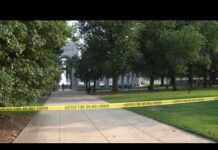
By the time medics and police had secured the northwest corner of the Seattle Center Armory—one of several overlapping crime scenes—seven people had been hit. Two adults were pronounced dead at the scene despite immediate life‑saving efforts by first responders. A third victim, a woman initially listed in critical condition, later died at the hospital, bringing the death toll to three. Four others were wounded, among them a boy of about two years old who was shot in the arm and transported to Harborview Medical Center in stable condition. The other injured victims included adults in their 20s, 30s, and 40s; one had minor injuries and declined hospital transport.
Victims: Ages, Identities, and Bystanders in the Crossfire
As the initial chaos subsided, officials began to clarify who had been struck. Police later identified the three people killed as a 19‑year‑old man, a 44‑year‑old man, and a 56‑year‑old woman. The injured ranged from the 2‑year‑old boy to adults in their late 30s and early 40s, a demographic spread that strongly indicates bystanders rather than a single targeted group. Hospital officials reported the child, a 23‑year‑old man, and a 39‑year‑old woman in stable condition, while a 40‑year‑old woman sustained only minor wounds and declined admission.
Assistant Chief Tyrone Davis and other Seattle officials have consistently emphasized that at least some of the fatalities were innocent attendees who happened to be standing between two people firing at each other. In public briefings, Davis described “seven victims caught in the crossfire,” a phrase that has since anchored coverage of the event. Subsequent reporting naming one deceased 19‑year‑old as a suspected shooter—and linking at least part of the incident to gang‑related conflict—adds nuance but does not change the basic pattern: a gun confrontation in a dense civilian crowd quickly transformed into mass casualty harm beyond the disputants themselves.
The Suspects and Early Investigative Picture
Within minutes of the first shots, uniformed officers already on site for festival security moved toward the sound of gunfire. According to Davis, multiple officers saw at least one suspect actively firing into the crowd and moved to detain him; notably, no police weapons were discharged during the incident. One suspect, described publicly only as a “young person,” was taken into custody near the Armory. Officials have repeatedly declined to specify whether that individual is a juvenile or adult, citing ongoing investigative and charging decisions.
From the earliest press conferences, Seattle police have framed the event not as a single‑gunman attack but as a shootout between at least two individuals. “We currently believe two people were shooting at each other,” Davis told reporters on the night of the shooting, a statement echoed in national coverage and later briefings. Investigators recovered two firearms at or near the scene, consistent with that account. At least one of the dead—identified in court documents as 19‑year‑old Junior Seamo—has been described as a suspect who was armed and firing before being fatally shot.
The picture grew more complex as detectives continued interviewing witnesses and reviewing limited video. In an update carried by local television, police spoke of “two groups firing in the area near the Armory,” and later briefings referred to a search for a second—and then a possible third—unidentified shooter believed to have fled. Mayor Katie Wilson initially told the public that two suspects were in custody and later corrected that to one, underscoring how fluid early suspect counts can be as fragments of information arrive from multiple officers and agencies.
The Toddler and the Human Cost of Crowd Shootings
Among the details that seized public attention, the age of the youngest victim stood out: approximately two years old, struck by gunfire while attending a family‑oriented festival. Harborview Medical Center listed the boy in “satisfactory” or stable condition following treatment, with doctors expecting him to survive. In community vigils the following days, speakers repeatedly invoked the image of a toddler in a stroller amidst a hail of bullets as emblematic of how far gun violence has drifted from any pretense of confined, adult‑only confrontation.
This is one of the defining characteristics of shootings in crowded civic spaces. When a dispute escalates to live gunfire in a dense environment—whether that dispute is gang‑related, personal, or purely opportunistic—the radius of risk immediately extends to children, elders, tourists, and workers who have no connection to the conflict. Seattle’s case, with victims aged 2 to 56, is textbook in that respect. The very design features that make urban festival grounds appealing—open plazas, multiple entry points, and free movement—also make them unforgiving when bullets start moving through the air.
Security, Surveillance, and the Limits of On‑Site Policing
Seattle Center is not an unpoliced space. Assistant Chief Davis noted that dozens of officers were already at the festival providing security when the shooting began; their rapid movement toward the sound of gunfire and immediate medical triage likely prevented a higher casualty count. Yet the incident still produced three deaths and four injuries, raising hard questions about what “security” realistically means in such environments.
One investigative challenge highlighted by Davis is the absence of surveillance cameras at the exact spot where the shooting occurred, just outside the northwest corner of the Armory. In many modern investigations, fixed video systems provide crucial evidence for reconstructing who fired first, how many shooters were present, and which rounds struck which victims. Without that footage, detectives are heavily dependent on eyewitness testimony, which tends to be fragmented and inconsistent in the wake of traumatic events.
Festival organizers and city officials have already signaled that security protocols will be reviewed, with options such as additional cameras, more controlled entry points, and expanded screening on the table. None of those measures can fully eliminate risk—an armed conflict that begins just outside a magnetometer still poses grave danger—but they can limit the window of opportunity and improve investigative clarity when incidents occur.
Gang Ties, Motive, and the Gap Between Messaging and Proof
As reporting moved from the immediate shock to richer detail, local outlets began to reference possible gang ties, quoting police who described the incident as involving “two groups firing” and investigating it as gang‑related. That line of inquiry matters for charging decisions and long‑term prevention strategies, but from a public‑safety perspective, it does not change the fundamental harm: whatever the underlying feud, the decision to resolve it with live gunfire in the middle of a family festival is what turned it into a mass shooting.
The Bite of Seattle case also illustrates a recurring pattern in modern mass‑violence coverage: officials must communicate quickly about the nature of the threat—how many shooters, whether one is at large, whether the scene is secure—before all forensic questions are answered. Davis’s formulation that “two people exchanged gunfire” and that bystanders were caught in the crossfire fits that template; it tells the public that the event appears to have been a contained confrontation rather than an indiscriminate, ongoing attack, while leaving room for later nuance as ballistics and witness statements are analyzed.
For readers and viewers, the practical lesson is to treat such early descriptions as working theories rather than final adjudications. In Seattle’s case, subsequent court documents, suspect identifications, and the evolving count of possible shooters refine but do not overturn the initial frame. The broad structural facts—multiple shooters, three dead, four injured including a toddler, one “young” suspect in custody and at least one at large—have remained stable across that evolution.
A vendor livestreaming at Seattle's Bite of Seattle festival captured the moment gunshots rang out Sunday evening. The shooting killed at least three people and injured four others, authorities said. Police say one suspect is in custody and are still searching for a second person… pic.twitter.com/6cT0QbmE4G
— Goodnews (@Feranmison) July 28, 2026
Why This Incident Resonates Beyond Seattle
On one level, the Bite of Seattle shooting is a localized tragedy, rooted in specific interpersonal and possibly gang‑related dynamics among young men at a particular place and time. On another level, it is part of a wider pattern of gun violence that reaches into civic spaces presumed to be safe: food festivals, holiday parades, open‑air concerts, and farmers markets. The mechanism is the same each time. A dispute escalates to gunfire, the setting guarantees a large pool of uninvolved potential victims, and the community is left to reckon with grief, fear, and renewed debates over how—or whether—such events can be secured.
For cities, the stakes involve not only life and death but civic confidence. Seattle Center is a symbolic public space, home to the Space Needle and a long history of communal gatherings. When a child is shot there during a festival, it challenges the implicit social contract that such spaces can be safely shared. The response—in better coordination among police and event organizers, in investment in investigative capacity, in community‑driven efforts to address youth gun violence—will determine whether the incident becomes a turning point or just one more entry in a grim national tally.
Sources:
nypost.com, npr.org, youtube.com, cnn.com, abc7news.com, knkx.org, seattletimes.com, latimes.com, cbsnews.com, goodmorningamerica.com