
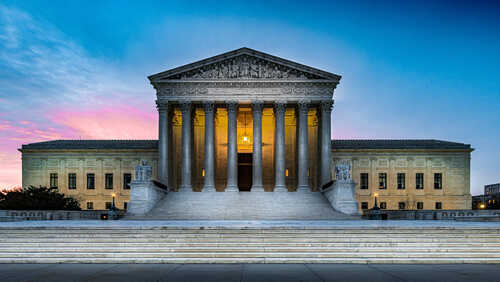
The Supreme Court’s recent decision to limit the use of nationwide injunctions marks a significant shift in the judicial landscape, especially regarding federal executive actions that have been a thorn in the side of true American governance.
At a Glance
- The Supreme Court ruled against the use of nationwide injunctions, curtailing judicial overreach.
- President Trump’s executive order on birthright citizenship faced legal challenges across multiple states.
- Ninth Circuit continues to uphold broad injunctions, defying the Supreme Court’s directive.
- States and advocacy groups are adjusting their legal strategies following the ruling.
Supreme Court’s Landmark Ruling
The Supreme Court, in a decisive 6-3 vote, has concluded that federal courts should not have the unchecked power to issue nationwide injunctions, except in the most extreme cases. This ruling arose from the contentious legal battles over President Trump’s executive order seeking to end birthright citizenship, a bold move to restore common sense to immigration policies. For too long, federal courts have acted as de facto policymakers, halting executive actions that were designed to protect American citizens and uphold the rule of law.
This ruling is seen as a victory for constitutional governance and a check against the judiciary’s overreach. The decision underscores the need for courts to limit their remedies to the parties directly involved in a case, rather than imposing blanket injunctions that affect the entire nation. This approach aligns with conservative values, emphasizing individual responsibility and limiting government intervention.
Ongoing Legal Challenges
Despite the Supreme Court’s ruling, the Ninth Circuit Court of Appeals has chosen to uphold a nationwide injunction in a related case, sparking further debate and potential for additional Supreme Court review. This decision highlights the ongoing legal uncertainty surrounding the use of broad injunctions and the judiciary’s role in checking executive power. The Ninth Circuit’s stance presents a challenge to the Supreme Court’s directive, raising questions about judicial consistency and the balance of power between federal and state governments.
The Ninth Circuit’s decision to uphold a broad injunction reflects a persistent divide within the judiciary, where some courts continue to assert their authority to provide comprehensive relief to state plaintiffs. This legal tug-of-war underscores the complexities of federalism and the ongoing struggle to define the appropriate scope of judicial intervention in executive actions.
Impact on Federal and State Dynamics
With the Supreme Court’s ruling, the federal government, under President Trump’s leadership, can move forward with implementing executive orders previously obstructed by nationwide injunctions. This newfound clarity in the law allows for more consistent policy enforcement, reducing the likelihood of single-district court rulings derailing national initiatives. However, the decision also means that states and advocacy groups must recalibrate their legal strategies, possibly pursuing class actions or coordinated lawsuits to achieve the desired outcomes.
BIG WIN: The Supreme Court has ruled that ROGUE, low-level activist judges CANNOT overrule the executive authority of the President of the United States.
PRESIDENT TRUMP WAS RIGHT AGAIN! pic.twitter.com/D18DEFIvFZ
— Rapid Response 47 (@RapidResponse47) June 27, 2025
State governments and advocacy groups, which have relied on nationwide injunctions to challenge federal policies, now face a more challenging legal landscape. The ruling may force these entities to rethink their approaches, focusing on targeted litigation and building coalitions to effectively contest federal actions they oppose.
Broader Implications and Future Outlook
In the long term, this Supreme Court decision is likely to curtail the judiciary’s ability to act as a check on executive power, shifting the balance towards more robust federal policy implementation. This change is expected to enhance policy continuity and reduce political gridlock, as executive actions face fewer nationwide legal obstacles. However, the ruling may also intensify political polarization, as debates over federalism and judicial authority continue to evolve.
The decision’s impact will be felt across various sectors, including immigration, healthcare, and civil rights, where executive orders and nationwide injunctions have historically played significant roles. As the legal landscape shifts, these sectors may experience changes in litigation and enforcement strategies, shaping the future of policy-making in the United States.