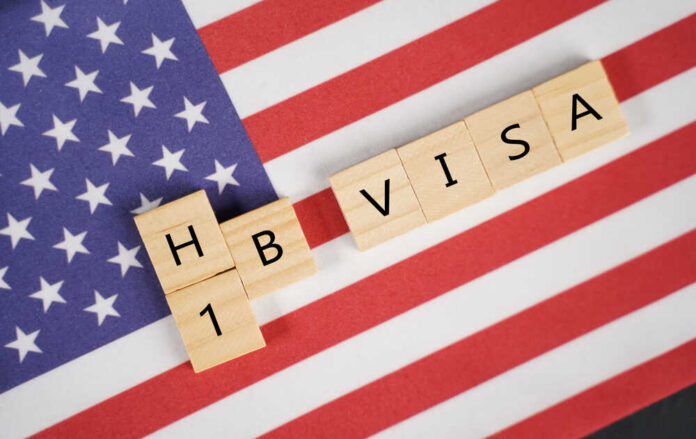
A staggering $100,000 fee on new H-1B visas leaves American employers and skilled immigrants reeling, igniting fierce debate over national priorities and the future of U.S. competitiveness.
Story Snapshot
- President Trump’s administration imposed a $100,000 fee on most new H-1B visa petitions, taking effect September 21, 2025.
- The abrupt policy has caused widespread confusion and immediate disruption among U.S. employers and skilled foreign workers.
- The measure aims to curb perceived abuses but raises concerns about talent shortages, especially in tech and research sectors.
- Experts warn of significant economic and reputational impacts, while legal challenges loom over the unprecedented fee hike.
Trump’s H-1B Fee Shock: Scope and Rationale
On September 19, 2025, President Trump issued a proclamation mandating a $100,000 fee for most new H-1B visa petitions.
What to know about the H-1B visa Trump has targeted with $100,000 fees, generating confusion, fear https://t.co/Xv7aTti2Io
— WJTV 12 News (@WJTV) September 22, 2025
This executive action, justified by the administration as a response to alleged program abuses and the displacement of American workers, immediately sent shockwaves through the business community. The fee applies to new petitions filed after September 21, 2025, and marked an extreme departure from prior visa policy, with no precedent for such a high barrier to skilled immigration.
The H-1B program historically enabled U.S. employers, particularly in technology, healthcare, and academia, to recruit foreign professionals with specialized expertise. With roughly 750,000 H-1B workers in the country, the abrupt fee increase has created uncertainty for both employers and prospective employees. The administration argues the move will protect domestic workers and deter abuse, but critics warn that the policy’s scale and immediacy undermine the nation’s ability to compete for top talent, especially in sectors already facing shortages.
Widespread Impact and Immediate Fallout
Employers, especially in tech and research, scrambled to assess the financial and operational implications of the new fee. Many companies canceled or postponed hiring plans, citing the prohibitive cost. International students and skilled professionals, who had viewed the U.S. as a premier destination for career advancement, suddenly faced daunting financial barriers. The resulting confusion was exacerbated by initially unclear guidance, prompting urgent clarifications from the Department of Homeland Security and USCIS, which confirmed the fee’s application only to new petitions and not to renewals or existing visa holders.
The fallout extended to foreign governments, particularly India, whose nationals make up a significant portion of H-1B recipients. Diplomatic channels have been engaged in response to the abrupt change, advocating for their citizens and bilateral interests. U.S. industry groups, such as the Chamber of Commerce, have signaled potential legal action, arguing that the fee is both unprecedented and crippling, especially for startups and smaller businesses that cannot absorb such expenses. The policy also threatens universities and research institutions that rely on global talent to maintain their programs and research output.
Broader Economic and Political Ramifications
Economically, the fee’s immediate effects include increased costs for American employers and a likely reduction in high-skilled immigration. In the longer term, experts caution that U.S. companies may lose ground to global competitors as top talent seeks opportunities in countries with more favorable immigration policies. The tech sector, which has long relied on H-1B workers for innovation and growth, stands to be hit hardest, with potential ripple effects throughout the economy. Socially, the move has created anxiety and uncertainty for immigrant communities, while politically, it intensifies debates over labor policy, government overreach, and America’s role in the global talent market.
What to know about the H-1B visa Trump has targeted with $100,000 fees, generating confusion, fear https://t.co/hofUwAHfbT
— WHLT 22 Hattiesburg (@WHLT22) September 22, 2025
Legal scholars and business leaders emphasize the lack of precedent for such a high fee and highlight the risk of protracted legal battles. While supporters argue the policy will protect American jobs and restore integrity to the visa system, critics maintain it is a blunt instrument that undermines U.S. competitiveness and could damage the country’s reputation as a destination for the world’s best and brightest. The situation remains fluid, with future adjustments and court challenges possible as all sides grapple with the far-reaching consequences of this aggressive immigration measure.
Sources:
Employment Law Worldview: Understanding the New $100,000 H-1B Fee and its Effect on U.S. Employers
White House Proclamation: Restriction on Entry of Certain Nonimmigrant Workers