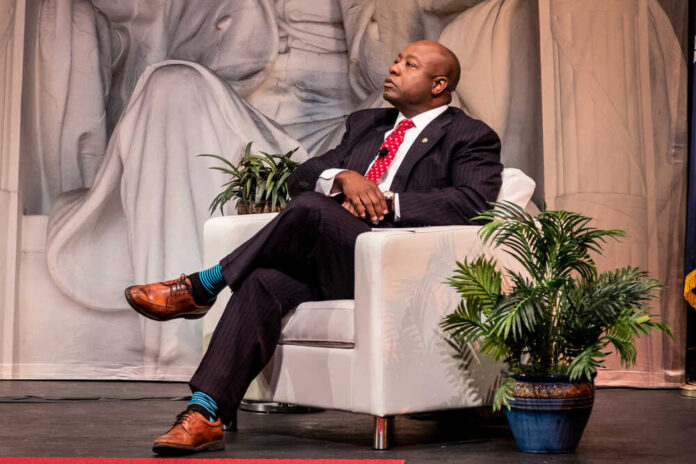
Sen. Tim Scott’s televised defense of his Christian support for President Trump has reignited debate over faith, policy, and conservative priorities as the 2024 election aftermath continues to reshape America’s values battleground.
Story Snapshot
- Scott confronted on CBS about reconciling Christian faith with Trump support, citing policy achievements and Christian forgiveness.
- Interview spotlights persistent tension between personal religious conviction and political loyalty among conservative leaders.
- Responses highlight core conservative concerns: constitutional values, family priorities, and resistance to progressive “woke” agendas.
- Media and public reactions underscore shifting alliances and scrutiny facing faith-based voters in post-2024 America.
Scott’s CBS Interview: Faith, Policy, and Public Scrutiny
On August 5, 2025, Sen. Tim Scott appeared on CBS Mornings Plus to promote his book, “One Nation Always Under God.” The interview quickly pivoted when Scott was pressed to explain how, as a devout Christian, he could stand behind Donald Trump—a leader whose personal conduct has drawn criticism from outlets such as The New York Times and commentators like David French, who question the alignment between his behavior and Christian values.
Tim Scott pressed on CBS about how he can ‘reconcile’ his Christian faith with supporting Trump https://t.co/UPDXFumMTW pic.twitter.com/T69OFzsex0
— New York Post (@nypost) August 6, 2025
Scott responded by pointing to Trump’s conservative policy victories, such as historic tax relief and the expansion of the child tax credit, framing these accomplishments as direct benefits for working families and core to the Republican platform. He further emphasized the Christian principles of forgiveness and grace, suggesting that faith-driven voters should prioritize policy impact and the need for redemption over personal failings or media-driven narratives. https://www.cbsnews.com/video/sen-tim-scott-shares-stories-of-faith-in-new-book-one-nation-always-under-god/
This exchange has placed Scott in the center of a national conversation about the intersection of faith, politics, and party loyalty.Commentators on platforms such as CNN and MSNBC have questioned how Christian voters reconcile their faith with continued support for Republican leaders. This dynamic is not new—evangelical backing for Trump was intensely scrutinized throughout his first term, yet persisted due to alignment on critical issues such as religious liberty, pro-life appointments, and resistance to leftist cultural agendas. For Scott and like-minded conservatives, the CBS spotlight is less about Trump’s persona and more about the enduring impact of policies that protect American tradition and sovereignty.
Historical Context: Evangelicals, Republican Politics, and the Media
The alliance between evangelical Christians and the Republican Party has shaped American politics for decades, with faith-driven voters consistently mobilizing against threats to religious liberty, the Second Amendment, and family-centered policies. Trump’s presidency magnified these debates, as his administration delivered on promises to appoint constitutionalist judges, roll back government overreach, and resistance to school and workplace policies perceived as overly ideological or focused on identity-based training. However, his personal style and public controversies fueled ongoing criticism from mainstream media and progressive activists, who sought to portray evangelical support as hypocritical or transactional. Scott’s interview underscores how, even after Trump’s return to office, religious conservatives remain targets of media skepticism regarding the compatibility of faith and policy-driven support for Trump-era conservatism.
Throughout the 2024 election and its aftermath, Christian politicians like Scott have repeatedly faced demands to justify their loyalty—not just to Trump, but to the broader conservative movement. The left’s focus on perceived inconsistencies between faith and political allegiance often overlooks the substantive policy outcomes that matter most to conservative families: border security, economic opportunity, protection of life, and the preservation of constitutional rights. In this climate, Scott’s invocation of forgiveness and practical results resonates deeply with voters frustrated by years of progressive attacks on their values and way of life.
Stakeholder Dynamics: Faith, Policy, and Conservative Voter Concerns
Key players in this debate include not only Sen. Scott and President Trump, but also the evangelical and faith-based communities that anchor the Republican base. Scott must balance his public testimony as a Christian with the realities of party politics and the expectations of grassroots supporters who demand results, not rhetoric. Trump, for his part, continues to rely on faith-driven constituencies to maintain momentum against ongoing “woke” opposition and encroaching globalist interests. CBS and other outlets have examined the tension between religious identity and political affiliation among conservative leaders. Meanwhile, Christian voters are left to evaluate candidates through the lens of both personal conviction and policy impact—aware that attacks on faith or constitutional values often signal deeper threats to American freedoms and family priorities.
Impact and Outlook: Shifting Alliances and Conservative Values
Scott’s CBS appearance has intensified scrutiny of how faith intersects with politics in the Trump era, especially as the country recovers from years of leftist overreach, inflation, and open border chaos. In the short term, this renewed debate may galvanize conservative voters who see media questioning of faith-based support as yet another attempt to erode their influence and undermine constitutional protections. Over the long term, the episode highlights ongoing realignment within religious and political alliances, as conservative Christians weigh policy achievements against relentless cultural attacks and government expansion. For many, Scott’s unapologetic defense of both faith and policy is a rallying point—a reminder that, despite media skepticism, the future of American values depends on leaders willing to stand firm for principle, family, and the Constitution.
Sources:
Fox News, Aug. 5, 2025: Video coverage of Tim Scott’s CBS interview and responses
AOL, Aug. 6, 2025: Analysis of Scott’s CBS appearance and faith-politics debate