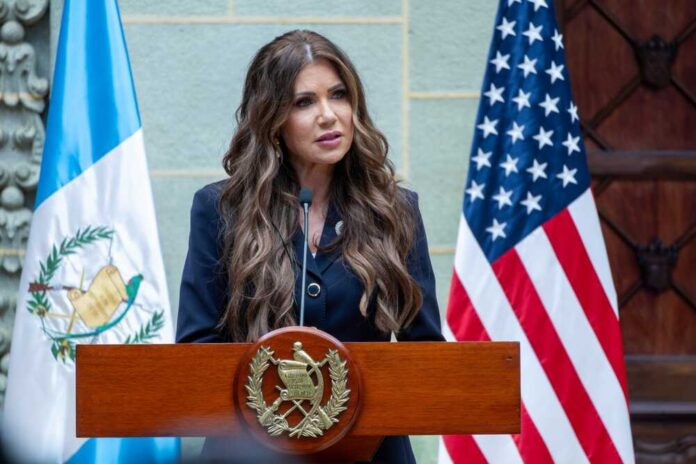
A swirling claim that Rep. Nancy Mace wants to investigate DHS Secretary Kristi Noem is colliding with one hard fact: the only thing clearly verified right now is that Noem is facing relentless hearings as Washington fights over how far immigration enforcement can go.
Story Snapshot
- Kristi Noem has faced back-to-back Senate and House Judiciary scrutiny over ICE tactics, including questions about DACA-related arrests, Election Day operations, and warrantless activity.
- Government funding fights and shutdown pressure are shaping DHS capacity while Congress demands answers and activists push back.
- Republicans broadly back tougher border enforcement, but accountability debates inside the GOP could create friction ahead of the 2026 midterms.
What’s Verified vs. What’s Being Claimed
Searchable, mainstream coverage does not clearly verify the premise that Rep. Nancy Mace is planning a formal investigation into “outgoing” DHS Secretary Kristi Noem, or that Mace delivered the widely circulated line about needing to “hold our own accountable.” The most solid public record centers on aggressive oversight of Noem through congressional hearings and on Mace’s separate push for accountability measures that recently hit resistance on Capitol Hill.
That gap matters because conservatives are tired of information laundering—big claims repeated until they sound official. The research provided shows strong documentation of hearings and controversies around Noem’s enforcement posture, but it also flags that the “Mace investigation” narrative may be emerging from commentary and secondary amplification rather than a clearly sourced announcement. Until a primary statement or formal committee action is documented, readers should treat the investigation claim as unconfirmed.
Noem’s Enforcement Agenda Is Driving the Oversight Storm
Kristi Noem entered DHS under President Trump with a mandate to reverse Biden-era border policies, prioritizing deportations, stepped-up ICE enforcement, and reviews of prior border crossers for national security risks. Those priorities have put DHS directly in the crosshairs of lawmakers who oppose strong interior enforcement and who demand tighter limits on operations. The research points to Noem describing threat identification work tied to wider geopolitical concerns.
Congressional questioning has focused on how ICE executes that mandate in practice. The research highlights criticisms related to DACA arrests, ICE presence or activity connected to Election Day, and concerns raised about warrantless operations. Democrats have used Judiciary hearings to frame these actions as overreach, while Republicans have largely defended the enforcement posture as a necessary correction after years of lax border controls and downstream consequences for public safety, budgets, and community stability.
March Hearings Put ICE Tactics and DHS Authority Under the Microscope
As of early March 2026, Noem faced consecutive oversight sessions: a Senate Judiciary appearance on March 2 and a House Judiciary hearing on March 4. Those hearings became flashpoints because they mixed policy disputes with operational details, including how DHS targets individuals, how it coordinates in major cities, and what legal thresholds apply when agents act quickly. The research also notes shutdown-related strain hanging over DHS.
For constitutional conservatives, the key issue is balancing enforcement with clear legal guardrails. Congress has the power to oversee executive agencies, but oversight can also become a political weapon when lawmakers focus more on halting enforcement than improving it. The hearing record described in the research suggests both dynamics are at play: legitimate questions about procedure and authority, alongside ideological efforts to blunt immigration enforcement altogether.
Where Mace Fits In: Accountability Theme, Not a Confirmed Noem Probe
Rep. Nancy Mace is described in the research as someone who has recently pursued internal accountability mechanisms, including a transparency push related to sexual harassment disclosure that did not advance. That history supports the broader theme that Mace sometimes targets institutional reforms even when they create discomfort inside her own party. But the provided research does not confirm a concrete Mace-led investigative action directed at Noem.
The “hold our own accountable” framing resonates with voters who watched the Biden years produce open-border chaos, cultural radicalism, and bureaucratic arrogance—with few consequences. Still, accountability is only credible when it is specific, sourced, and tied to actual jurisdiction and evidence. Right now, the better-supported story is congressional pressure on DHS operations, not a documented intra-GOP investigation initiated by Mace.
Political Stakes: Border Enforcement, Party Unity, and 2026 Midterms
The immediate risk flagged in the research is operational: funding fights and shutdown pressures can impede DHS capacity even as lawmakers demand higher performance. The longer-term risk is political: sustained controversy around tactics and internal GOP disagreements could complicate messaging going into the 2026 midterms. Democrats will continue to spotlight enforcement optics, while Republicans will try to keep the focus on sovereignty, law enforcement, and deterrence.
GOP Rep. Nancy Mace Plans to Investigate Outgoing DHS Secretary Kristi Noem: ‘We Need to Hold Our Own Accountable’ https://t.co/mW4a2GL1Cx
— The Gateway Pundit (@gatewaypundit) March 7, 2026
For conservative readers, the practical takeaway is to separate two debates that often get blurred on purpose: whether America has the right to enforce immigration law, and whether particular enforcement actions follow clear rules that can stand up in court and under oversight. The research supports a reality of intense scrutiny and political pressure on Noem’s DHS. It does not yet support treating the “Mace investigation” as a settled, verified event.
Sources:
House bats down Mace effort to reveal sexual misconduct …
Nancy Mace demands airport CEO resign after claims …
Nancy Mace under investigation by House Ethics Committee








![🇺🇸 AMERICA 250 🎉 President Donald Trump Delivers Remarks at Mount Rushmore in South Dakota [LIVE]](https://newsglobal.com/wp-content/uploads/sites/34/2026/07/maxresdefault-100x70.jpg "Rushmore Turns Political—Fireworks Not The Hottest Thing")