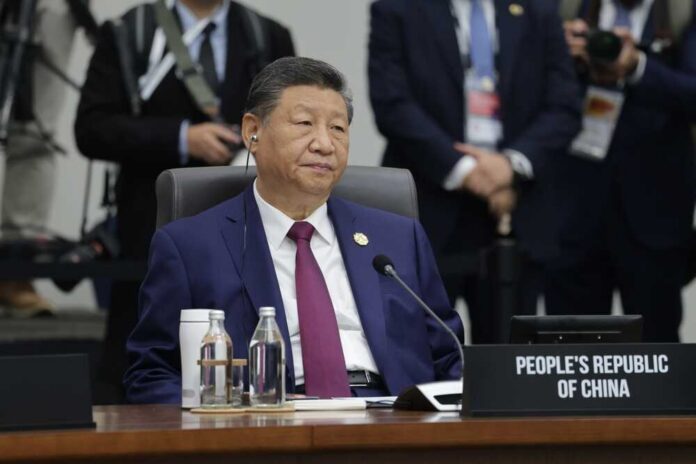
Beijing is testing America’s resolve on Taiwan while dangling trade gains, forcing the Trump administration to balance prosperity with principle.
Story Highlights
- Chinese officials signaled a hard line on Taiwan as leaders meet in Beijing [1].
- Analysts say Xi may press Trump to oppose Taiwan independence or nod to “one China” language [3].
- Trump downplayed China’s leverage on Iran and emphasized personal rapport with Xi [4][5].
- Big-ticket business deals and rare earth dominance raise stakes without clear Taiwan concessions [1][3].
China’s Stance on Taiwan Sets the Summit’s Red Line
Chinese officials reiterated resolve to crush Taiwan’s independence movement ahead of President Trump’s meetings, casting a sharp edge over otherwise deal-focused talks [1]. Analysts argue Xi Jinping could seek U.S. statements that formally oppose Taiwan independence, back “peaceful reunification,” or even endorse Beijing’s “one China” principle—positions that would mark a departure from long-standing U.S. policy that does not support Taiwan independence but also rejects coercion [3]. No official Chinese documents publicly list these demands, underscoring reliance on analyst assessments rather than on-record terms [3].
Reports indicate Taiwan and U.S. arms sales will be discussed but are not expected to dominate the agenda, with trade and Iran drawing primary attention [1]. That dynamic complicates Beijing’s leverage narrative: China’s goal of constraining U.S. support for Taiwan faces a schedule stacked with commerce-driven priorities and war-related concerns. The absence of leaked agendas or formal proposals naming Taiwan policy shifts further limits visibility into any concrete asks, leaving observers to weigh rhetoric against the subdued placement of the Taiwan item [1].
Trump’s Leverage Play: Rapport, Independence, and Results
President Trump publicly dismissed the need for Chinese help managing Iran, signaling he would not trade security or sovereignty questions for short-term relief, and projecting self-sufficiency despite regional strain [4]. He also highlighted a warm working relationship with Xi—calling him a great leader and a friend—while noting that past problems were solved quickly, framing diplomacy as a practical channel for progress rather than a venue for concessions on core American interests [5]. Those messages aim to reassure conservatives wary of any erosion of deterrence.
A large American business delegation accompanied the visit, pointing to a push for aircraft, agriculture, and advanced chip deals that can strengthen domestic industry and reduce costs for families back home [1]. Analysts warn, however, that China’s advantages in rare earth minerals—so-called “golden screws” critical for manufacturing—may give Beijing bargaining power at the margins, especially as global inflation and energy pressures persist [1][3]. The administration must ensure that trade gains do not come at the expense of Taiwan’s security or America’s credibility in the Indo-Pacific.
Separating Facts from Spin on Beijing’s “Upper Hand”
Council on Foreign Relations commentaries contend China enters with an upper hand amid U.S. distractions, predicting carefully choreographed but limited outcomes rather than sweeping deals on strategic issues like Taiwan [3]. That forecast tempers claims that Beijing can force explicit U.S. reversals. It also aligns with reports that, while Taiwan will be broached, the talks are structured to prioritize commerce and crisis management, not a rewrite of long-standing policy frameworks that underpin regional stability and deter coercion across the Taiwan Strait [1][3].
Interview on High Stakes Summit
Trump has leverage going into this summit with China’s SecGen Xi Jinping – press the advantage for accountability regarding various transgressions by Beijing:
1. Clamp down on fentanyl precursor chemical shipments.
2. Free trade in rare earth… pic.twitter.com/hZ8mr5hUyd— Brent D. Sadler (@brentdsadler) May 14, 2026
Xi’s repeated warnings about Taiwan—paired with a message that mishandling risks confrontation—show Beijing’s intent to lock in advantage, but they do not automatically translate into American concessions [1][3]. The burden now is on the post-summit record. Conservatives should look for clear U.S. language affirming peace through strength: continued defensive arms sales to Taiwan, opposition to coercion, and rejection of any “deal” that trades security for soybeans or semiconductors. The administration’s credibility rests on securing jobs and growth without blinking on sovereignty.
What to Watch Next: Readouts, Language, and Lines Held
Official readouts from both governments will determine whether Beijing extracted new statements on Taiwan or whether Washington held its traditional line while pocketing trade wins [3]. Key signals include any shift from the U.S. formula of not supporting Taiwan independence yet maintaining robust unofficial ties and defensive support. If the final text avoids endorsing Beijing’s “one China” principle and leaves arms sales intact, the White House will have combined economic progress with constitutional priorities: a strong defense posture, limited government entanglements, and protection of free nations against authoritarian pressure [1][3].
Sources:
[1] YouTube – What are Trump, Xi’s goals for high-stakes China summit?
[3] Web – At the Trump-Xi Summit, China Will Have the Upper Hand
[4] YouTube – Miles Yu on Xi Jinping’s Power, Pressures, and Priorities
[5] YouTube – Trump arrives in Beijing, asks Xi to pressure Iran as gas prices surge …