

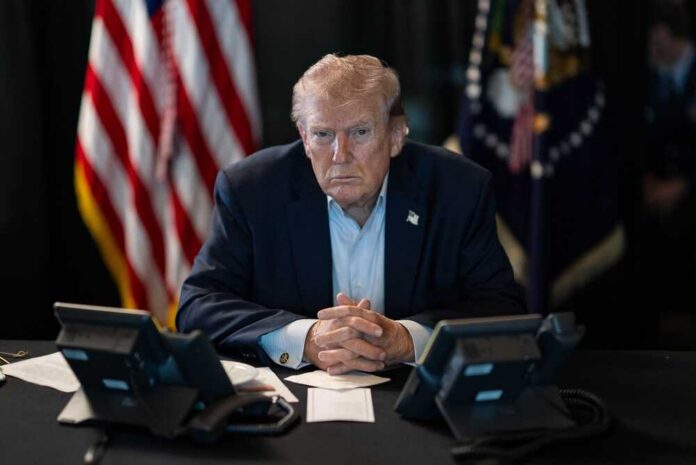
A new Trump executive order puts Washington inside the AI development process, and supporters say it is a national-security guardrail while critics see the first step toward deeper federal control.
Quick Take
- The order creates a streamlined federal review process for advanced AI models before public release.[1][3]
- The framework is described as voluntary, not a mandatory licensing system.[1][4]
- Axios reported the White House dropped a tougher draft after concerns it could hurt American competitiveness.[1]
- The administration is tying AI policy to broader efforts to protect U.S. leadership and counter state-level restrictions.[3][4][5]
Federal Review Without a Licensing Regime
President Donald Trump signed an executive order on Tuesday that sets up federal oversight of the most powerful artificial intelligence systems before they are released to the public.[1][3] The order is being sold as a national-security measure, not a full regulatory takeover, and the reporting available here says the White House chose a narrower path after rejecting a more aggressive version that could have slowed development.[1]
Axios reported that the administration cut back an earlier draft after officials worried it might undermine American competitiveness.[1] The same report says the final version relies on voluntary cooperation from major firms and explicitly avoids creating a government licensing, preclearance, or permitting system for new frontier models.[1] That matters because the distinction between voluntary review and compulsory permission is the difference between a safeguard and a gatekeeper.
What the Order Actually Requires
According to the reporting, the order directs Treasury Department officials, the Cybersecurity and Infrastructure Security Agency, the National Institute of Standards and Technology, and White House staff to develop a classified process for evaluating advanced model capabilities and deciding when a system qualifies as a covered frontier model.[1] The order also creates a cybersecurity clearinghouse and asks agencies to improve defenses around advanced artificial intelligence systems.[1] Those steps show oversight, but they stop short of an outright ban or mandatory approval scheme.
The review period itself is a major point of dispute. Reporters say the White House reduced the pre-deployment testing window to 30 days, and that change was meant to keep models from being stalled for months.[1][2] Even so, any waiting period can matter in a fast-moving industry where product timing, investor confidence, and competitive advantage often hinge on days rather than quarters. For supporters, the delay is the price of caution; for critics, it is proof that the federal government is already slowing the market.
Why Supporters Say It Protects America
The administration’s public AI posture has been consistent: remove barriers, preserve leadership, and avoid heavy-handed federal rules that could hand an edge to foreign rivals.[3][4][5] The White House has already framed its broader artificial intelligence agenda around a “minimally burdensome” national policy framework, while AI.gov highlights executive actions meant to advance the American AI technology stack.[3][4] From that perspective, this order looks less like a crackdown and more like a selective safety check on systems powerful enough to create security risks.
Trump signs an executive order to vet top AI models for national security risks https://t.co/CRHmEVX8mR
— ABC11 EyewitnessNews (@ABC11_WTVD) June 3, 2026
That is the strongest case for the order among voters who want Washington to stay out of the way unless a real threat exists. The available record shows the administration rejected mandatory licensing, limited the scope to advanced models, and preserved a voluntary structure that leaves private labs in the driver’s seat.[1] Supporters can reasonably argue that this is a restrained response to a legitimate security concern, not the kind of sweeping intervention conservatives usually fear from federal bureaucracies.
Why Critics See a Bigger Pattern
Critics are unlikely to be reassured by the word “voluntary” alone. Axios reported that the order still tasks multiple agencies with developing a formal vetting process and classifying which systems fall under the frontier-model label.[1] Politico also described the order as a blow to those who prefer a “tech Wild West,” signaling that the new regime is meant to change behavior even if it does not impose a hard permit requirement.[2] That is enough for opponents to argue that Washington is building a precedent for deeper control.
The broader policy backdrop reinforces that concern. The White House has already moved to challenge state artificial intelligence laws and promote a federal framework that preempts conflicting state rules.[3][6] For readers worried about government overreach, that pattern matters. A federal review process for frontier models may sound narrow today, but once Washington normalizes involvement in model approval, future administrations can widen the scope, tighten the standards, or turn voluntary cooperation into something far less optional.
Sources:
[1] Web – Trump signs executive order establishing oversight of AI models
[2] YouTube – Trump Signs Highly Anticipated AI Executive Order
[3] Web – President Trump Signs Executive Order Challenging State AI Laws
[4] YouTube – Trump signs new artificial intelligence executive order
[5] YouTube – Trump signs AI executive order to give government early look at new …
[6] Web – Ensuring a National Policy Framework for Artificial Intelligence