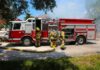
When fire penetrates a neonatal nursery, seconds decide outcomes; the mechanisms that usually sustain fragile lives—oxygen-rich air, continuous power to incubators, sealed rooms to limit infection—can, in a failure, accelerate catastrophe.
At a Glance
- A dawn fire in a neonatal nursery at Islamabad’s main public hospital killed 14 newborns, according to hospital and government officials.
- Rescuers and hospital staff removed infants from the ward; at least one baby was saved alive, officials said.
- Authorities ordered an immediate inquiry, as early reports pointed to an electrical fault in the ward.
- The tragedy fits a documented regional pattern: NICUs are uniquely vulnerable when fire safety engineering and procedures lag clinical needs.
What happened inside the nursery
In the early morning, a fire broke out in the newborn nursery at the Pakistan Institute of Medical Sciences (PIMS), Islamabad’s flagship government hospital. Officials stated that 14 infants died in the blaze and its aftermath; at least one newborn was rescued alive. The federal health minister publicly confirmed the death toll and the hospital initiated emergency response while coordinating with families and authorities. Initial public statements from officials referenced an electrical fault in the ward as a suspected ignition source, a familiar trigger in clinical spaces with heavy round-the-clock equipment loads.
The core facts settled quickly because the hospital, emergency responders, and central authorities were all on record the same day. That clarity matters in a chaotic scenario: neonatal units are compact, highly serviced environments—continuous oxygen supply, incubators and warmers, infusion pumps, phototherapy lights, monitors—so a small ignition can transition to an untenable smoke environment in under a minute. In that window, staff must locate, disconnect, and carry non-ambulatory patients through smoke-laden corridors while maintaining airway and thermal protection, an ask that overwhelms even well-drilled teams if compartmentation and smoke control fail.
Why neonatal and maternity wards are at special risk
Neonatal intensive care units (NICUs) and step-down nurseries concentrate heat, electrical load, and oxidizers around patients who cannot self-evacuate. Fire engineers describe this as a high-consequence, low-tolerance environment: equipment density raises the probability of electrical faults; piped oxygen and oxygen-enriched microenvironments raise heat release rates and the speed of flashover; infection-control measures that tighten building envelopes can trap smoke if mechanical extraction and door discipline break down. Evacuation is intrinsically complex—each infant is tethered to warmth, air, and monitoring—so best-practice doctrine emphasizes defend in place: hard fire compartmentation, automatic detection and suppression, and preplanned horizontal relocation inside smoke-safe zones rather than vertical egress.
Across South Asia, serious nursery and NICU fires have recurred when that doctrine collides with older infrastructure, overloaded circuits, ad hoc equipment additions, and infrequent life-safety audits. Clinical literature and regional incident reviews repeatedly cite three converging factors: (1) electrical loading beyond circuit design, (2) oxygen-rich atmospheres that accelerate flame spread, and (3) gaps in staff training for immediate smoke control and staged relocation under RACE protocols (rescue, alarm, confine, extinguish). When those layers fail together, mortality spikes before external fire services can intervene.
The evidence we have—and what it supports
On-the-record reporting from national and international outlets aligned on the death toll and location: 14 newborns died in the nursery fire at PIMS, with rescuers and staff extracting other infants and at least one survivor confirmed by officials. Authorities announced an immediate inquiry the same day, a standard step after mass-casualty hospital incidents that typically encompasses electrical forensics, maintenance logs, alarm and suppression system functionality, and staff response timelines. While investigators will parse ignition specifics and responsibility, the operational profile already matches a well-characterized pattern: an electrical fault interacting with oxygen and high equipment density inside a neonatal ward.
That pattern is not speculative; it is borne out by prior regional cases and summarized in NICU-focused fire-safety research and guidance. Probe findings from other South Asian hospital fires have documented expired extinguishers, disabled alarms, missing or blocked fire doors, and power-distribution improvisations under continuous life-support load—conditions that turn survivable incidents into lethal ones when smoke migrates into rooms housing ventilated or thermally vulnerable neonates. The Islamabad fire’s provisional details are consistent with those known failure modes, which is exactly why inquiries after such events tend to land on the same remediation list: power-quality and redundancy upgrades, oxygen safety discipline, hard compartmentation, and live drills that include horizontal relocation of incubator-dependent patients.
Mechanics of failure: from spark to untenable conditions
In a neonatal nursery, the most dangerous product of a small fire is not always flame; it is smoke—hot, toxic, and fast. A short circuit in an air-conditioning unit or power strip can ignite nearby polymer housings or cable insulation. In oxygen-enriched air, even materials that normally self-extinguish can sustain combustion, elevating heat release. Without immediate door closure and active smoke extraction, the room’s tenability—measured by temperature, visibility, and carbon monoxide concentration—can collapse in under two minutes. Infants in incubators may be shielded from drafts but still asphyxiate as ambient oxygen is displaced and carbon monoxide penetrates enclosures. This is exactly why compartment integrity and staff muscle-memory on “close, confine, relocate” matter as much as extinguisher use; the first minute’s decision to shut a door can outweigh the next ten minutes of firefighting.
Electrical design adds another layer. NICUs accumulate devices over time—additional warmers, portable suction, chargers—often connected via multiway adapters not rated for continuous medical loads. Even where the base design meets code, real-world use can exceed design spec, introducing heat at receptacles and panels. Clinical operations run 24/7; unlike an office, there is no nightly cool-down. Investigations in comparable cases have traced fires to continuous high current in oxygen concentrators and HVAC units, then documented rapid flame spread along cables and into suspended ceilings, bypassing detection zones and delivering smoke to adjacent rooms.
Today's tragedy at PIMS Hospital, Islamabad is beyond heartbreaking. We already have strong laws such as the Islamabad Fire Safety Act 2010 and Building Codes of Pakistan 2016, which cover NFPA safety standards for every scenario. These laws exist and are in force. (1 of 3).
— Sheikhoo (@Nedian_shaikh) August 26, 2026
What prevention looks like in practice
Prevention is not a single fix; it is layered defense scaled to neonatal acuity. Start with power: dedicated, isolated, and redundantly protected circuits for incubators and warmers; prohibition of consumer-grade adapters; thermal imaging spot-checks of panels under peak load; and documented maintenance cycles. Next, oxygen discipline: leak checks, clear signage and staff refreshers on sources of enrichment, and airflow design that prevents pooling near heat sources. Then, building measures: rated fire doors that self-close; smoke compartmentation that allows horizontal relocation; detectors zoned to trigger early but avoid nuisance disablement; and, where feasible, pre-action sprinklers tuned for healthcare occupancies so a single localized discharge can hold a room below flashover without flooding adjacent care areas.
Finally, people and practice. Written plans are inert without drills that rehearse the real work: two-person incubator carries, rapid umbilical line management, door control, and communication under alarm conditions. The most effective NICU teams run short, unannounced, scenario-based exercises during all shifts, measure door-close times, and debrief after near-misses. Hospitals that have adopted this culture and paired it with electrical and compartment upgrades have demonstrably reduced the casualty profile of similar ignition events in the region’s most challenging clinical environments.
After Islamabad: the stakes of getting this right
An inquiry will assign cause and responsibility in Islamabad; that process should proceed to the end. But the system-level lesson is already legible. Neonatal care concentrates the youngest lives where the margin for failure is microscopic. When capital budgets prioritize beds and monitors over the unglamorous scaffolding of safety—power quality, door hardware, smoke control, testing—families end up trusting their children to wards that work beautifully on a normal day and catastrophically on a bad one. The Islamabad nursery fire belongs to a preventable class of disasters. Hospitals that treat energy, oxygen, and smoke as clinical risk factors—engineered out, rehearsed against—can make sure that a spark is just an incident, not a mass fatality.
Sources:
apnews.com, npr.org, aljazeera.com, nytimes.com, bbc.com, independent.co.uk, pubmed.ncbi.nlm.nih.gov, journals.sagepub.com, babushahi.com