

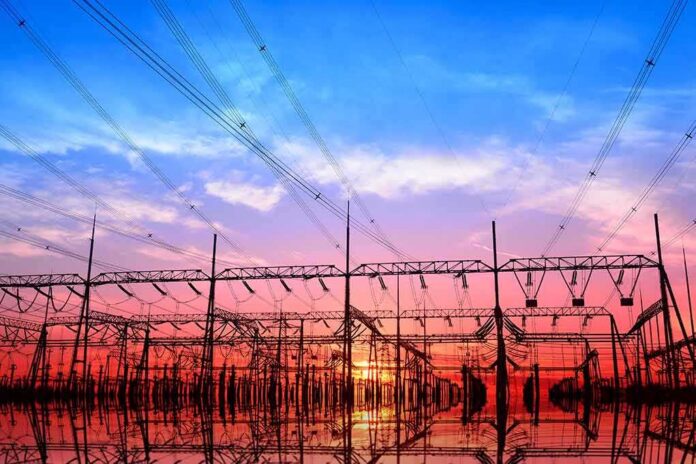
Southeast Asia’s power story is no longer about how much generation can be built; it’s about whether electricity can be delivered, when and where new demand shows up, across grids that were not designed for today’s load patterns or tomorrow’s industries.
At a Glance
- Electricity demand in Southeast Asia is rising fast and is set to keep outpacing broader energy demand this decade and next.
- More than 100 TWh of additional load could arrive by 2030 from data centers, EVs, and industrial clusters — often faster than grids can expand.
- Transmission and distribution investment has lagged generation, with permitting and delivery timelines stretching five to fifteen years.
- Modernizing national grids, adding storage, and deepening cross-border interconnections are the decisive levers for reliability and flexibility.
Demand is accelerating; the constraint is deliverability, not just megawatts
The region’s electricity demand growth is robust and durable. The International Energy Agency (IEA) projects Southeast Asia’s electricity consumption to climb from above 1,300 TWh to over 2,000 TWh by 2035, growing around 4% annually and outpacing overall energy demand growth. This trajectory reflects structural forces — industrialization, urbanization, rising incomes, and electrification of end uses — that have persisted across cycles and policy shifts. Put simply, more of the economy is moving onto the grid, and the grid must keep up.
Layered on this secular climb is a discrete surge of “new-load” customers — hyperscale and colocation data centers, EV charging networks, and modern industrial parks — that concentrate large blocks of demand in specific locations. A Bain & Company analysis reported in the business press estimates more than 100 TWh of additional electricity consumption by 2030 from these segments, with many projects targeting go-live windows of one to three years. Transmission and distribution reinforcements, by contrast, typically require five to fifteen years from concept to energization; that timing mismatch makes deliverability, not nameplate generation, the binding constraint in many jurisdictions.
Why grids lag: timelines, institutions, and the incentives that favor plants over wires
Across Southeast Asia, grid investment has trailed generation for a decade. The IEA’s 2026 outlook notes that transmission and distribution spending — roughly USD 12–13 billion mid-decade — remains below what’s needed to match rising generation and to connect new resources and loads. The reasons are prosaic but persistent: multi-agency permitting, right-of-way acquisition, social acceptance, environmental approvals, and procurement processes that elongate delivery schedules and raise carrying costs. The result is a system that can add plants faster than it can move electrons, leaving congestion, curtailment, and local reliability risks even as regional capacity appears ample on paper.
Policy and market incentives often compound the problem. New generation assets are tangible, politically visible, and easier to finance within existing utility capital frameworks. Grid upgrades, by contrast, are diffuse in their benefits, harder to attribute to a single constituency, and frequently face regulatory lag in cost recovery. This bias is not unique to Southeast Asia, but its effects are sharper in a region where demand centers are shifting and where renewable resources are often remote from urban load.
Interconnection and storage: flexibility, not just capacity
Electricity security is no longer just a matter of reserve margin; it is a function of system flexibility — the ability to meet changing hourly, seasonal, and locational needs without excessive cost. The IEA underscores that expanding and modernizing national grids, coupled with deeper regional interconnections, is essential to deliver that flexibility. The ASEAN Power Grid initiative seeks to knit the ten member states into a more resilient network, allowing surplus generation in one area to support deficits elsewhere and smoothing variability from renewables across a wider footprint.
Storage complements wires by shifting energy across hours and bolstering operating reserves. While technology mix and duration needs differ by country and resource stack, the investment signal is clear: in the IEA’s announced-pledges pathway, annual investment in grids and storage must rise from roughly USD 13 billion today toward about USD 50 billion by mid‑century to keep reliability and decarbonization goals aligned. That is a multi-decade buildout of both infrastructure types, not a one-time surge.
The 100 TWh surge: what it is — and is not
The “100 TWh” figure that now anchors many boardroom and cabinet discussions is a demand increment, not a diagnosed regional shortfall. As summarized from Bain’s analysis, it captures additional consumption expected by 2030 from fast-growing segments whose siting and timelines may not line up with existing grid capacity. The implication is operational: the risk is not necessarily systemwide scarcity, but localized inability to interconnect and serve new load at the pace developers expect. In practical terms, a city ring may be constrained while a national balance looks adequate; a hyperscale campus may face multi-year delays for a substation and high-voltage spur even as new plants break ground elsewhere.
This is why serious planning distinguishes between energy volume (annual TWh) and firm deliverable capacity at specific nodes and hours. New demand tends to be lumpy and place-based. Meeting it requires substation capacity, high-voltage transmission to upstream resources, and distribution upgrades that can flex with hourly profiles. Those elements are rarely on the same timeline as a data hall build or an EV fleet rollout.
Country differences are real — but the system problems rhyme
Southeast Asia is not a monolith. Power-sector structure, reserve margins, resource endowments, and regulatory regimes vary widely among Indonesia, Vietnam, Thailand, Malaysia, the Philippines, and Singapore. Yet the planning challenges rhyme: long lead times for transmission, congestion between renewable-rich regions and urban load, and interconnection queues for large customers and generators. The IEA’s regional lens captures these common constraints even as project-level realities diverge. That is precisely why interconnection — both within countries and across borders — is so valuable: it reduces the cost of reliability by diversifying supply and sharing reserves across a larger balancing area.
Cross-border links also create options when domestic buildout lags. The Lao PDR–Thailand–Malaysia–Singapore power integration project is a case in point, and more such corridors can mitigate local shortfalls or variability. But realizing that promise requires sustained alignment on grid codes, wheeling arrangements, and commercial rules — institutional work that takes as much persistence as steel in the ground.
What a credible response looks like
First, bring grid planning forward. Align transmission and distribution roadmaps with industrial-zone development, data-center siting, and national electrification strategies. Where demand is certain and concentrated, pre-build substations and transmission spurs to compress timelines.
Second, fund flexibility as infrastructure. Treat batteries (short and medium duration), grid-enhancing technologies such as dynamic line ratings, and advanced distribution automation as reliability assets with regulated returns. They buy time while long-lead transmission advances and reduce curtailment of renewables that are already built.
Third, widen the balancing area. Accelerate pragmatic, staged interconnections that deliver immediate reliability value, while continuing the ASEAN Power Grid’s longer-horizon work on standards and market design. The power-system economics are clear: larger, better-connected systems need fewer reserves and can integrate more variable renewables at lower total cost.
Finally, match capital to the map, not just the model. The IEA’s pathway implies a several-fold increase in annual grid and storage investment by mid‑century. Countries that pair clear cost-recovery mechanisms with streamlined permitting and predictable procurement will attract the capital required to make those numbers real — and, critically, to deliver power where growth is actually occurring.
Sources:
zerohedge.com, iea.org, isear.vn, caseforsea.org