The most reliable account here is not a viral tale of hiding in a bathroom shelf; it is a hard, documented survival from an elevator in the South Tower after United Airlines Flight 175 struck, involving identifiable colleagues from Keefe, Bruyette & Woods and a desperate escape through a narrow opening before the building fell.
At a Glance
- Keefe, Bruyette & Woods occupied the 88th and 89th floors of the South Tower; multiple employees are documented as survivors and victims.
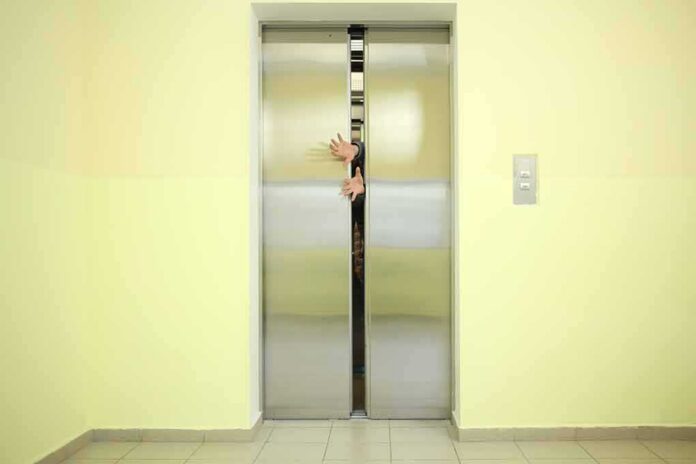
- After the second plane hit, at least one elevator car dropped and halted; trapped occupants forced doors and crawled through a gap to safety.
- The names and office context recur across memorial archives and reporting, anchoring the event in verifiable people and places.
- Later social-media framings distort the facts; the credible record supports an elevator rescue, not concealment in a bathroom shelf.
The verified core: a South Tower elevator survival
On the morning of September 11, 2001, Keefe, Bruyette & Woods (KBW) staff were working on the 88th and 89th floors of Two World Trade Center. That placement is not conjecture; it appears in institutional memorial portraits and trade-press retrospectives that catalog exactly where the firm operated inside the South Tower. When United Airlines Flight 175 struck the building, elevator service was violently disrupted. In a widely cited account, one elevator car plunged, then stopped near the height of the lobby atrium, leaving its occupants to face a grim choice. They pried at the doors until a small opening appeared—narrow enough that only by crawling could they squeeze through and then jump to the floor outside. Named KBW colleagues appear in this narrative, tying the episode to real people whose presence in those offices is separately corroborated.
The timing tracks the public chronology: this elevator incident occurred after the second impact, and the surviving women made it out and were across the street when the South Tower collapsed. That sequence matters because it situates the rescue between the moment of systemwide elevator failure and the building’s fall—precisely the window when ad hoc extractions and self-rescues occurred across the complex. The basic mechanics—free fall arrested within the shaft, a jammed door, responders with tools working to breach metal—align with other 9/11 elevator entrapments, where improvised means and small gaps spelled the difference between life and death.
Who, where, and how we know
Survivor stories that can be named and placed are harder to dismiss and easier to preserve. In this case, reporting and memorial archives repeatedly reference a cluster of KBW employees—by surname and firm—caught in an elevator, including two women who crawled through to safety and colleagues who did not make it out. The Globe and Mail’s feature traces the escape to specific people and floors, while the 9/11 Memorial & Museum preserves first-person portraits from KBW that independently confirm office locations and the firm’s experience that morning. This naming consistency is what separates a cautionary internet anecdote from a historical episode with verifiable edges. It is also consistent with the firm’s documented casualty toll: multiple outlets chronicled the extraordinary loss KBW sustained, a detail that gives somber context to why individual rescues stand out so starkly in the record.
The office-floor facts are prosaic, but they are the load-bearing structure of the story. Traders Magazine’s post-attack coverage put KBW’s core operations on the 88th and 89th floors and described roughly forty professionals on site, many of whom perished when the South Tower fell. The Guardian’s early roll call, while necessarily preliminary, pointed to the firm’s scale of loss within days of the attack, reinforcing the same picture from a very different genre of reporting. Aligning the elevator account to these anchored facts—who worked where, who survived, who was lost—keeps the narrative grounded in the institutional memory that has been painstakingly cataloged since the attacks.
Mechanics of an elevator entrapment under impact
To understand why an elevator might drop, then halt within reach of an exitable gap, it helps to recall how high-rise elevator systems behave under trauma. Elevator safety gear—wedge-shaped governors that clamp onto guide rails when overspeed is detected—are designed to stop a falling car before terminal descent. Violent structural shock can knock a car loose, trigger braking, distort doors, and leave the cab stranded between landings or adjacent to an atrium opening. In such conditions, doors may not align cleanly, and cabin-to-lobby egress can require prying the car doors and the hoistway doors simultaneously to reveal only a partial aperture. That is exactly what survivors describe: a fall arrested, a narrow opening, then a crawl and jump to the outside.
Rescue in these contexts is time- and tool-constrained. Port Authority and FDNY responders used whatever they had—axes, Halligan bars, in some cases saws—to create workable openings while alarms, smoke, and debris complicated visibility. Survivor accounts from multiple locations in both towers mention these tools and the rhythm of door-by-door improvisation. The KBW cluster fits that pattern. Crucially, it also fits the timeline: the South Tower stood for 56 minutes after impact, a devastatingly short yet lifesaving interval for those able to get out before progressive failure made further extractions impossible.
Names matter because memory is fragile
Two forces shape how this story is now told. First, oral history. Projects at the 9/11 Memorial & Museum and other institutions have preserved hundreds of interviews precisely because survivor memory, while sometimes imprecise in detail, is irreplaceable in texture and meaning. Second, amplification. Social platforms and short-form video reward compression and spectacle, which is why a sober elevator escape can be reframed as “surviving in a bathroom shelf”—a captivating hook that misstates the actual mechanism of survival. The responsible path is to keep the verified core intact and let memorial archives carry the human voices that give it depth.
The elevator narrative’s persistence across reputable sources—and its anchoring to a particular firm, suite of floors, and named colleagues—argues for its credibility. It also explains why some fine-grained elements vary when retold: the exact number of people in the car, the precise distance to the lobby, even name spellings drift across features and anniversary pieces. That is normal variation around a stable center. The stable center is what we keep: the South Tower, KBW on 88/89, a post-impact drop and halt, forced doors, and survival by inches.
Why this account endures
Elevator rescues are not the most televised images of that day; they rarely yield footage or iconic photographs. But they capture something essential about disaster survival: systems designed to save lives—in this case, elevator governors and door interlocks—did their imperfect work under conditions they were never meant to endure, and people made the last, decisive difference. The KBW survivors who crawled through that gap did so with a building fatally wounded above them and with colleagues still trapped behind. That is why the most accurate version deserves to be the most shared: it honors the engineering that slowed a fall, the responders who pried metal, the firm that rebuilt from loss, and the human beings who lived because they refused to wait passively for a perfect rescue that could not come in time.
Sources:
podcasts.apple.com, catalogimages.wiley.com, theglobeandmail.com, reddit.com, 911memorial.org, tradersmagazine.com, ny1.com