
The hard problem in U.S.–Mexico security cooperation is not whether the CIA is present; it is where liaison and training end and operational participation begins—and the Chihuahua case shows what breaks when that boundary blurs.
At a Glance
- Credible reporting indicates CIA officers embedded with Chihuahua state forces for months, providing training and operational support.
- Mexico’s federal authorities say the U.S. personnel were not accredited for operations, making the activity unauthorized at the national level.
- A lethal convoy crash exposed contradictory accounts about the Americans’ role and triggered high-level resignations and a treason case.
- Public U.S.–Mexico statements endorse sovereignty-respecting cooperation, but the record here turns on the narrow line between support and action.
What the evidence supports: a liaison mission that drifted into the operational lane
The most specific reporting—built from interviews with Mexican and U.S. officials—describes CIA officers working alongside Chihuahua state units for more than six months: training, advising, and at times joining select missions against cartel targets. The detail that matters is not abstract presence but function: these officers were “shepherded” into vetted teams by a Chihuahua official who paired them with police units and tapped their operational expertise, a posture that exceeds typical classroom instruction or back-office analysis. That setup aligns with a familiar liaison model used worldwide—until it doesn’t. When the support function bleeds into field participation, the legal and political ground shifts under everyone’s feet.
The April 19, 2026 mountain-road crash made that shift undeniable. Two Americans and two Mexican officials died while returning from an action aimed at suspected synthetic-drug sites. The deaths fixed the liaison-in-theory, operational-in-practice contradiction in the public record: federal authorities, who control foreign-agent accreditation, stated plainly that the U.S. personnel had no authorization for operational activities in Mexico. State-level cooperation and access do not cure a federal absence of authority, which is why the aftermath reverberated into resignations and criminal exposure.
How the boundary is supposed to work—and why Chihuahua crossed it
Modern U.S.–Mexico security cooperation is designed to keep American hands off the trigger. Since the Mérida Initiative, the architecture has privileged equipment, vetted-unit training, intelligence exchange, and financial targeting over any U.S. kinetic footprint on Mexican soil, precisely because sovereignty sensitivities are deep and historically grounded. Joint communiqués are explicit: cooperation must occur “within [each nation’s] legal framework,” respecting sovereignty and territorial integrity. This diplomatic grammar is not boilerplate; it is the guardrail that enables close coordination without political self-destruction in Mexico City.
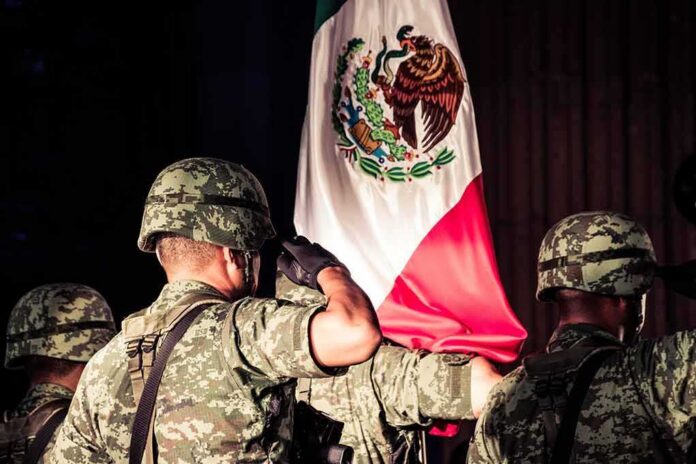
By that standard, Chihuahua’s arrangement failed at the most important checkpoint—federal accreditation. Mexico’s Security Ministry reported that one American entered on a visitor visa and another on a diplomatic passport, but “none had formal accreditation to participate in operational activities in national territory”. In other words, even if local leaders welcomed U.S. support, they could not confer what the law reserves to the national level. That mismatch is why the same set of facts can be described, with some truth, as either “support to local authorities” (the U.S. line) or “unauthorized foreign operatives in the field” (the federal Mexican line). Both capture a piece of reality; only the second captures who gets to decide.
The crash, the contradictions, and the consequences
Lethal incidents collapse euphemism. After the crash, Chihuahua officials emphasized the Americans’ status as embassy instructors, not direct participants, and suggested they were engaged in drone training away from the raid. Federal authorities countered that they lacked operational accreditation altogether. Local reporting, meanwhile, described the Americans as part of a convoy returning from the action—consistent with the more operational reading. The resulting dissonance is a tell: institutions issued statements aligned with their equities, not a single integrated narrative. When the evidence depends on field access and internal paperwork—radio logs, manifests, approvals—the side controlling those records can shape the story; here, those records were thin or withheld, amplifying the contradictions.
The political and legal consequences were immediate and senior. Chihuahua’s attorney general resigned within days; months later, reporting described a federal treason case tied to the covert cooperation, demonstrating that the federal center treated the episode as more than a bureaucratic foot fault. You do not reach for treason statutes over mere liaison excess—unless you intend to reassert the primacy of federal authorization in the most emphatic way the code allows.
The CIA needed a foothold on the Mexican side of the border.
So they turned to a Mexican official who had just had his U.S. visa revoked for suspected ties to cartels.@Stevelfisher and I take you inside the covert CIA operations in Mexico:https://t.co/eyif0GaOrY
— Jack Nicas (@jacknicas) November 10, 2026
What the U.S. says—and doesn’t
Official U.S. statements lean on principles: reciprocity, sovereignty, shared responsibility, mutual trust. They also frame joint activity as necessary to dismantle transnational criminal networks and blunt fentanyl flows. None of that is controversial in Washington’s idiom, and as policy aims they are widely shared on both sides of the border. In this case, U.S. messaging emphasized that the Americans who died were supporting state authorities’ efforts, a formulation that preserves the advisory frame even when field proximity was close. Separately, U.S. and Mexican officials have flatly denied at least one explosive claim—that the CIA facilitated a lethal operation against a cartel boss elsewhere—illustrating how hard-line accusations, once public, can be batted down without granular disclosure.
What is missing is equally instructive: no public documentary trail that federal Mexico approved ground participation; no detailed, on-the-record U.S. account of tasking, rules of engagement, or command relationships in Chihuahua. Intelligence work often lacks “fingerprints” by design. But when that design intersects with a federal legal regime that demands formal accreditation for foreign agents, absence of paper is not a feature; it is a liability.
Parsing the dispute without false balance
On the core questions, the evidentiary weight tilts. Multiple-sourced reporting supports that CIA officers extended their role with Chihuahua state forces into activities that looked and felt operational. Mexico’s federal government stated unequivocally that those officers were not accredited for such activities. A lethal incident tied to a specific mission anchored the debate in facts rather than hypotheticals, and it triggered tangible institutional outcomes—resignation and a treason case—that reflect federal judgment about the severity of the breach.
Counterclaims are not frivolous; the U.S. is right that cooperation aims to protect both countries and must rest on sovereign consent, and senior Mexican security officials have publicly resisted the notion that American agents operate in the field with them. But those statements describe the cooperation model as it ought to be; Chihuahua revealed how it actually was, at least for a period, in one state.
The enduring lesson: tighten the seam
Intelligence liaison is at its best when three signatures are present and documented: national-level legal authorization, partner-command consent, and an audit trail linking mission parameters to both. Chihuahua appears to have had at most two—and one of them died in the crash convoy. That is why the aftermath migrated from tragedy to constitutional dispute. For Mexico, the remedy is procedural clarity and enforcement: a federal gate that cannot be bypassed by state-level relationships. For the United States, the remedy is discipline about the mission boundary and an insistence that any field presence in Mexico rides on explicit, durable federal authorization—advisory, technical, or otherwise.
This is not an argument against cooperation. It is an argument for cooperation that survives exposure. In a domain where secrecy is normal, the only thing more costly than a failed mission is a successful mission that cannot be explained when something goes wrong. Chihuahua is the cautionary case. The next iteration should be the template for how to do it right.
Sources:
theamericanconservative.com, nytimes.com, english.elpais.com, freep.com, cbsnews.com, latimes.com, state.gov, congress.gov, govinfo.gov