

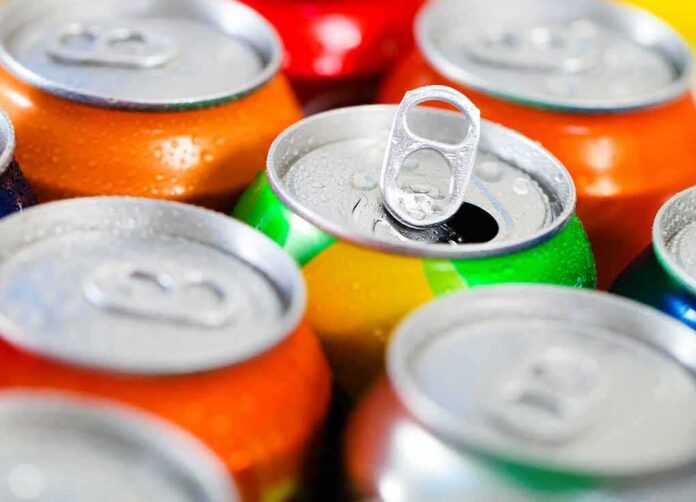
The “fridge cigarette” debate is not about whether Diet Coke equals nicotine; it’s about how a culturally sticky ritual, reinforced by caffeine and cue-driven habit loops, can feel indispensable long before anything meets the threshold of a clinical addiction.
The Short Version
- The viral “fridge cigarette” label names a ritual—cold can, crack of carbonation, a mid-day pause—more than a pharmacological addiction.
- Experts agree caffeine can create dependence and withdrawal in some users; that mechanism plausibly supports the habit’s pull, not a nicotine-equivalent addiction.
- Coca-Cola’s leadership distances the brand from the nickname, framing it as consumer-generated culture rather than company positioning.
- There is no population-level evidence that the trend reflects clinical impairment; claims of nicotine-like addiction overstate current science.
What the “fridge cigarette” actually describes
The phrase surfaced because it captures a repeatable micro-ritual: an afternoon walk to the refrigerator, the sensory pop and fizz of a just-opened can, the jolt of cold and sweetness, and a sanctioned two-minute break that feels earned. Coverage documenting the meme emphasizes this choreography—sound, temperature, carbonation, timing—over any claim that Diet Coke carries nicotine-like pharmacology. Clinicians quoted in reports describe the drink as a “quick, reliable burst of stimulation or relief,” especially when used to manage stress or appetite; as a daily emotional crutch, that pattern can entrench a habit loop. The social reach of the label—millions of views across platforms—suggests shared recognition of the ritual, not proof of addiction or harm on a clinical scale.
This distinction matters. Ritual is behavior organized by cues and rewards; addiction is a medical construct tied to impairment and loss of control. The fridge cigarette conversation often blurs them because ritual looks, from the outside, like compulsion. But mechanism tells us what’s doing the work.
The mechanism: caffeine, sweetness, and cues—not nicotine
Caffeine is a central nervous system stimulant. In sodas, its dose is modest compared with coffee, yet sufficient to produce tolerance and recognizable withdrawal for some users—headaches, irritability, fatigue—when intake abruptly drops. Peer-reviewed work and clinical overviews have long documented caffeine intoxication, withdrawal, and a spectrum of caffeine-related disorders in diagnostic manuals; research samples suggest a nontrivial minority meet dependence-like criteria when those are applied to caffeine specifically.
Sweet taste and carbonation add reward and sensory salience. Researchers studying food reward have shown that sweetness can activate dopaminergic circuits that encode “wanting,” making sweetened beverages unusually easy to repeat. That does not convert Diet Coke into a nicotine analog; it simply supplies a credible reward-learning pathway that, when paired with consistent contextual cues—same time of day, same fridge, same work stress—creates a robust habit loop. In short: caffeine confers pharmacologic reinforcement; sweetness and fizz supply immediate sensory payoffs; context does the stitching.
What the evidence shows—and what it does not
On the “shows” side: experts quoted across outlets tie the ritual’s stickiness to caffeine’s stimulant properties and to reward learning from sweet taste; they warn that using the drink as an all-purpose mood regulator can deepen reliance. Social media’s amplification is real—hundreds of thousands of likes, and a single origin video reportedly near four million views—which validates cultural salience, not health risk. These are reasonable, bounded claims; they rest on known caffeine physiology and behavioral psychology rather than sensational equivalence with cigarettes.
On the “does not” side: none of the reporting provides prevalence data, validated dependence scales administered to Diet Coke users, or longitudinal evidence of clinically significant impairment attributable to the ritual. Assertions that Diet Coke “hijacks dopamine like nicotine” overreach the available science; they’re metaphors for shared circuitry, not demonstrations of comparable potency, dose-response, or compulsion. Artificial sweeteners, including aspartame, are discussed in general terms without controlled human data showing dependence in ordinary consumers. In short, the nickname’s virality is not evidence that most users are self-medicating anxiety, and it is certainly not proof of nicotine-level addiction.
How Coca‑Cola frames the moment
Corporate positioning is straightforward. Coca‑Cola’s lead executive has said the company doesn’t present Diet Coke as a “fridge cigarette” and characterizes the label as consumer-generated. The brand’s own story emphasizes taste, distinctiveness, and end-to-end engagement from social media to the shelf—cultural connection without conceding any dependency narrative. Strategically, that stance allows Coca‑Cola to benefit from attention while disavowing the more charged addiction language.
This is both predictable and consistent: consumer brands rarely embrace metaphors that could invoke regulatory scrutiny or health-risk connotations. The company’s framing counters the dependence storyline by re-centering autonomy and preference—“people call it what they want, we make a great-tasting product”—which is exactly where most marketing organizations prefer to live.
Where reasonable disagreement lives
Two claims can be true at once. First, caffeine dependence and withdrawal exist; a meaningful minority of consumers meet proposed diagnostic thresholds for caffeine use disorder, and many more experience milder withdrawal when cutting back. Second, calling a Diet Coke a “fridge cigarette” is a cultural flourish that conflates the feel of a break with the pharmacology of smoking, which is far more potent and destructive. Health writers who draw this line are on solid ground: the habit loop can be powerful without invoking an equivalence that the neurobiology does not support.
That is the productive center of this debate—parsing ritualized reward from disordered use. It is not anti-science to say the ritual is real; it is not pro-industry to say the nicotine analogy is wrong. It is simply accurate.
Fridge moment can yall tell how much i love diet coke and redbull zero pic.twitter.com/ON2q40YGSX
— kay 𓆩♡𓆪 (@STAK3MYH34RT) November 2, 2026
What would settle the scientific questions
Three kinds of evidence would lift the conversation above metaphor. First, longitudinal studies tracking high-frequency Diet Coke drinkers, with validated craving and impairment measures, would reveal whether the ritual predicts clinically relevant outcomes. Second, randomized lab work separating caffeine, sweetness, carbonation, temperature, branding, and the ritual itself would quantify each component’s contribution to craving and mood. Third, preregistered neuroimaging and psychophysiology could test whether Diet Coke cues produce reward responses materially different from equally palatable, similarly caffeinated beverages. None of these designs presupposes danger; they simply clarify mechanism and magnitude.
How to think about your own ritual
If the break is the point and the can is the cue, you have leverage. Shift the cue—sparkling water, a brief walk, a call to a friend—and you’ll learn quickly whether caffeine is driving the behavior or the ritual is. If skipping Diet Coke triggers headaches or irritability that resolve with caffeine from another source, you’re looking at caffeine withdrawal, not a brand-specific addiction. If the ritual feels indispensable because it manages stress you’re not addressing elsewhere, consider whether you’re outsourcing regulation to a can. None of this demands panic; it calls for honest observation and, if needed, small experiments.
Bottom line
The fridge cigarette label is culturally sharp because it captures a truth about modern life: we graft meaning and relief onto compact, repeatable acts. Diet Coke fits that slot for many people because it delivers reliable sensory reward and a caffeine lift on cue. The evidence base supports that narrow claim and the reality of caffeine dependence for some users. It does not justify equating the beverage with cigarettes. Until stronger data arrive, treat the phrase as metaphor, the ritual as habit, and the question as one of fit: does this break serve you—or do you now serve the break?
Sources:
byrdie.com, meridian.news, menshealth.com, stockanalysis.com, cambridge.org