

When a sexual assault allegation against a faculty member moves from rumor to a detailed felony complaint and arraignment, the center of gravity shifts: it becomes a criminal matter with time, place, charges, and a public process that can be evaluated on its particulars.
The Short Version
- Prosecutors charged former Farmingdale State College professor Antoine Munfakh with first-degree sexual abuse, third-degree rape, and third-degree obstruction of breathing tied to an incident alleged to have occurred in a campus parking lot.
- Court filings described by local outlets specify a precise time, location, and conduct, including compelled oral sex and choking with a lanyard.
- Police and campus officials coordinated after a 911 call; the case proceeded to arraignment the following day, where Munfakh pleaded not guilty through counsel.
- The broader landscape: sexual misconduct in academia is underreported, yet criminal adjudication still turns on evidence tested in court, not statistics.
What the charges assert and why their specificity matters
According to reporting grounded in Suffolk County court records, the felony complaint in this case sets out a concrete account: the alleged assault occurred on October 15 in Parking Lot 6 at Farmingdale State College, inside a vehicle, at approximately 2:48 p.m. The filing, as described by Newsday and the New York Post, alleges breast touching, compelled oral sex, and strangulation using the student’s lanyard—details that align with the filed counts of first-degree sexual abuse, third-degree rape, and third-degree criminal obstruction of breathing. That level of specificity—time stamp, location, and modalities of force—signals prosecutors believe the incident can be investigated along multiple evidentiary vectors: physical, digital, and testimonial.
In New York practice, obstruction of breathing is charged to capture the distinct harm and forensic profile of strangulation. Splitting it from the sex-crime counts is not bureaucratic redundancy; it is a recognition that choking leaves its own potential trace evidence, medical implications, and statutory elements. Here, both outlets reported that prosecutors filed the obstruction count alongside the sexual abuse and rape charges, reflecting that prosecutorial calculus.
From 911 call to arraignment: the early procedural arc
Farmingdale State College stated that after a 911 call to Suffolk County police, campus police were notified and responded quickly to assist the student—an institutional step that matters for both immediate safety and the evidentiary record, including dispatch logs and body-worn camera footage when available. The following day, the defendant was arraigned before Suffolk County Judge Evan S. Tanenbaum, and the charges were read into the record. Munfakh pleaded not guilty. His attorney publicly and categorically denied the allegations and said the defense intends to establish his innocence at trial; that is the standard posture at this stage, where burden and proof remain squarely on the state.
The timeline—alleged offense on October 15, arraignment on October 16—suggests rapid engagement by law enforcement and prosecutors. That speed is neither inherently exculpatory nor incriminating; it indicates that investigators and charging attorneys believed they had sufficient probable cause to bring counts swiftly and preserve the integrity of early-stage evidence, from surveillance retention windows to medical documentation.
How such a case can be investigated: evidence lanes that matter
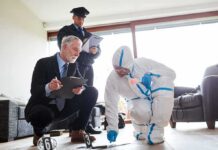
Because the complaint pins the incident to a specific parking lot at a specific time, multiple categories of corroboration become realistic. Video surveillance—fixed cameras covering ingress/egress or lot perimeters—can document arrivals, departures, or contemporaneous activity. License-plate reader hits and campus access control logs can support a timeline. Digital exhaust—phone location histories, text messages, and the 911 call recording—can tighten sequences. When strangulation is alleged, medical examination within hours or days can capture bruising, petechiae, or internal injuries; alternate light sources and imaging may reveal trauma not obvious to the naked eye, building a clinical record that both guides care and supports or undercuts an element of the charge.
Sex-crime prosecutions increasingly lean on holistic physical evidence—vehicle swabs, clothing fibers, trace DNA where available, and injury documentation—rather than the misconception that “DNA or nothing” determines viability. The National Institute of Justice has emphasized that non-DNA physical findings and careful scene work often carry significant probative value, particularly when paired with precise time-and-place allegations that can be tested against objective records.
Institutional context: prevalence is not proof, but it shapes why response speed matters
Higher education has wrestled for decades with sexual harassment and misconduct that occur far more often than formal reports would suggest. National Academies syntheses place harassment exposure—distinct from criminal sexual assault—at roughly 20–50% among female students and over half of female faculty and staff in some disciplines, underscoring that reliance on institutional complaint counts alone will understate the underlying problem. Those macro findings do not substitute for evidence in a particular criminal case; they do explain why prompt, coordinated responses—emergency support, law enforcement notification, evidence preservation—are considered best practice across campuses.
Underreporting also has procedural consequences. Delayed disclosures can narrow the evidence aperture: surveillance footage is overwritten, transient injuries resolve, and digital artifacts are lost. When a case like this one advances immediately from 911 call to arrest and arraignment, investigators have a better chance of securing perishable materials that, whatever they show, improve the accuracy of adjudication.
What the charges require the state to prove
New York’s third-degree rape statute generally centers on nonconsensual intercourse where consent is absent due to incapacity or other statutory conditions, which prosecutors must specify and prove; first-degree sexual abuse requires forcible sexual contact; and obstruction of breathing targets intentional compression of the throat or neck. The complaint’s described facts map to those elements: compelled oral sex and breast touching under coercion, and choking with a lanyard. The state will have to translate those assertions into admissible evidence that satisfies each element beyond a reasonable doubt. Defense counsel’s categorical denial previews a contest over credibility, corroboration, and the inferences a jury may reasonably draw from medical, digital, and physical records.
The obstruction count often turns on medical and testimonial detail—how pressure was applied, for how long, with what effect—because visible injury is not required to establish the crime, even though clinical findings can be powerful corroboration. Prosecutors and defense alike therefore scrutinize not just whether marks exist, but the timing and quality of documentation and whether alternative explanations are plausible in light of the record.
Why this case will turn on particulars, not narratives
The temptation in high-profile campus cases is to rush toward broad narratives—either institutional failure or false accusation. The more disciplined approach is narrower and more useful: follow the particulars. Here, we have a specific lot, specific minute, specific acts alleged, and a set of charges lodged the next day. That framework invites hard questions that are answerable: What do the cameras show? What do the dispatch and body-worn camera logs say? What does the medical record document about breathing obstruction? How do phone and message trails align with the timeline? Those are the questions that convert allegations into findings—either for the state or for the defense.
Sources:
nypost.com, rfi.fr, littlesis.org, cornwallpolice.ca, abcnews.com