Gustavo Petro’s Havana remarks matter because they show how quickly Cuba policy can move from hard power language to diplomacy, and how a Latin American president can use an official visit to make that argument directly to President Trump and Secretary of State Marco Rubio. The substance of Petro’s message was not ambiguous: he rejected invasion and missile talk, and he offered dialogue as the alternative.
Intro Header
- Petro used an official visit to Havana to call for dialogue with Trump rather than coercion toward Cuba.
- He framed any military action as a regional danger, not merely a bilateral dispute.
- The remarks were repeated consistently across multiple contemporaneous reports, strengthening attribution.
- The larger threat environment remained a matter of rhetoric and perception rather than a documented U.S. invasion order.
What Petro actually said in Havana
According to contemporaneous reporting, Petro told Cuban media that he had come “to call on humanity to show solidarity with Cuba, so that there is no invasion here or missile strike, and to propose dialogue as an alternative” to the current U.S. government, Rubio, and Trump. Semana reported the same core formulation, including Petro’s insistence that “it is the moment to dialogue,” and that Cuba should become “a setting for that dialogue.” Those are not vague anti-war gestures; they are a specific diplomatic proposal tied to named interlocutors and a named venue.
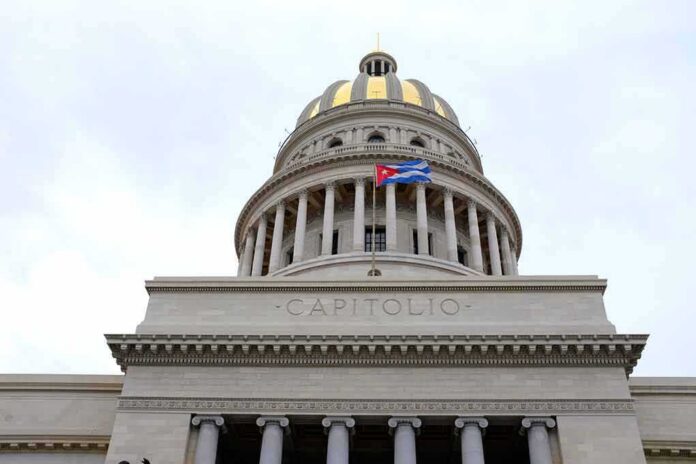
The setting mattered. Petro’s comments came during an official visit to Havana, after he was received with military honors by Miguel Díaz-Canel and held formal talks at the Palace of the Revolution. That makes the statement part of statecraft, not a passing comment on social media. It also explains why the message traveled quickly through wire services and regional outlets: it was delivered in a diplomatic theater designed to amplify exactly this sort of political signal.
Why the wording is more than slogan
Petro did more than reject force in the abstract. He cast the issue as a regional security question, arguing that any military action against Cuba would be an aggression against Latin America and invoking the Caribbean as a “zone of peace.” That framing matters because it shifts the argument away from the familiar Cold War binary of Washington versus Havana. In Petro’s telling, Cuba is not an isolated target; it is part of a broader hemispheric order whose stability depends on nonintervention. That is a classic Latin American diplomatic position, but Petro delivered it in unusually direct language and aimed it explicitly at the sitting U.S. president.
He also supplied a policy substitute. The most important line in the reporting is not the warning about invasion; it is the proposal to convert danger into “a setting for that dialogue.” In other words, Petro was not just condemning escalation. He was defining a venue, a method, and a principle: negotiation over coercion, even between governments that remain deeply distrustful of one another. That distinction separates a substantive diplomatic proposal from a purely declarative anti-U.S. posture.
The broader Petro pattern on Cuba and regional tension
Petro’s Havana statement fits a longer pattern in his foreign policy. Earlier in 2026, he urged Washington to change its Cuba policy and restart dialogue, warning against military intervention and arguing that lifting pressure on the island would help produce political change rather than force it. He has also linked diplomacy to de-escalation beyond Cuba, telling CBS News that dialogue with Trump could “stop a world war.” That is consistent with a governing worldview in which negotiation is not a soft add-on to security policy; it is the security policy.
That consistency is one reason the Havana remarks should be read as a deliberate intervention rather than a one-off flourish. Petro has repeatedly treated U.S.-Cuba relations as a test case for whether hemispheric disputes are managed through pressure or talks. The Havana trip gave him a platform to restate that view at maximum volume, while the official reception from Díaz-Canel gave the message the visual grammar of state solidarity.
What the record does and does not prove
The record here clearly proves Petro’s statement and the diplomatic context in which he made it. It does not prove that a U.S. invasion of Cuba was actually underway or formally ordered at the time he spoke. The reports document a threat scenario, not a confirmed operational plan. That is an important distinction, but it does not weaken the core fact of the story: Petro publicly urged Trump to choose talks over force because he believed the danger of escalation was real enough to warrant a direct appeal.
There is also a sourcing asymmetry worth noting. Much of the most detailed wording was carried through Cuban media and then reproduced by AFP and regional outlets. That does not make the statement unreliable; it means the strongest evidence is strongest on attribution and weaker on independent reconstruction of surrounding context. In practice, though, the essential message appears consistently across multiple outlets, which makes the core quotation difficult to dismiss as a misreading or outlier.
Colombian President Gustavo Petro urges Trump to hold talks, calls for averting US invasion of Cuba pic.twitter.com/LF2SinC1oE
— official Denton James (@Dentonjameso) August 2, 2026
Why this kind of diplomacy still matters
Petro’s Cuba appeal shows how much power remains in public diplomatic language even when formal relations are tense. A president can use an official trip, an allied host, and a sharply chosen set of words to try to redirect a crisis away from military logic and back toward negotiated restraint. Whether Washington is receptive is another matter. But the strategic purpose of Petro’s message is unmistakable: to make nonintervention sound not sentimental, but stabilizing; not naïve, but necessary.
Sources:
insiderpaper.com, globalnation.inquirer.net, nampa.org, aljazeera.com, en.cibercuba.com, colombiaone.com, cnn.com, instagram.com, barrons.com