A decade-long aviation mystery is being reopened by a forgotten eyewitness whose detailed account never matched the official search path.
Quick Take
- Oil rig worker Mike McKay says he saw a burning aircraft the night MH370 vanished and documented it immediately in an email to his employers.
- McKay’s reported bearings and location near Vietnam pointed toward the South China Sea, while later searches shifted far away into the Indian Ocean.
- Malaysia approved a renewed search that began December 31, 2025, using Ocean Infinity’s Armada 8605 vessel and underwater drones.
- As of early February 2026, rough seas forced a pause in operations, and no public breakthrough had been announced.
The “Forgotten Witness” and a Paper Trail That Still Exists
Mike McKay, a New Zealand oil rig worker on the Songa Mercur platform off Vietnam, has said for years that he witnessed what appeared to be MH370 burning at high altitude on the night it disappeared, March 8, 2014. He described seeing flames for roughly 10 to 15 seconds and provided directional bearings in a message sent to his employers. That immediate documentation matters because it predates the online theory machine and was not written as publicity.
McKay’s account also captures the human side of high-stakes investigations: he said he tried contacting Malaysian and Vietnamese officials in the days after the disappearance, but later felt discredited after his email leaked publicly. The core limitation is unavoidable—his sighting cannot be independently confirmed as MH370 based on the available reporting alone. Still, the specificity of his notes continues to raise a practical question: why wasn’t this type of structured eyewitness report clearly reconciled with the eventual search decisions?
What We Know MH370 Did Before It Vanished
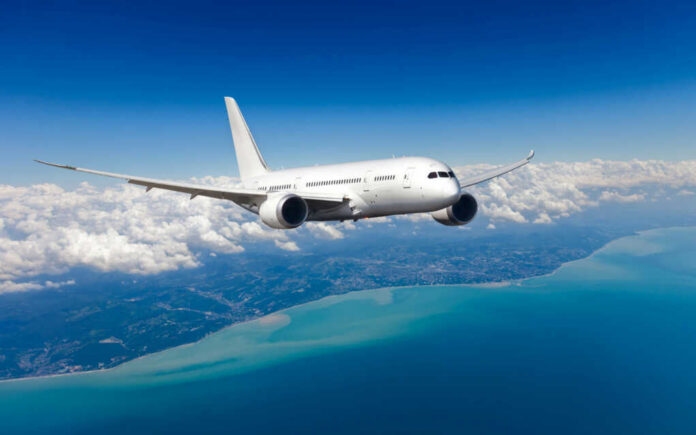
Malaysia Airlines Flight MH370 disappeared with 239 people aboard—227 passengers and 12 crew—while flying from Kuala Lumpur to Beijing. Reporting summarized in the provided research says the Boeing 777 deviated sharply from its planned route about an hour after takeoff, turned west, and headed toward the Andaman Sea before dropping off radar and losing communication. Without a main wreckage field or flight recorders, investigators have been left to infer the aircraft’s final path from partial data.
That evidentiary gap is why witness accounts like McKay’s remain relevant in 2026. His claimed location in the South China Sea near Vietnam matched early search attention in that region, but later efforts moved to the Indian Ocean, roughly 1,200 miles off Perth, Australia. The research does not provide a definitive explanation for the shift that fully resolves the discrepancy. With no confirmed crash site, the public is left watching official confidence collide with unresolved details that never got fully closed out.
Search Efforts Restarted: Ocean Infinity’s 2026 Mission
Malaysia approved a new search that began December 31, 2025, restarting a case that many families feared would fade into bureaucracy and “process” forever. The Armada 8605 vessel deployed with two underwater drones and began working a designated search area under an intermittent 55-day window. That renewed push is significant because it signals at least some political will to keep looking, even after previous searches yielded no publicly confirmed recovery.
As the 2026 effort unfolded, observers noted the operation appeared to use wider search strips than earlier work, prompting questions about whether the pattern reflected efficiency, a strategic first-pass filter, or a constraint-driven compromise. The research does not settle which explanation is correct. It does, however, connect the approach to a familiar deep-ocean reality: large areas must often be scanned broadly before narrowing in with more precise sonar and optical confirmation, a multi-step process seen in prior aviation recoveries.
Rough Seas, Pauses, and the Reality of Deep-Ocean Limits
In early February 2026, the Armada 8605 paused due to rough seas and returned to Fremantle for port operations, while reporting indicated the broader search plan continued in additional phases rather than simply ending. No public breakthrough had been announced by that point. For the 239 families, that means renewed waiting, again. For the wider public, it underscores the hard truth that technology has improved, but the ocean still imposes timelines and uncertainty that can’t be spun away.
The unresolved tension at the center of the MH370 story remains: specific claims like McKay’s suggest a scenario closer to Vietnam, while the dominant modern search focus sits far into the Indian Ocean. The provided sources do not prove McKay was correct, but they also do not demonstrate a clean, publicly satisfying explanation for why his detailed report was effectively sidelined. In an era when citizens have watched institutions dismiss inconvenient details, the case is a reminder that transparency—not slogans—is what builds credibility.
Sources:
Oil rig worker claims missing Flight MH370 was engulfed in flames
MH370 search update as Malaysia Airlines government investigation resumes