
The most durable truth in the Katie Suarez case is stark and dual: a random act of violence ended a young runner’s life, and the clinical machinery of modern transplantation turned that loss into multiple second chances for strangers.
At a Glance
- A 28-year-old Brooklyn runner, Katie Suarez, was stabbed while jogging on the Shore Parkway Greenway and later died from her injuries.
- Police and contemporaneous reporting place the attack around 8 p.m. on October 30, 2026; she was transported in critical condition and died days later.
- An arrest followed; a suspect has been charged with murder in connection with the killing.
- According to subsequent reporting, Suarez’s posthumous organ donation saved five lives — a medically plausible outcome when brain death is declared in-hospital.
What Happened on the Greenway
The sequence is clear. On Friday evening, October 30, 2026, Katie Suarez set out on a familiar route along the Shore Parkway Greenway in Brooklyn. She sustained multiple stab wounds to the neck near Bath Beach around 8 p.m., was discovered gravely injured, and was rushed to NYU Langone Hospital–Brooklyn, where clinicians fought to stabilize her. She remained on life support for several days and died early the following week, according to family statements and hospital-course reporting that tracked her deterioration from critical condition to death.
Within days, detectives narrowed the window of the assault and canvassed the corridor’s limited surveillance footprint. Ultimately, an arrest was made and a suspect was charged with murder in Suarez’s killing; that charging decision anchors the police theory of the case while the criminal process moves forward. Coverage of the investigation’s early arc — the nighttime setting, the lack of an immediate motive, and the family’s vigil — echoed an all-too-familiar pattern in urban runner homicides: a routine run interrupted by sudden, targeted violence, followed by a meticulous but difficult search for a perpetrator.
From ICU to Operating Room: How Donation After Death Works
Reports that Suarez’s death led to lifesaving organ transplants for five recipients prompted broader public questions: How does donation proceed after catastrophic trauma, and when is it feasible? The clinical prerequisites are stringent. For deceased donation in the United States, a patient must die in a hospital under conditions that allow organ preservation, most commonly after a formal determination of brain death — a legal diagnosis made when all brain function has irreversibly ceased, confirmed by a battery of clinical tests performed by physicians not involved in transplantation. Artificial ventilation and circulatory support are continued after death is declared to maintain organ perfusion while the organ procurement organization (OPO) coordinates matching, logistics, and recovery.
That pathway is consistent with Suarez’s hospital course. She survived transport, was maintained on life support in an intensive care unit, and then died days later — exactly the setting in which OPOs evaluate potential donors, verify prior donor registration or obtain next-of-kin authorization, and mobilize transplant teams. Because donation is tightly regulated and recipients’ identities are protected health information under HIPAA, the public typically learns only summary outcomes — the number and type of organs recovered and transplanted — not identifying details of who benefited.
“Five Lives Saved” Is Plausible — And Common in Multiorgan Donation
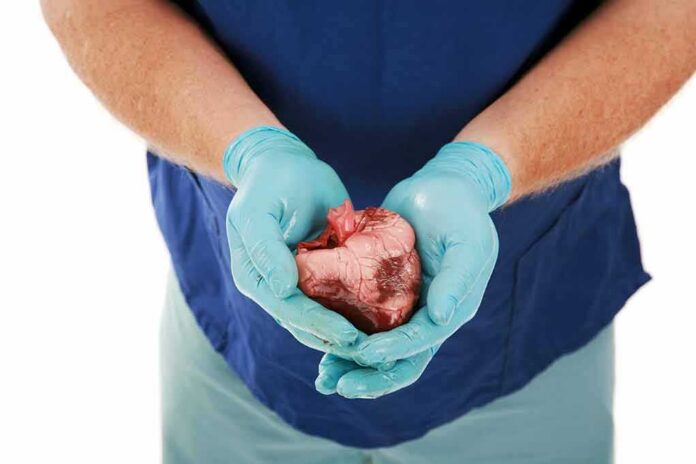
A single deceased donor can save multiple lives; heart, liver, two kidneys, and pancreas are often recoverable in young, otherwise healthy donors, with additional impact through tissue donation. Media reports citing law enforcement and family sources indicated that Suarez’s organs went to five recipients — a figure that squares with standard multiorgan recovery patterns in donors her age and clinical circumstance. In practice, once brain death is declared and authorization is in place, the OPO enters the donor’s clinical data into the Organ Procurement and Transplantation Network (OPTN) system, matches organs to candidates by medical urgency, compatibility, and geography, and orchestrates a tightly timed sequence of operating room recoveries and transplant implantations often spanning several hospitals.
The reason this matters is not symbolic alone. Each successful transplant removes a patient from a national waiting list where thousands die annually for lack of suitable organs. The presence of life support before death and rapid transition to procurement are what preserve organ viability; far from being incidental details in the Suarez narrative, they are the mechanism that made donation possible at all.
Balancing Two Domains of Fact: Criminal Case and Medical Privacy
The Suarez story sits at the intersection of two evidentiary cultures. Homicide investigations prize transparency that can be tested in court: arrest affidavits, charging instruments, and chain-of-custody records. Transplantation, by contrast, is deliberately opaque to the public at the level of personal detail: OPOs and transplant centers are bound by privacy law to avoid disclosures that could identify donors or recipients, even inadvertently. The result is a familiar asymmetry. The who-what-where of the crime can be stated with precision and corroborated in open sources; the who of the recipients cannot. What remains appropriate for public accounting is the clinical pathway — hospital death, determination of brain death, artificial support, and multiorgan recovery — and the aggregate claim of lives saved. On those terms, the reporting about five recipients stands as both plausible and consistent with how the system functions.
That separation is healthy. It prevents the emotional power of the homicide narrative from standing in as “proof” of transplant outcomes, and it avoids the inverse error of letting necessary privacy shroud the public’s understanding of how, concretely, donation after death rescues patients on waiting lists.
Katie Suarez had her life brutally taken from her while jogging in Brooklyn. Yet, even in death, she gave five other people a chance to live through organ donation.
Five lives saved.
What an extraordinary final gift from a young woman whose own life was cut so tragically short.… https://t.co/v5lyd2VK2X
— Sam E. Antar (@SamAntar) November 8, 2026
What This Means — For Safety, Systems, and Legacy
No policy brief can reverse a fatal street crime, but the through-lines here are instructive. Urban running corridors that lack fixed cameras and lighting complicate investigations; cities that have invested in targeted infrastructure — lighting, emergency call points, limited-access segments with surveillance, and predictable patrol patterns — generally hand detectives better starting material when violence occurs. On the medical side, the transplantation system did what it is designed to do: when a young, otherwise healthy person dies in a hospital after irreversible neurologic injury, OPOs and transplant centers move quickly to turn potential into transplants. The test of that system’s integrity is not whether the public knows a recipient’s name; it is whether the chain from declaration of death to organ recovery adhered to clinical and ethical norms, and whether viable organs reached appropriate candidates safely and on time.
For families, the juxtaposition is wrenching but often clarifying. Donation does not heal the wound, but it offers a tangible legacy measured in transplanted hearts that keep beating and kidneys that spare someone dialysis — outcomes as real, and as verifiable within the protected transplant ecosystem, as any court record. In Katie Suarez’s case, the criminal process will proceed on its own evidentiary track. The lives reportedly saved through her donation represent the parallel triumph of a system that exists precisely for moments like this — when medicine can answer violence with life.
Sources:
nypost.com, nydailynews.com, people.com, runnersworld.com, newsweek.com