
Accountability in modern air wars turns on a simple proposition: when civilians are killed in broad daylight at a marketplace, the chain of command behind the strike must be identified and tested against the law; that is exactly what UN investigators now seek to do in Myanmar.
The Short Version
- A midday airstrike near Kyauktaw’s market in Myanmar’s Rakhine State killed at least 49 people and injured 58, according to contemporaneous reports from rescue personnel and local authorities.
- The UN’s Independent Investigative Mechanism for Myanmar (IIMM) is soliciting information to identify the pilots and commanders involved, framing the incident as a potential serious international crime.
- The strike fits a broader, documented pattern of Myanmar military aerial operations impacting civilians and protected sites across multiple regions.
- The IIMM has built multi-source case files on aerial attacks countrywide and says it has already identified some responsible units and command structures.
What Happened in Kyauktaw and Why It Matters
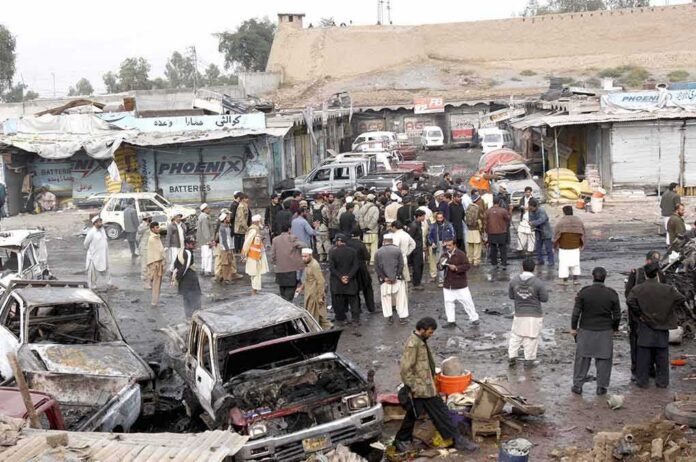
On a late September afternoon, an air-delivered munition exploded near a functioning market in Kyauktaw, Rakhine State, killing dozens and injuring many more. Rescue workers on scene reported at least 49 fatalities and 58 wounded, with the dead described as vendors, shoppers, and passersby in the vicinity of the marketplace at the time of the blast. Initial tallies and detail came through established international outlets drawing on a local rescue official and area authorities, providing a rapid but consistent picture of a mass-casualty incident centered on a civilian area. The locus of harm—a market operating during trading hours—places the event squarely in the analytical frame of the laws of armed conflict: distinction, proportionality, and precaution.
The IIMM, the UN-mandated body charged with collecting, preserving, and analyzing evidence of serious international crimes in Myanmar since 2011, responded with a targeted request: help identify the pilots and any individuals who ordered or carried out the operation. This is not a symbolic gesture. The Mechanism has repeatedly emphasized individual criminal responsibility—pilots, operations officers, squadron commanders, air force leadership—where evidence supports direct participation, ordering, or superior responsibility for unlawful attacks. When a mass-casualty strike hits a civilian marketplace, the question shifts from whether the event warrants scrutiny to how quickly investigators can assemble a defensible chain of evidence.
How Accountability Is Built in Aerial Cases
Modern atrocity investigations do not rely on any single strand of proof. The IIMM’s methodology layers witness testimony with open-source intelligence (OSINT), satellite and aerial imagery, weapons-effect forensics, radio intercepts where available, unit movement logs, aircraft spotter data, and documentary records. The goal is not merely to show that a strike occurred but to attribute it to a specific aircraft type, base, sortie window, and command authorization—then map that onto named individuals. In its public reporting, the Mechanism has stated it draws on more than a thousand sources across cases and has, in some instances, already identified responsible units and their command hierarchies. Requests for pilot names and orders in the Kyauktaw case are therefore parts of a larger evidentiary architecture, not the architecture itself.
Attribution in air operations typically follows a progression. First, establish the incident parameters: time on target, munition characteristics, pattern of damage, and victim profile. Second, correlate those with known aircraft availability and flight patterns—what platforms were capable of delivering the observed effects, which airbases or forward strips could generate the sortie, and which units were on tasking cycles that day. Third, examine doctrine and prior operational behavior: has the unit demonstrated target selection practices inconsistent with distinction? Finally, test potential defenses—military objective claims, presence of combatants, or collateral damage estimates—against the observed facts. Each rung is about narrowing uncertainty until responsibility can be assigned with prosecutorial confidence.
The Pattern: Aerial Operations and Civilian Harm in Myanmar
The Kyauktaw market strike is not an outlier in the country’s conflict trajectory. Over recent reporting cycles, the IIMM has documented an increase in aerial attacks affecting civilian objects—villages, schools, religious buildings, displacement camps, and medical facilities—alongside a broader catalogue of abuses. Its annual and periodic bulletins describe a Myanmar military increasingly reliant on airpower and low-cost airborne platforms to project coercive force across contested terrain, with civilian casualties recurring across theaters. The Mechanism’s public findings characterize some of these attacks as deliberate or indiscriminate, signaling potential violations of core tenets of international humanitarian law where civilian objects were not spared and feasible precautions appear absent.
Context matters because patterns illuminate intent and foreseeability. When multiple strikes over time hit marketplaces, homes, or clinics, the argument that such outcomes are tragic anomalies weakens; investigators look for systemic drivers—targeting practices, rules of engagement, or command tolerance for civilian risk. That is the evidentiary backdrop against which Kyauktaw will be read: not in isolation but as a data point in a mapped sequence of aerial conduct and its human toll.
Arakan records most junta airstrikes as 214 civilians killed across Myanmar: BNI
Arakan recorded the highest number of Myanmar military junta airstrikes nationwide during a four-week period, while 214 civilians were killed in conflict-related violence across the country,… pic.twitter.com/3FurXOy8GS
— Maung Khin Zaw (@MaungKhinZaw4) October 27, 2026
Law on the Ground: Distinction, Proportionality, and Precautions
International humanitarian law, binding on all parties to armed conflict, imposes three operational guardrails with special salience in air campaigns. Distinction requires directing operations only against military objectives; civilians and civilian objects—markets included—are protected unless and for such time as they are used for military purposes. Proportionality prohibits attacks where expected incidental civilian harm would be excessive relative to the concrete and direct military advantage anticipated. Precautions demand attackers take feasible steps—weapon selection, timing, approach vectors, and abort criteria—to minimize civilian harm. A strike that kills vendors and shoppers at midday burdens any claim of lawfulness: the attacker would need to articulate a legitimate military objective present at the site, show the harm was not excessive against that objective, and demonstrate meaningful precautions. The casualty profile in Kyauktaw and the nature of the location sharpen those tests considerably.
What the IIMM Is Asking For—and What Comes Next
The Mechanism’s public call seeks granular inputs: names of pilots, aircrew, ground controllers, operations officers, and commanders linked to the sortie; orders and tasking documents; radio logs; and any imagery or telemetry that can anchor timing and platform identification. It also welcomes civilian accounts, photographs, and videos that can be geolocated and time-stamped to reconstruct the event. Such crowd-sourced contributions can be decisive when paired with technical analysis—muzzle flash timing, shadow angles, blast signatures, and debris fields—to lock down incident parameters.
Downstream, verified evidence can feed several legal pathways. The IIMM’s mandate is to prepare case files for use by competent courts—domestic jurisdictions with universal or extraterritorial jurisdiction statutes, ad hoc tribunals, or other mechanisms authorized to try serious international crimes. Even short of immediate prosecutions, credible attribution alters the strategic calculus: it raises the personal exposure of named officers, constrains international support to implicated units, and informs targeted sanctions and arms-transfer decisions.
Why This Case Is a Bellwether
Kyauktaw will test whether a well-documented mass-casualty strike on a quintessentially civilian site can be translated into individual accountability within a fragmented conflict. The IIMM has already shown it can connect aerial incidents to specific command chains in other contexts; applying that rigor here would both address victims’ demands for justice and signal that daytime market strikes will not dissolve into the fog of war. The mechanism’s accumulated record on Myanmar’s air operations—breadth of incidents, depth of analysis, identification of units—gives it the tools to try. What it needs now are the last-mile details: names, orders, and data that stitch an undeniable narrative from cockpit to crater.
Sources:
thegatewaypundit.com, assamtribune.com, etnownews.com, khrg.org, info-res.org, en.wikipedia.org, iimm.un.org, apnews.com