Immigration fights often devolve into slogans about “amnesty” or “deportation,” but the real leverage point is far more technical: what happens to a final removal order as years pass and lives take root. The Protect Our Neighbors Act targets that hinge, proposing a defined, rule-bound sunset for certain old orders rather than a blanket pardon—and that design choice, not the rhetoric around it, is what actually matters.
The Short Version
- The bill would set a 10-year expiration for certain final removal orders tied to long-term presence and a clean criminal record.
- An immigration judge could renew an order in exceptional cases under a high “clear and convincing evidence” standard.
- Relief is coupled to a legal pathway: eligible people could seek lawful permanent residence instead of living in indefinite limbo.
- Critics label the plan “amnesty,” but the evidence shows bounded eligibility and judicial review, not unconditional mass legalization.
What the proposal actually does—and does not do
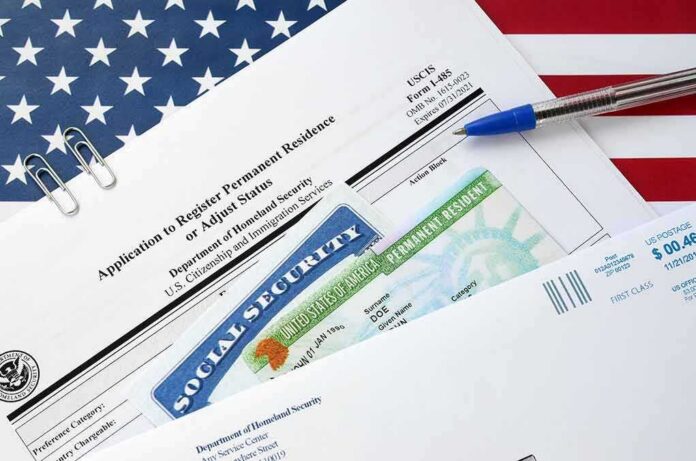
Under current federal law, a final order of removal never expires; it can trail a person indefinitely, even as cases age, families form, and conditions change. The Protect Our Neighbors Act would impose a 10-year expiration for individuals who have remained continuously in the United States and have no criminal conviction; the expiration would not be automatic in every case, because immigration judges could renew an order if the government proves by clear and convincing evidence that a substantial, non-administrative reason for the delay exists and that renewal serves the public interest based on new evidence. The legislation, as described, pairs this time limit with a defined path to lawful permanent residence for those whose orders lapse under the statute—an adjustment mechanism, not a mere pause in enforcement.
Two boundaries are central. First, eligibility turns on continuous presence and the absence of a conviction; people who arrived more recently or who have been convicted of crimes would not qualify under the reported criteria. Second, the government retains a renewal tool aimed at truly exceptional circumstances—one that is intentionally demanding: “clear and convincing” is a high evidentiary bar in civil adjudication, sitting above the more common “preponderance” threshold. As described, this is a targeted recalibration of how very old orders function, not a switch that invalidates the immigration code.
Why time limits on removal orders are on the table
Final orders do not exist in a vacuum; they live inside a chronically overburdened adjudication system. Backlogs, shifting enforcement priorities, resource constraints, and limited docket control at the immigration courts mean cases can drift for years after a decision, often with neither swift deportation nor meaningful integration following. A statute that attaches consequences to the mere passage of a decade—conditional on conduct (no convictions) and on judicial backstops—seeks to resolve that limbo by converting extreme stasis into a decision point: either the government shows exceptional cause to renew, or the individual becomes eligible to normalize status.
There is historical rhyme here. When Congress has legalized defined groups in the past, it has typically tethered eligibility to sustained residence and screening. The 1986 Immigration Reform and Control Act (IRCA) legalized roughly 2.7 to 3 million people through programs that demanded proof of residence, background checks, and a staged process toward permanent status. Approval rates were high among filed cases, but administrative complexity and eligibility cutoffs excluded many who might otherwise have qualified. The present proposal borrows that logic of time-and-ties criteria and couples it to a judicial safety valve—another signal of bounded design rather than an indiscriminate sweep.
Parsing the “amnesty” charge
Opponents have framed the measure as a mass amnesty that rewards people for waiting out the clock, and some commentary layers on an electoral motive claim—that Democrats intend to mint future voters. On scrutiny, these criticisms conflate distinct mechanisms. The bill, as described by mainstream reporting, does not erase all orders; it conditions expiration on a decade of continuous presence and a clean conviction record and preserves a court-led renewal process under a high standard of proof. That is a materially different architecture than unconditional forgiveness. The “future voters” claim is rhetoric, not evidence in the cited material; nothing in the sourcing ties the design of expiring orders to substantiated electoral engineering.
Reasonable policy disagreement remains: skeptics can argue that any expiration will change incentives at the margins, that convictions do not capture all public-safety risk, or that delays may be litigant-driven. Those are fair questions to press in committee and implementation. But labeling a time-limited, criteria-bound, judge-checkable mechanism as undifferentiated amnesty sheds more heat than light—and it obscures the core trade-off between perpetuating administrative limbo and converting aged cases into adjudicated legal status with screening.
Mechanics that will decide whether it works
The bill’s efficacy will rise or fall on design details not yet fully public in the reporting. Three hinge points deserve attention. First, exclusions and security screens: how does the statute treat pending charges, arrests without conviction, immigration fraud indicators, gang databases, or national-security flags? The no-conviction criterion is clear; the rest needs text. Second, causation for delay: the renewal standard excludes administrative or funding lags, but mixed-cause cases are common—unavailable travel documents, litigation, and foreign-government noncooperation can tangle with agency backlog. Clear guidance for judges on attributing delay will be essential. Third, the adjustment pathway’s architecture: admissibility rules, waiver standards, fraud detection, and appeal rights will determine whether the promised legal route is rigorous, fair, and operationally feasible.
Capacity and sequencing matter just as much. USCIS would likely shoulder the status-adjustment workload; without resources and workflow modernization, backlogs could simply migrate from enforcement to benefits processing. Implementation that ties eligibility verification to digitized records, risk-based interview scheduling, and interagency vetting can prevent that. Congress has learned—often the hard way—that legalization programs fail when documentation standards are mismatch to reality or when application windows and guidance are too rigid for people with decades-old footprints.
What history suggests about consequences
Past large-scale regularizations have produced a mix of outcomes: clearer labor-market participation and tax compliance for those who adjust; negligible evidence of crime surges among screened cohorts; and administrative growing pains when agencies confront surges without modernized systems. Public opinion tends to polarize, but it is more elastic than partisans assume; when voters are exposed to the actual complexity of immigration rules and the administrative burdens they impose, support for pragmatic reforms can rise modestly, suggesting that specificity—not slogans—moves attitudes at the margin. Against that backdrop, a targeted sunset for decade-old orders coupled with a high-bar renewal mechanism sits within the mainstream of how the United States has historically converted long-term, low-risk unauthorized residence into lawful status—through criteria, screening, and adjudication, not through a wand wave.
None of this guarantees enactment. Even well-crafted proposals can stall for reasons unrelated to policy merit: committee bottlenecks, cross-chamber friction, and the simple fact that legalization fights trigger base mobilization on both sides. But if the question is whether the Protect Our Neighbors Act, as described, is indistinguishable from “amnesty,” the evidence says no. It is a rules-based attempt to close a loophole of a different sort—the one that traps people and agencies in endless aftercare for cases the system cannot or will not bring to final resolution.
House Democrats, led by California Rep. Lateefah Simon, are introducing the Protect Our Neighbors Act. It would make final orders of removal expire 10 years after issuance for individuals continuously present in the U.S. with no criminal convictions, and create a pathway to…
— Keith Ainsworth (@AinsworthKeith) November 19, 2026
How to evaluate it going forward
Judge the idea on verifiable design: the statutory text’s eligibility and exclusion lists; the clarity of the “clear and convincing” renewal test; DHS, EOIR, and USCIS implementation plans; and credible estimates of the actually eligible population. Then demand metrics that matter: subsequent conviction and arrest rates among adjustees; employment and tax participation; adjudication timelines; fraud-referral volumes; and the share of renewals granted and denied. That is how to separate a principled recalibration of stale orders from either wishful thinking or fearmongering. On immigration, the mechanism is the message.
Sources:
pjmedia.com, abcnews.com, amgreatness.com, lifezette.com, immigration-analytics.com, redstate.com, en.cibercuba.com, sureno.ai