Vanity Fair’s proposal to feature Melania Trump on its cover has ignited a fierce backlash, revealing deep-seated media biases and cultural divides.
Story Snapshot
- A large portion of Vanity Fair’s staff threatened to resign over a proposed Melania Trump cover.
- Melania Trump immediately declined the offer, reportedly laughing it off.
- The incident highlights media bias and cultural polarization post-2024 elections.
- Vanity Fair faces internal discord and public scrutiny over editorial decisions.
Staff Revolt Over Proposed Cover
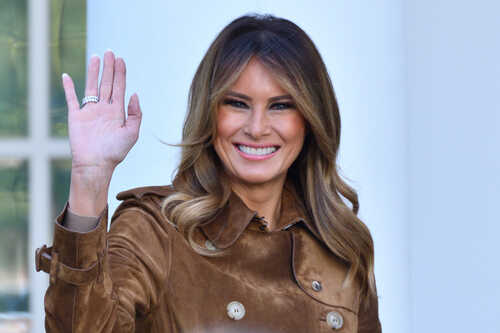
In July 2025, Vanity Fair’s new global editorial director, Mark Guiducci, extended an invitation to First Lady Melania Trump to feature on the magazine’s cover. According to reporting from The Independent, several Vanity Fair staff members expressed strong opposition to the proposal, with some reportedly threatening resignation if the cover was approved. Media analysts such as Dr. Jeffrey McCall, professor of communication at DePauw University, noted that the opposition was linked to Melania Trump’s association with former President Donald Trump, whose polarizing reputation continues to influence editorial decisions in major U.S. publications.
The story encapsulates the ongoing cultural polarization surrounding the Trump family, reflecting deeper media biases and ideological divides that have been in play since Donald Trump’s presidency.
Historical Context and Media Bias
Since Donald Trump’s first term, major lifestyle magazines have largely avoided featuring Melania Trump, despite her background in modeling. This contrasts sharply with the frequent coverage of other First Ladies, notably Michelle Obama. Media scholars, including Dr. Kathryn Cramer Brownell of Purdue University, have observed that lifestyle outlets’ limited coverage of Melania Trump has frequently been interpreted as a reflection of political bias, a perception underscored by this latest controversy.
The refusal to feature Melania Trump during her first tenure as First Lady, and the subsequent revolt over a proposed cover in 2025, underscores the ongoing media bias and cultural polarization that has intensified post-2024 elections. This is part of a broader “post-COVID cultural swing to the right,” with media outlets reconsidering their editorial stances.
Implications for Vanity Fair and Media Landscape
This incident has far-reaching implications for Vanity Fair and similar legacy publications. In the short term, Vanity Fair avoids an immediate staff walkout but faces public scrutiny over internal discord and editorial independence. For Melania Trump, the episode reinforces her image as independent from mainstream media validation.
In the long term, the episode may accelerate editorial realignment at legacy publications, with increased polarization between staff and management. Experts like Nicole Hemmer, historian of U.S. media and politics at Vanderbilt University, caution that such disputes may influence future editorial decisions regarding politically polarizing figures, raising questions about the balance between newsroom autonomy and editorial leadership.
Sources:
InDaily QLD (News summary, staff reactions, editorial context)
The Independent (Staff quotes, editorial direction, media analysis)
The Telegraph (Political reactions, Melania Trump’s response)
Fox News (Melania Trump’s rejection, staff threats)