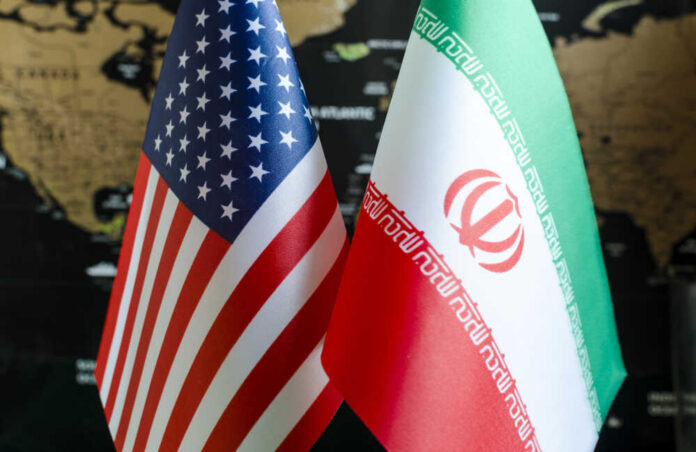
VP JD Vance declared “great progress” in the first round of U.S.-Iran nuclear talks in Switzerland — but Iran still refuses to give up uranium enrichment, leaving the hardest fight ahead.
Story Snapshot
- Vance led the first face-to-face U.S.-Iran nuclear talks in Switzerland, calling them “historic” and saying both sides made major progress in just hours.
- The existing deal is a 14-point framework — it freezes the ceasefire for 60 days but leaves the biggest nuclear questions unanswered.
- Iran’s president says his country will “never” give up its right to enrich uranium, the core sticking point in any final deal.
- The Trump team says Iran gets no economic rewards unless it follows through — sanctions relief and frozen assets are tied to verified compliance.
Vance Calls Swiss Talks a Historic First Step
Vice President JD Vance traveled to a Swiss resort near Lake Lucerne on Sunday, June 22, 2026, to lead the first direct U.S.-Iran nuclear talks in history. He met with Iran’s Foreign Minister Abbas Araghchi and parliamentary speaker Mohammad Bagher Qalibaf. Vance told reporters the session represented “the beginning of a technical negotiation” — not a final deal, but a real start to working through the toughest issues between the two countries.[3]
A senior U.S. diplomat said the team had “substantial discussions on all aspects of the nuclear deal” and planned to keep working through the night. The diplomat called the day’s work “a foundation for ongoing technical discussions.” Qatari and Pakistani mediators also took part, reflecting the broad diplomatic push the Trump administration has built to support the talks.[6]
What the Current Deal Actually Says
The agreement signed by President Trump and Iranian President Masoud Pezeshkian is a 14-point Memorandum of Understanding — roughly a page and a half long. Vance himself called it “very vague.” It extends the ceasefire by 60 days, reopens the Strait of Hormuz to commercial shipping toll-free, and allows Iran to sell oil freely. Iran also gets access to some frozen assets. In return, Iran reaffirms it will not develop nuclear weapons.[5]
The deal does not spell out what happens to Iran’s stockpile of enriched uranium. It says both sides “agreed to resolve the disposition of stockpiled enriched material” and sets a minimum standard of “downblending” some of that uranium under International Atomic Energy Agency (IAEA) supervision. But it does not name specific amounts, does not mention centrifuges, and does not set a hard deadline for removal. Those details are left for the 60-day technical talks now underway.[19]
Iran’s Demands Could Derail a Final Deal
The biggest obstacle is uranium enrichment. Iranian President Pezeshkian stated flatly that Iran will “never relinquish our right to enrich uranium.” That directly clashes with the U.S. position. The Trump team pushed for Iran to shut down enrichment on its own soil entirely, proposing instead that civilian enrichment happen in a regional consortium in neighboring countries under international supervision.[1]
🚨 𝗕𝗥𝗘𝗔𝗞𝗜𝗡𝗚: 𝗪𝗛𝗢’𝗦 𝗜𝗡𝗦𝗜𝗗𝗘 𝗜𝗥𝗔𝗡’𝗦 𝗗𝗘𝗟𝗘𝗚𝗔𝗧𝗜𝗢𝗡 𝗔𝗧 𝗧𝗛𝗘 𝗦𝗪𝗜𝗦𝗦 𝗧𝗔𝗟𝗞𝗦?
🇮🇷 As high-stakes U.S.–Iran peace talks begin in Switzerland, attention is shifting to the powerful figures representing Tehran — a delegation packed with political,… pic.twitter.com/Sa3eUBZB2e
— 🦋 Laraib Fatima 🦋 (@Laraib_Fatiima) June 21, 2026
Iran’s nuclear program has grown significantly since the original 2015 deal collapsed. By May 2025, the IAEA confirmed Iran held over 400 kilograms of uranium enriched to 60% purity — nearly weapons-grade — a nearly 50% jump in just a few months.[14] Iran also declared the 2015 deal fully expired in October 2025 and said it was no longer bound by any of its limits.[10] That history makes verification the central challenge. Vance said nuclear inspectors would “definitely” be allowed back into Iran as part of any final deal, but Iran has not yet agreed to that on the record.
Trump’s Team Says Performance Drives the Rewards
The Trump administration has been clear: Iran gets benefits only if it delivers. Sanctions relief and asset releases are tied to verified steps, not promises. Vance said at his press briefing that if Iran does not change its behavior, “their military and their nuclear program is still destroyed.” He added that the final deal requires Iran to stop funding regional terrorism and to behave “like a normal country.”[3]
The deal also requires Iran to stop attacking Kurdish opposition groups — something Iran violated just days before the talks began. The 60-day window is tight. Both sides have agreed to a roadmap for a final deal, but the core fights over enrichment, inspections, and sanctions sequencing are still wide open. The Trump team’s pressure-first approach is the right instinct — but the next 60 days will show whether Iran is serious or simply buying time.
Sources:
[1] Web – BREAKING: VP Vance announces major progress made by the United States …
[3] YouTube – ‘Great progress’ at US-Iran talks says US Vice-President JD Vance
[5] Web – ‘High drama’ over Trump threats and Lebanon at US-Iran talks in …
[6] Web – Trump may release US-Iran deal before Friday, Vance says – BBC
[10] Web – U.S. and Iran agree to ‘roadmap’ for final deal, mediators say – NPR
[14] Web – What Is the Iran Nuclear Deal? | Council on Foreign Relations
[19] Web – Iran nuclear agreement: Congressional review – Ballotpedia