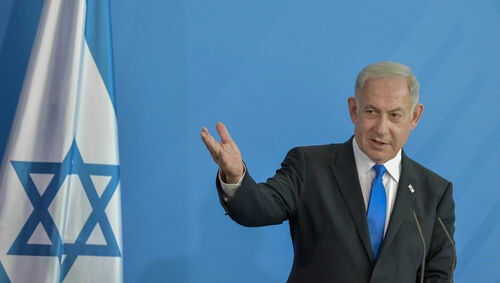
As a ceasefire framework struggles to hold, an Israeli minister’s “all of Lebanon must burn” demand risks a wider war and tests U.S. leadership.
Story Highlights
- Israeli National Security Minister Itamar Ben-Gvir urged massive strikes on Lebanon after four Israeli soldiers were killed [7].
- His comments challenged U.S. de-escalation efforts tied to a reported U.S.-Iran arrangement to cool the front with Hezbollah [7].
- Other Israeli politicians echoed hardline rhetoric, signaling pressure on Prime Minister Benjamin Netanyahu to escalate [1][7].
- The administration must balance support for Israel’s defense with strict focus on American interests and avoiding mission creep.
What Ben-Gvir Said And Why It Matters Now
Israeli National Security Minister Itamar Ben-Gvir wrote that “all of Lebanon must burn” after Israel announced four soldiers were killed in southern Lebanon. He framed the demand as a duty to protect citizens and warned against “measured” responses. He also signaled defiance of American pressure with the phrase, “With all due respect to the Americans.” The comments landed as Washington tries to keep a fragile calm between Israel and Hezbollah tied to broader talks with Iran [1][7].
Finance Minister Bezalel Smotrich echoed the same hard line. He urged Israel to “open the gates of hell,” and called for a more sweeping campaign against terror groups. Opposition figure Avigdor Lieberman called for a “heavy price” to be exacted in Lebanon. These statements show a real push inside Israel’s politics to expand strikes and reject narrow rules of engagement. That pressure box can complicate any ceasefire or quiet arrangement that depends on restraint from both sides [7].
The Ceasefire Framework And The Risk Of Spillover
Reports say the soldiers’ deaths were the first Israeli losses announced since a U.S.-Iran deal was described as helping end the broader war and slow fighting with Hezbollah. Washington has shown frustration over continued Israeli operations near Lebanon under that framework. If senior officials in Jerusalem champion maximalist action, then diplomatic space shrinks. That raises the chance that border clashes morph into a larger fight that pulls in more actors and hurts deterrence stability [3][7].
Video segments and regional reports tracked fresh strikes and renewed clashes near the same period. Lebanese officials cited deaths and injuries overnight while Israel reported its own combat losses. While timing is close, the record does not prove that Ben-Gvir’s words caused the next strikes. But the rhetoric undercuts de-escalation signals that diplomats need to hold a line. Hot language in a crisis often adds fuel, not clarity, to battlefield decisions [9].
What This Means For U.S. Policy And American Interests
The United States stands with Israel’s right to defend itself from Hezbollah rockets and raids. At the same time, Americans remember the cost of open-ended commitments and vague goals. The administration must back Israel’s self-defense while drawing a clear red line against any expansion that drags U.S. forces or treasure into a grinding regional war. Support should focus on missile defense, intelligence sharing, and narrow deterrence—not on endorsing sweeping calls to “burn” a country [7].
Conservatives value strength with discipline. That means pressuring Iran’s network, keeping sanctions tough, and arming allies to win short fights fast. It also means rejecting globalist deals that excuse terror. Yet it rejects collective punishment rhetoric that hands propaganda wins to Iran and its proxies. Washington should press for specific, lawful target sets tied to active threats, push partners to limit civilian harm, and keep the mission centered on American security first, last, and always [12].
How Israel Can Deter Hezbollah Without Triggering A Wider War
Israel can pair firm strikes on verified Hezbollah assets with tighter rules to protect civilians. Clear goals, like degrading specific rocket units and supply routes, work better than vague promises to “go wild.” Precision targeting, timely warnings where possible, and visible restraint when threats are not imminent reduce blowback and keep U.S. support strong. Discipline on messaging also matters. Leaders should condemn terror and pledge defense—not threaten an entire nation, which muddies moral authority [12].
🔴 ESCALATION RISK: BEN-GVIR DEMANDS LEBANON BURN AFTER IDF LOSSES 🇮🇱🇱🇧
Following the death of 4 IDF soldiers in SOUTHERN LEBANON, ITAMAR BEN-GVIR called for total destruction. IRAN quickly condemned the rhetoric, labeling the ISRAELI leadership a global threa…
— OSN – Observer Security Network (@OSN_Reports) June 19, 2026
For American readers, the bottom line is simple. Hezbollah and Iran’s regime are the problem. Israel has the right to hit real threats hard. But language that signals total war across Lebanon risks breaking the guardrails that prevent a larger conflict. The White House should keep aid focused, set firm conditions, and ensure every action lines up with U.S. law, the Constitution, and common sense. Strength works best when it is precise, lawful, and aimed at victory—not chaos [7].
Sources:
[1] Web – ‘All of Lebanon must burn’: Israeli gov’t extremist defies peace …
[3] Web – Israel’s inflammatory minister calls for “all of Lebanon to burn”
[7] Web – Israel’s National Security Minister says all of Lebanon must burn
[9] Web – Israel’s National Security Minister says all of Lebanon must …
[12] Web – Israel’s National Security Minister says all of Lebanon must burn