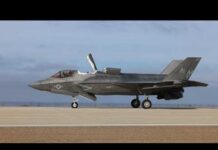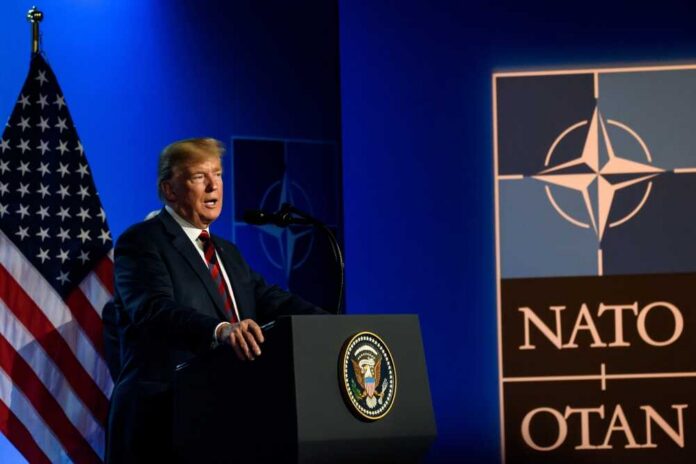
Washington is weighing whether to hand one of America’s most advanced warplanes to a government that bought Russian missiles, shelters Hamas leaders, and courts China—all at the same time.
Story Snapshot
- Turkey was removed from the F-35 fighter program after buying Russia’s S-400 air defense system, and U.S. law still bans its return while it owns those missiles.
- American officials warn that operating Russian S-400s near F-35s could help Moscow learn how to spot and shoot down U.S. and allied jets.
- Turkey’s support for Hamas since the October 7 attacks raises moral questions about selling it top-tier American weapons.
- Bipartisan members of Congress, plus key U.S. allies like Israel and Greece, strongly oppose letting Turkey back into the F-35 program.
Why Turkey Was Kicked Out Of The F-35 Program
Turkey was once a full partner in the F-35 project, even helping build parts for the jet and ordering 30 aircraft of its own. That changed after Ankara bought the Russian S-400 air and missile defense system in 2017 and began taking deliveries in 2019. U.S. and North Atlantic Treaty Organization leaders said a Russian-made radar built to spot stealth jets could not sit inside the same ecosystem as the F-35 without risking American secrets. In 2019, Washington removed Turkey from the program and later imposed sanctions over the S-400 purchase.
Congress then locked this break into law. Section 1245 of the 2020 National Defense Authorization Act says Turkey cannot rejoin the F-35 program unless it no longer possesses the S-400 and gives “credible assurances” it will not buy similar Russian systems again. U.S. officials stress this is not just a policy choice but a legal wall. The F-35 is a shared system across 19 countries, so any data the jet sends or receives could be exposed if linked, even indirectly, to a Russian intelligence platform. For many, this is a red line, not a bargaining chip.
Russia’s S-400, F-35 Secrets, And A Deep Trust Problem
Security experts warn that the S-400 was built in part to track and kill advanced stealth jets like the F-35. If the Russian system operates near F-35 flights, it could quietly collect radar data on how the jet appears in the real world. That information could help Russian forces or partners adjust their radars and missiles to detect U.S. aircraft that are supposed to be nearly invisible. Analysts worry Moscow could demand access to S-400 data as the price of future support or upgrades for Turkey’s batteries.
There is no public proof that Turkey has directly linked its S-400s to F-35 systems or sent F-35 data to Russia. Turkish leaders say the S-400s are currently not deployed and would remain separate from Western networks. Some in Ankara even argue that storing the missiles inactive reduces the risk and should satisfy Washington. But critics respond that the core issue is not whether the system is switched on today. The danger is that one future political decision in Ankara—or in Moscow—could flip the switch and expose a generation of U.S. and allied pilots.
Hamas, China, And The Moral Case Against The Sale
Turkey’s stance toward Hamas adds another layer of concern. After the October 7, 2023 attacks on Israel, President Recep Tayyip Erdogan continued to host and back Hamas leaders, offering political and financial support even as Americans watched brutal footage from southern Israel. Policy analysts argue this makes it hard to justify giving Ankara some of the most advanced U.S. strike aircraft ever built, especially while Israel, a close American partner, faces rockets and raids from that same group. Critics say arming such a government sends the wrong moral signal.
ERDOGAN’S NATO POWER PLAY RAISES ALARMS IN ISRAEL AS TURKEY’S INFLUENCE SURGES
Turkey is preparing to host NATO’s annual summit in Ankara with 52 world leaders, thousands of journalists, and a massive security operation — a stage President Recep Tayyip Erdogan hopes will… pic.twitter.com/5esUJgBP4g
— Mossad Commentary (@MOSSADil) July 4, 2026
Some experts also flag a broader risk: Turkey’s complex ties with rivals like Russia and China. Ankara has increased energy and trade links with Moscow and deepened economic ties with Beijing, even as it remains in the North Atlantic Treaty Organization. Opinion pieces ask whether any leader, including Erdogan, can truly guarantee that F-35 know-how would never leak—in whole or in part—to Russia, China, Iran, or even North Korea. There is no public evidence of such leakage today, but many in Washington do not want to run that experiment with America’s front-line fighter.
Congress, Allies, And A Rare Moment Of Bipartisan Skepticism
The sharpest resistance to giving Turkey F-35s now comes from Congress. In August 2025, forty members from both parties signed a letter urging the State Department to reject Ankara’s request to reenter the program, citing the S-400 issue, Hamas ties, and Turkey’s crackdowns on domestic critics. A later policy alert by a Washington think tank argued that Turkey has not met the law’s conditions and that any sale would reward bad behavior and weaken U.S. leverage. With Republicans and Democrats both wary, it is hard for any White House to cut a quiet deal.
Key American allies in the region share those doubts. Israel and Greece, both uneasy about Turkish military moves, warn that F-35 sales to Ankara could tilt the local balance of power and put their own forces at risk. Their air forces either already fly the F-35 or plan to, so they worry about a neighbor that operates Russian sensors and supports groups they see as direct threats. When U.S. partners on both sides of the political divide raise alarms, many Americans read it as another sign that the system is not putting their security first.
Is Washington Protecting Security Or Feeding The “Deep State”?
Behind these technical debates sits a deeper anger many Americans share. People on the right see years of “globalist” deals that sent jobs and defense contracts overseas while elites in Washington and big companies cashed in. People on the left see weapons sales used as leverage while basic needs at home go unmet and wars never seem to end. The F-35 saga with Turkey touches both frustrations: a massive joint program run by a giant contractor, billions on the line, and decisions made in rooms far from ordinary voters.
Some observers suspect that the same defense industry that lost Turkish work in 2019 now enjoys having tighter control of the project and less foreign competition. Others point to social media and big news outlets, which often highlight only one side of the story and bury questions about grand strategy or long-term cost. But even critics of the so-called “deep state” can agree on one hard fact: once F-35 technology and data are shared, they cannot be taken back. In a world of rising powers and shaky alliances, many argue that giving that edge to a partner flirting with Russia, Hamas, and China is a gamble America’s leaders have no right to make on the public’s behalf.
Sources:
realcleardefense.com, breakingdefense.com, jinsa.org, youtube.com, reddit.com, newsweek.com, thehill.com, turkishminute.com, x.com, japcc.org