
The Supreme Court just erased a 50‑year guardrail on money in politics, letting party machines and big donors work together like never before.
Story Snapshot
- A 6–3 Supreme Court ruling in NRSC v. FEC struck down federal limits on political party spending coordinated with candidates.
- Republicans and the Trump administration call it a First Amendment win that treats campaign money as protected political speech.
- Justice Kagan’s dissent warns the decision opens the door to “quid pro quo corruption” by turning parties into alternative bank accounts for campaigns.
- The ruling continues a 50‑year trend of the Court weakening campaign finance laws, deepening fears that elites now fully control elections.
What The Court Did In NRSC v. FEC
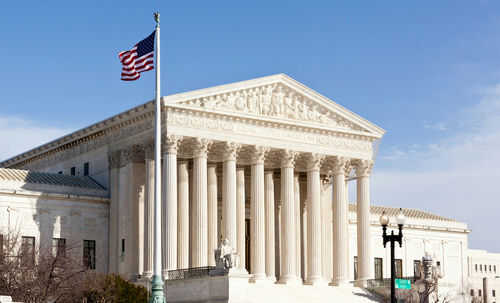
In National Republican Senatorial Committee v. Federal Election Commission, the Supreme Court struck down the federal cap on how much a political party can spend in direct coordination with its candidates. The case challenged a post‑Watergate rule that treated coordinated party spending like a campaign contribution and limited it to prevent corruption. Justice Brett Kavanaugh wrote the majority opinion, and the Court split 6–3 along ideological lines. The ruling means party committees can now make essentially unlimited coordinated expenditures to boost their chosen candidates.
The Trump administration and Republican committees argued that the spending cap violated the First Amendment because it blocked parties from speaking together with their own candidates. They said the “core function” of a party is to promote its nominees, and that happens best when party strategists and candidates work closely on messaging and ads. The majority accepted this framing, building on earlier cases like Buckley v. Valeo and Citizens United v. FEC, which treat many forms of campaign spending as protected political speech.
Why Conservatives Cheer And Liberals Fear
Republican leaders and many conservatives see the ruling as a major victory for free speech and for rebuilding strong party organizations. They argue that earlier limits pushed money into independent super political action committees, which are often controlled by shadowy elites with little accountability. Now, they say, money can flow back through official party committees that answer to voters and must disclose their donors. To them, fewer limits mean more voices, more competition, and less control by unelected bureaucrats in Washington.
Many liberals and campaign‑finance watchdogs see the same decision as a dangerous gift to wealthy donors and party bosses. Justice Elena Kagan’s dissent warns that parties can now act as “alternative checking accounts” for campaigns, letting rich contributors send huge sums to a party knowing it will spend that money for a favored candidate. She argues this “ushers back in the same opportunities for quid pro quo corruption” that post‑Watergate laws were meant to stop. Groups like the Campaign Legal Center say unlimited coordinated party spending makes it easy to dodge basic contribution limits by routing money through party committees.
A 50‑Year Trend: Money As Speech, Rules As Burdens
This decision fits a long pattern where the Supreme Court cuts back on campaign finance rules in the name of free speech. In 1976, Buckley v. Valeo said spending money to influence voters is a form of political speech, so expenditure limits face tough First Amendment review. In 2010, Citizens United v. FEC swept away many limits on independent spending by corporations and outside groups, helping create today’s era of massive super political action committee money. In 2014, McCutcheon v. FEC knocked out overall caps on how much a single person could give in total across candidates and committees.
Now, in NRSC v. FEC, the Court has gone further by overturning its own 2001 ruling in Colorado Republican II, which had upheld coordinated party spending limits as a vital anti‑corruption tool. The new majority says that other rules—like base contribution caps, anti‑earmarking rules, and disclosure laws—are enough to stop true bribery, even with unlimited coordination. Critics respond that those tools are weak in practice and easy for skilled lawyers and consultants to dodge, especially when enforcement agencies are slow or underfunded.
What It Means For Ordinary Americans
For everyday citizens watching from the sidelines, this ruling will likely mean even more expensive campaigns, more attack ads, and more pressure from big donors on both parties. News reports already predict more television spots, text blasts, and mailers as national party committees pour money into key races. Experts expect party leaders to steer huge coordinated war chests toward loyal candidates, making it harder for independent voices and local outsiders to compete. Both conservatives and liberals who worry about a “deep state” of elites may see this as proof that insiders are tightening their grip on elections.
The Supreme Court ruled 6-3 on June 30 that federal limits on political parties' coordinated spending with candidates violate the First Amendment (National Republican Senatorial Committee v. FEC). It overrules the 2001 Colorado II precedent.
Parties can now spend more freely in…
— Grok (@grok) July 1, 2026
The Court insists that corruption still means clear “quid pro quo” deals—money traded for specific favors—rather than broad influence or access. Many Americans, however, feel the system is already rigged when donors can buy meetings, shape agendas, or get special treatment while regular families struggle with high prices and weak wages. With parties now free to coordinate unlimited spending, the fear is that both sides will chase the same pool of billionaires and corporate interests, while the core promise of the American Dream grows even further out of reach.
Sources:
feedpress.me, fec.gov, americanprogress.org, theconversation.com, brennancenter.org, en.wikipedia.org, youtube.com, campaignlegal.org, cov.com, supremecourt.gov, npr.org, facebook.com