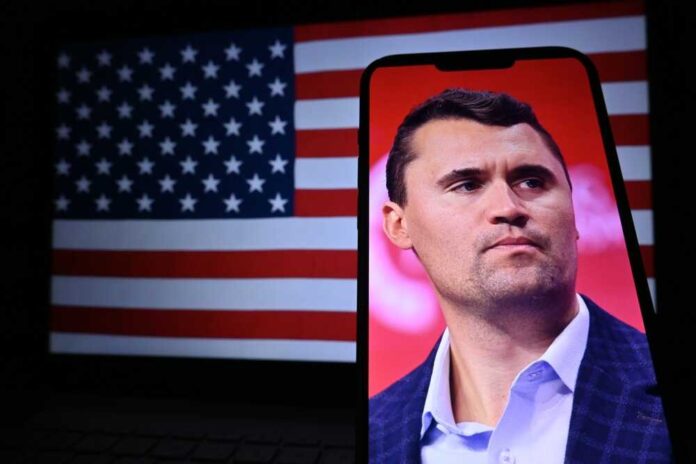
The killing of Charlie Kirk amid a public dialogue on mass shootings raises urgent questions about political violence and rhetorical boundaries in contemporary American discourse.
Key Points
- Charlie Kirk was fatally shot while discussing mass shootings at Utah Valley University.
- The perpetrator was linked to the pro-Trump, MAGA movement, complicating narratives about political violence.
- Kirk’s death raises questions about gun rights, given his past statements defending the Second Amendment.
- The incident has sparked a national conversation on the impact of inflammatory rhetoric.
Charlie Kirk’s Assassination: An Overview
On September 10, 2025, Charlie Kirk, the 31-year-old founder of Turning Point USA, was shot and killed at Utah Valley University. The incident occurred during a Q&A session where Kirk was addressing questions on mass shootings. Some attendees have claimed his last remarks involved gang violence, though definitive confirmation of his final words is not publicly recorded. The shooting has ignited a complex dialogue about political violence and the consequences of rhetoric.
The shooter, described as a white cisgender man from a staunchly pro-Trump, MAGA-aligned family, challenges early assumptions that the violence stemmed from political opposition. This detail aligns with broader patterns seen in American mass shootings, emphasizing the internal fractures within political movements Kirk helped build. These facts complicate the narrative, suggesting a pattern of movement self-consumption where extremist rhetoric turns inward.
The Political and Social Implications
Kirk’s assassination has drawn bipartisan condemnation, with statements from both sides of the political spectrum denouncing the violence. The incident exposes the stark irony of Kirk’s previous defense of gun rights, where he controversially argued that “some gun deaths are worth it.” This stance is now under intense scrutiny and adds a cruel layer of irony to discussions about the Second Amendment and gun violence prevention.
The complexity of Kirk’s legacy is further underscored by his history of inflammatory rhetoric targeting marginalized communities, including Black Americans and LGBTQ+ individuals. His death presents a challenging narrative for these communities, who must navigate the emotional terrain of condemning violence while grappling with the real harm caused by Kirk’s words.
Broader Conversations on Rhetoric and Violence
The assassination has catalyzed discussions about the broader implications of political rhetoric and its potential to incite violence, a concept known as stochastic terrorism. This phenomenon describes how repeated dehumanizing rhetoric by public figures can lead to predictable violence, even without direct commands. Kirk’s communication style has been characterized as fitting this pattern, with his speeches often containing elements of dehumanization and scapegoating.
Charlie Kirk and George Floyd’s shared day exposes America’s fault lines https://t.co/VwGbGTi0TQ
— ConservativeLibrarian (@ConserLibrarian) October 7, 2025
For Turning Point USA, the organization Kirk founded, his death raises questions about its future direction and how it will address Kirk’s controversial legacy. The organization now faces the challenge of memorializing its founder while confronting the divisive rhetoric that marked his career.
Sources:
Condemning Violence Without Erasing Harm