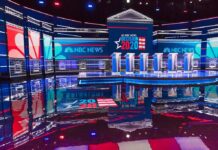
The rise of AI in Hollywood threatens the livelihoods of performers, igniting a fierce battle over the future of the entertainment industry.
Story Highlights
- AI is being used to replace actors, sparking fears of job losses in Hollywood.
- Major unions are negotiating to protect their members’ rights against AI encroachments.
- State and federal governments are implementing laws to regulate AI use in entertainment.
- Speculative narratives about “dark forces” in Hollywood circulate but lack verification.
AI’s Growing Influence in Hollywood
As AI technology advances, Hollywood studios are increasingly leveraging it to cut costs. This shift, however, threatens the job security of actors, who fear being replaced by AI-generated replicas. The Alliance of Motion Picture and Television Producers (AMPTP) has been at the forefront of deploying AI to enhance visual effects and create synthetic performers. This technological evolution, while cost-effective, poses significant risks to traditional performers.
The Screen Actors Guild‐American Federation of Television and Radio Artists (SAG-AFTRA) is actively negotiating with studios to secure consent and compensation for the use of AI. Their contracts, which expire in June 2026, are a critical battleground where the union seeks to protect its members from AI-induced job losses. The threat of strikes looms large, as unions leverage their negotiating power to enforce protections against unauthorized AI use.
Legal and Regulatory Measures
In response to these challenges, various states, including California, Tennessee, and Illinois, have enacted laws to safeguard performers’ rights against AI exploitation. These regulations aim to provide a legal framework ensuring that performers retain control over their likenesses. The Department of Justice’s AI task force has also been working towards establishing comprehensive guidelines to manage AI’s impact on the entertainment industry, highlighting the federal commitment to addressing these issues.
Despite these efforts, speculative narratives about “dark forces” allegedly corrupting Hollywood continue to circulate. These claims, often lacking credible evidence, suggest moral decay and industry exodus but primarily serve to fuel public distrust. Such narratives, while captivating, have yet to be substantiated by reliable sources, contrasting with the tangible economic and technological challenges the industry faces.
The Broader Implications
The ongoing developments in Hollywood have far-reaching implications. In the short term, potential strikes could disrupt productions more severely than past actions, given AI’s growing role in the industry. Long-term, AI could reshape Hollywood’s control dynamics, posing an existential risk to performers if adequate protections are not secured. The economic and social impacts, including potential job losses and shifts in production budgets, underscore the need for strategic responses from all stakeholders.
Hollywood's DARK FORCES Exposed! America Fights Back! #shorts https://t.co/poneMKTmXu via @YouTube
— Mike Horan (@mikehoran1158) January 4, 2026
While the allure of conspiracy theories persists, the real battle in Hollywood centers around labor rights and technological adaptation. The outcomes of these negotiations will likely set precedents for how industries worldwide manage the integration of AI, balancing innovation with human labor rights.
Sources:
The 2026 Hollywood Doomsday Clock
Hollywood 2026 Preview: Collapse or Comeback