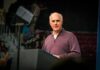


What makes Hasan Piker politically durable is not that his critics can find no combustible quote; it is that the most damaging ones are real, memorable, and then immediately fought over in the realm where context, ideology, and clipped video all compete for dominance. The result is a modern media paradox: a streamer can be simultaneously overexposed and underexplained, with a single sentence doing years of reputational work.
Key Points
- Piker’s 2019 “America deserved 9/11” remark is the central fact around which the controversy turns, and it was followed by a one-week Twitch suspension.
- He later said the line was about U.S. foreign-policy blowback, not literal moral desert, and acknowledged that the wording was inappropriate.
- The strongest evidence in the supplied record supports criticism of Piker’s rhetoric and judgment; the weakest part of the anti-Piker case is the leap from anti-Israel language to a documented finding that he attacked Jews as Jews.
- The dispute persists because political opponents, platform moderators, and sympathetic media all extract different meanings from the same clipped material.
The quote that will not die
The core of the controversy is simple and well documented: during a Twitch stream in August 2019, Piker said, “America deserved 9/11, dude,” a line that triggered immediate backlash and a one-week suspension from Twitch. That quote has remained sticky because it is both morally explosive and syntactically plain. There is no need for elaborate decoding; the sentence is shocking on its face. That is precisely why it has endured as a political weapon. Once a public figure says something that severe on a live microphone, every later dispute about that figure begins with the burden of that sentence, even if the deeper argument concerns something else entirely.
But the sentence does not explain itself. In the supplied record, Piker’s own defense is that he was not saying civilians deserved mass murder; he was making a blunt, hyperbolic argument about U.S. foreign-policy blowback, later conceding that his wording was inappropriate and that he should have been more precise. That distinction matters. It does not erase the quote, and it does not make the reaction irrational. It does, however, separate an ugly rhetorical choice from a literal endorsement of terrorism. Those are not the same thing, and serious analysis has to keep them distinct.
Why the 9/11 remark became bigger than the stream that produced it
The reason the 2019 incident escaped the bounds of internet culture and entered campaign politics is that it is an ideal oppo-research artifact: short, self-contained, and easy to replay without the surrounding explanation. Politico’s reporting on Abdul El-Sayed shows exactly how that works in practice; El-Sayed publicly disavowed the remark as “dumb” and said flatly that America did not deserve 9/11, an act of political self-protection as much as moral clarification. Once the clip is useful in a race, its evidentiary status becomes almost secondary to its function. It becomes a symbol, not just a record.
That is also why platform punishment matters so much in public memory. Twitch’s one-week suspension is repeatedly cited as if it were a formal verdict on the substance of the statement, when in reality it is evidence of moderation, not adjudication. Platform enforcement tells you the clip crossed a line in community rules; it does not tell you whether the underlying political argument was about foreign policy, trolling, satire, or something else. In the Piker case, the punishment hardened the quote into a kind of received wisdom, but it did not settle the interpretive dispute. It merely made the dispute harder to ignore.
Where the criticism is strongest, and where it overreaches
The strongest criticism of Piker does not require inflating the evidence. He has a long record of deliberately incendiary language, including praise for authoritarian actors and repeated provocations around Israel, Palestine, and U.S. power. Rolling Stone itself described him as a relentless critic of Israel and noted that he has been accused of antisemitism, while also making clear that Piker rejects that charge. That much is enough to explain why he is such an easy target and why so many audiences find him exhausting. A person who regularly reaches for maximum-heat phrasing cannot plausibly demand to be treated as a model of careful speech.
Yet the record supplied here does not support the cleanest version of the condemnation. The documentary base is strongest on the 9/11 quote and on later anti-Israel or anti-war rhetoric; it is much thinner on the specific claim that Piker has directly attacked Jews as Jews. His own public defense, preserved in later interviews, is that his criticism was aimed at Zionist politics, Israeli state power, or what he characterizes as ethno-supremacist ideology, not Jewish identity broadly. That defense may or may not satisfy listeners, but it is materially different from a direct antisemitic slur or a documented pattern of religious hatred. The gap between those categories matters.
Mehdi is promoting the marriage of the radical left and radical Islam. Hasan Piker is the officiant, and the left is the child bride.
— ATX_ACE (@ace_mrm) August 11, 2026
The Hamas, Oct. 7, and “terror sympathizer” frame
The more severe label in circulation is not merely that Piker is provocative, but that he is a terrorist sympathizer. That charge is built from a cluster of reported statements: a Washington Times report that he said he would “vote for Hamas over Israel every single time,” and New York Post coverage that he minimized the significance of rape allegations connected to the Oct. 7 attacks. These claims, if taken at face value, are far more damaging than the 9/11 remark because they move from abstract geopolitical argument into the moral territory of a live massacre. They are also harder to evaluate from the supplied record because the underlying full transcripts are not provided, and the context is filtered through secondary reporting.
That said, the absence of a full transcript is not the same thing as exoneration. It simply means the evidentiary base is uneven. On the supplied material, the Hamas and Oct. 7 allegations are serious enough to explain why critics use the phrase “terrorist sympathizer,” but not airtight enough to prove, in a forensic sense, that every quoted line was intended as literal endorsement rather than inflammatory polemic. In other words, the available evidence supports a harsh judgment about judgment, tone, and political recklessness; it supports a more cautious judgment on the narrower question of whether every disputed line amounts to a direct celebration of terrorist violence.
The antisemitism question is narrower than the rhetoric around it
This is the part of the controversy most often blurred in public debate. Anti-Israel speech, anti-Zionist speech, and antisemitic speech are not interchangeable categories, even though bad-faith actors on all sides routinely collapse them into one another. The supplied sources document that Piker has used inflammatory language about Zionists, Israeli settlers, and Hamas, and that his critics have treated those statements as proof of antisemitism. But the record here does not provide a primary-source quote in which he denigrates Jews as Jews, nor does it include a formal finding from a Jewish institution or civil-rights body establishing that his remarks meet a specific antisemitism standard.
That does not make the criticism frivolous. It makes it imprecise when it overreaches. If the claim is that Piker is habitually reckless, morally unserious, and willing to traffic in language that normalizes contempt for enemies, the evidence amply supports it. If the claim is that the supplied record proves a settled, explicit, identity-based antisemitic program, the evidence is thinner than the rhetoric surrounding him. In controversies like this, the distinction is not semantic hair-splitting; it is the difference between a defensible indictment and a lazy one.
What the case against Piker really shows
The Piker controversy is best understood as a case study in how a high-volume political influencer becomes a permanent test of audience loyalty. His defenders hear anti-war critique, anti-imperialism, and clipped outrage; his detractors hear the collapse of moral boundaries, the romanticization of enemies, and the use of irony as a shield for extremity. Both readings draw from the same public record, but they emphasize different parts of it. That is why the dispute never closes. Piker’s brand depends on provocation, and provocation guarantees interpretive warfare.
What survives, after the slogans and campaign crossfire, is a fairly clear bottom line. The 9/11 quote is real; the apology and contextual explanation are also real. The platform suspension was real. The later anti-Israel and pro-Hamas-tinged remarks reported in the supplied material are serious and politically toxic, though not all are equally documented in primary form. The anti-Piker case is strongest when it sticks to the record that can be shown. It becomes weaker when it leaps beyond that record into claims that the evidence here does not fully sustain.
Sources:
twitchy.com, factcheck.org, youtube.com, washingtontimes.com, en.wikipedia.org, reddit.com, nypost.com, foxnews.com