The post–October 7 campus era fused anti-Israel activism with a historic spike in antisemitic incidents, and the evidence shows this was not a brief flare-up but a sustained campus-centered crisis that reshaped student life, governance, and the boundaries of acceptable conduct.
The Short Version
- Antisemitic incidents in the U.S. hit record levels, with campuses a major locus and most cases tied to Israel/Zionism after October 7.
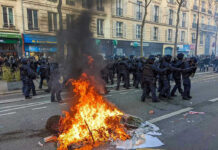
- Campus anti-Israel activism expanded sharply and often crossed into conduct classified as harassment, vandalism, and encampments.
- A House Education and Workforce majority investigation found universities tolerated encampments and failed to protect Jewish students.
- Later research traced part of the problem to faculty, classroom framing, and academic governance—beyond street protests alone.
What the data actually says: scale, locus, and linkage to Israel/Zionism
Start with scale. The Anti-Defamation League’s 2024 audit reported 9,354 antisemitic incidents nationwide, including 1,694 on college campuses; the organization attributed 58% of all incidents to dynamics related to Israel or Zionism. Independent news coverage echoed both the record volume and the campus concentration, emphasizing that many of the cases emerged in the context of anti-Israel demonstrations. The picture is not of isolated flare-ups but of a mass phenomenon with a distinct geographic epicenter: universities and their adjacent streets.
On campuses specifically, ADL’s 2023–2024 analysis counted 2,637 anti-Israel incidents and found antisemitic incidents on U.S. campuses rose to more than 1,400—nearly a fivefold increase over the prior year. Categories spanned protests and encampments, harassment, vandalism, and divestment drives. That taxonomy matters: it shows the activity was not only rhetorical but organizational and operational, with formal resolutions and prolonged encampments alongside direct targeting of students and facilities.
How the campus crisis unfolded: encampments, governance breakdowns, and student experience
Congressional investigators reached a blunt conclusion: antisemitism “engulfed college campuses” while administrators privileged the wants of “terrorist sympathizers” over the safety of Jewish students. The House Education and Workforce Committee majority staff documented the spring 2024 encampment wave as unlawful and antisemitic in character, and faulted universities for failing to impose meaningful discipline when conduct violated rules or law. Whether one agrees with all the rhetoric, the report’s institutional diagnosis is clear: governance responses were permissive, episodically paralyzed, or both.
Reporting outside government tracks the lived reality those governance failures produced. The Associated Press summarized the same ADL data and emphasized that Jewish students “face hostility, exclusion and sometimes physical danger because of their identity or their beliefs.” That sentence captures the practical campus problem: Jewish students were not merely encountering ideas they disliked; they were encountering environments where access, safety, and belonging felt contingent on disavowing Israel or remaining silent about it.
Beyond the quad: classrooms, faculty, and institutional dynamics
As the initial protest shock subsided, new research shifted attention from tents and plazas to syllabi, lectures, and faculty governance. ADL’s analysis of “Antisemitism Among Faculty and in the Classroom” argues that faculty conduct, curricular framing, and academic structures have helped normalize hostility toward Jewish and Israeli students, effectively moving the issue from the streets into the seminar room. In other words, the campus problem did not end when encampments were cleared; some of its assumptions migrated into day-to-day academic life.
The persistence is measurable. After the 2024 peak, ADL still recorded 583 campus antisemitic incidents in 2025—well below the prior crest but far above a pre-October 7 baseline, indicating an elevated new normal rather than a one-off convulsion. This pattern—spike, partial abatement, durable higher plateau—is exactly what practitioners in campus risk see after politicized crises embed into institutional culture.
Mechanism: how anti-Israel activism morphed into antisemitic targeting
Mechanism matters because it distinguishes protected political speech from discriminatory conduct. Across the incident record, four channels recur. First, slogan migration: chants that begin as state-focused (“from the river to the sea”) become person-directed when deployed to ostracize or menace Jewish classmates at Hillel houses or in dorms. Second, boundary collapse at encampments: organizers’ posted “liberated zone” rules sometimes exclude Zionists, which in practice maps onto many Jewish students, converting political tests into identity tests. Third, vandalism and doxxing: mezuzahs defaced, Jewish organizations plastered with invective, and named students targeted online. Fourth, gatekeeping through governance: student government resolutions and departmental statements that mark Zionism as beyond the pale, chilling participation by those who identify with Israel or refuse ideological litmus tests.
None of this claims all anti-Israel criticism is antisemitic; the line runs through intent, context, and effect. But when the line is crossed, it is typically through these operational channels, which is why incident tallies—rather than opinion polls—became the evidentiary center of gravity after October 7.
Where the category lines blur—and why the campus focus is not the whole society
Two clarifications keep analysis honest. First, the strongest evidence is campus-centered. The ADL audits and the House report are focused on universities and protest sites; they do not prove that all progressive activism has become more antisemitic across every arena of American life. They do prove that, in campus ecosystems, anti-Israel activism correlated with, and often contained, antisemitic expression and conduct at unprecedented levels.
Second, the labels used in monitoring—“anti-Israel,” “anti-Zionist,” “antisemitic”—are not synonymous, and case files do not always sort them perfectly. That does not erase the core finding of record-high incidents tied to the Israel/Zionism nexus, but it does mean that adjudicating individual cases still requires context-sensitive judgment. The better the incident-level data, the sharper that line can be drawn; even so, the macroscopic surge remains robust across sources.
How we got here: the October 7 shock and the campus amplification loop
The inflection point is not in dispute. The October 7 Hamas attack and the ensuing war lit the fuse on U.S. campuses, where existing activist networks, social-media amplification, and polarized DEI-era frames produced an unusually combustible mix. ADL’s longitudinal campus work documents a near-500% year-over-year jump in incidents, and its 2024 national audit shows the Israel/Zionism dimension dominating the caseload. Congressional investigators argue that administrative vacillation compounded the crisis by signaling that rule-breaking would be indulged if adequately framed as resistance.
In the months after the encampments, the conflict matured rather than disappeared: less spectacle, more normalization. This is when faculty statements, departmental events, and classroom framings assumed outsized importance—subtle enough to evade headlines but consequential for daily climate and student outcomes. The latest research calls out that shift explicitly.
1) The consultants are the hit men. An older guy who "suddenly decided to retire" at the University told me this when I was a student and I didn't believe him… until it literally happened in 3 months.
2) "Fealty" to the administrators indicates the real "customer." I recall a…
— Thurgood (@shhhisoke) August 14, 2026
Implications for policy, governance, and academic freedom
Three implications follow from the evidence. First, Title VI compliance must be enforced in practice, not just pledged in statements; viewpoint diversity does not protect discriminatory conduct that targets students on the basis of shared ancestry or ethnic characteristics, which includes many expressions of antisemitism. Second, incident-level clarity is essential. Universities should move beyond generic “bias” tallies to track specific harms, locations, perpetrators, and outcomes, which is how patterns are interrupted rather than merely lamented. Third, faculty governance is part of the solution set. If classroom framings and departmental gatekeeping help normalize exclusion, then faculty senates and provosts need standards that uphold academic freedom while prohibiting ideological litmus tests in participation or evaluation.
What to watch next
Watch whether the elevated post-2024 plateau holds, declines, or hardens into a new baseline. Track whether encampment-era tactics reappear in the next geopolitical crisis, which would signal that universities failed to reestablish neutral rules of the road. And look for whether classroom-level dynamics—curricular choices, faculty communications, assessment practices—become the next front of federal oversight and litigation. The core facts are already settled by the record: campuses bore the brunt of a historic antisemitism surge linked to anti-Israel activism. What remains is whether institutions have the will and the tools to unwind it without hollowing out academic freedom or student safety.
Sources:
pjmedia.com, adl.org, cnn.com, edworkforce.house.gov, ap.org