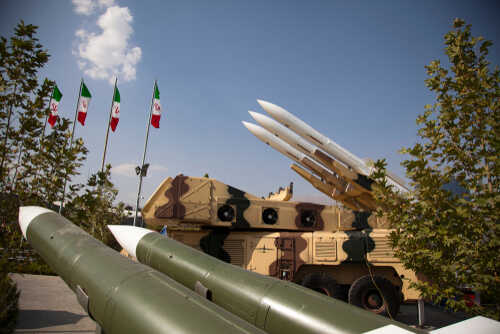
Iran publicly accepted President Trump’s ceasefire, then launched missiles within hours, exposing how fragile any deal is when enforcement meets reality.
Quick Take
- Iran fired missile barrages toward Israel shortly after Trump announced a two-week ceasefire framework, immediately putting the truce’s credibility in doubt.
- Sirens sounded across major Israeli population centers as emergency services reported shrapnel impact sites and minor injuries.
- Reuters-reported strikes on Saudi Arabia and missile alerts in the UAE signaled a regional spillover beyond Israel.
- The ceasefire concept included conditions tied to Iran halting attacks and allowing shipping through the Strait of Hormuz, linking security to energy-market stability.
Missiles After a Ceasefire Announcement: What Happened and Where
Iran launched missile barrages toward Israel overnight Wednesday, hours after President Donald Trump announced a two-week ceasefire arrangement involving the U.S., Israel, and Iran. Air raid sirens sounded across southern, central, and northern Israel, including Tel Aviv, Haifa, and the Jerusalem area. Israel’s emergency response and security services moved to assess impact zones and potential unexploded ordnance as the situation developed in real time.
Magen David Adom reported three shrapnel fall sites in central and northern Israel and said missile cluster fragments fell in the Sharon area. Authorities reported four people lightly injured in the Bedouin town of Tel Sheva and additional anxiety cases as residents sought shelter during alerts. Police units, Border Police, and bomb disposal experts were dispatched to investigate reported sites and conduct safety assessments.
Iran’s Mixed Messaging Undercuts Confidence in Any “Pause”
Iran’s Supreme National Security Council said it had accepted the ceasefire while also signaling it did not view the conflict as finished, warning that further moves by enemies would be met forcefully. That language matters because it frames a truce as conditional and temporary, not as a durable settlement. For U.S. and Israeli planners, that kind of ambiguity complicates verification and raises the risk that “ceasefire” becomes a label rather than a measurable change.
President Trump’s public posture emphasized a two-week suspension window and conditions tied to Iran halting attacks and allowing shipping through the Strait of Hormuz. That linkage places the agreement at the intersection of national security and economic stability, since Hormuz remains a key artery for global energy flows. Early market reactions reportedly included falling oil prices, but the missile launches quickly reintroduced uncertainty about whether de-escalation could hold.
Why Saudi Arabia and the UAE Matter in This Round
Reuters reporting referenced Iranian strikes on Saudi Arabia’s Jubail petrochemical area, and missile alerts were triggered in the United Arab Emirates. Even limited spillover changes the strategic picture because it widens the number of governments with direct security and economic exposure. When energy infrastructure and Gulf airspace are involved, the pressure increases on Washington to protect trade routes and deter attacks without sliding into open-ended commitments.
What to Watch Next: Enforcement, Talks, and Real-World Measures
Talks were scheduled to begin in Islamabad under Pakistani mediation, but the immediate post-announcement launches make diplomacy harder by raising questions about command-and-control and intent. The key test is not rhetoric but observable behavior: fewer launches, fewer alerts, and verifiable reductions in threats to shipping. With limited public detail from the White House at the time of reporting, Americans are left watching whether stated conditions translate into enforcement mechanisms that actually constrain Iran’s actions.
Sources:
US President Donald Trump says a “double-sided …
US, Israel and Iran agree to 2-week ceasefire as Trump …
Iran fires missile barrages at Israel after Trump says …