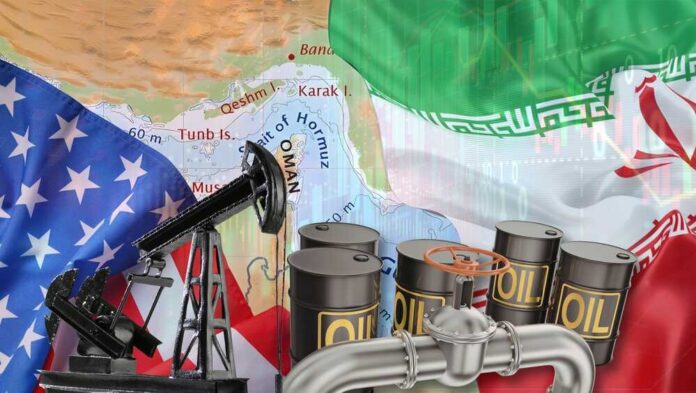
Control over the Strait of Hormuz today turns less on firepower than on law: Iran’s attempt to “close” the strait and fire on a commercial ship rests on a contested legal theory that collides head‑on with the modern regime of guaranteed transit passage through international straits.
Key Points
- Iran’s Revolutionary Guard Corps (IRGC) has declared the Strait of Hormuz closed to most foreign shipping and has fired on at least one commercial vessel it claims violated Iranian navigation rules.
- Tehran frames these actions as lawful enforcement of its sovereign control and an exercise of self‑defence, applying an “innocent passage” regime that it says allows it to deny passage to US, Israeli and allied vessels.
- Most international legal analysis holds that Hormuz is governed by a non‑suspendable transit passage regime, or at minimum a non‑suspendable innocent passage regime, under customary law and earlier treaties, leaving Iran no right to close the strait to general traffic.
- Iran’s selective restrictions, transit fees, and armed attacks on civilian shipping are widely assessed as violations of the law of the sea and UN Charter limits on the use of force, even if some narrowly defined self‑defensive strikes against military targets could be lawful.
What Iran Has Done in the Strait of Hormuz
Since the latest round of hostilities with the United States and Israel, Iran’s Islamic Revolutionary Guard Corps has moved from episodic interference to systematic control over the Strait of Hormuz. IRGC statements and independent reporting describe the strait as closed to vessels linked to “Zionist-American enemies” and their supporters, with passage permitted only to ships explicitly authorized by Tehran. Commercial traffic has collapsed: in one recent 24‑hour period, ship‑tracking data showed zero vessels transiting the strait compared with more than 100 on a typical day.
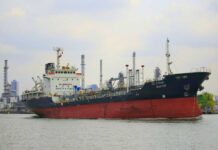
Iran is not merely threatening force; it has used it. IRGC units have fired on commercial ships, including a Cyprus‑flagged containership transiting near Oman, causing serious damage to the engine room, fire onboard, and at least one missing mariner, after accusing the vessel of using an “unauthorized route” allegedly cleared by the US Navy. Iranian officials simultaneously announced that any ship entering the strait without prior coordination could be “set on fire,” and demanded transit fees reportedly reaching up to $2 million per vessel for safe passage. These are not isolated incidents but part of a deliberate, publicly articulated policy.
Iran’s Legal Narrative: Sovereignty, Innocent Passage, and Self‑Defence
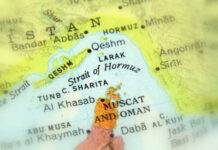
Tehran’s legal case rests on three pillars: its sovereign control over territorial waters, its rejection of the transit passage regime of the 1982 UN Convention on the Law of the Sea (UNCLOS), and its invocation of self‑defence under Article 51 of the UN Charter. Iran has long argued that the Strait of Hormuz is subject to the regime of “innocent passage” rather than “transit passage,” asserting that as a coastal state it may regulate, condition, and, in some circumstances, deny passage through its territorial sea. Iran signed but never ratified UNCLOS and explicitly rejected provisions on transit passage when signing, characterizing them as a quid pro quo bargain that does not reflect binding customary law.
In official statements, Iranian authorities frame their actions as enforcement of safety and security regulations in coordination with Oman, and as defensive measures against aggressor states that have attacked Iranian territory and interests. They argue that vessels, equipment, and assets belonging to the United States, Israel, and other participants in the “aggression” do not qualify for innocent or non‑hostile passage, and therefore may be excluded from the strait or targeted. Iranian legal commentary extends this logic to merchant vessels carrying cargo that contributes to the adversary’s military effort or sailing under enemy convoy, which they claim may be attacked under the law of armed conflict at sea.
This narrative is designed to re‑cast what the rest of the world describes as closure, obstruction, and attack as a combination of legitimate regulation of navigation and proportionate self‑defence. Iran pointedly avoids declaring a formal blockade, which would require meeting strict conditions under the law of naval warfare and would more clearly trigger international condemnation and possible counter‑measures. Instead, it emphasizes selective restrictions and framing of attacks on ships as “security-related operational measures.”
The Prevailing Law of the Sea: Transit Passage and Non‑Suspendable Access
Measured against the dominant interpretation of the law of the sea, Iran’s legal position is weak. Modern maritime law treats straits used for international navigation—like Hormuz—as subject to a robust transit passage regime: a right of all ships and aircraft to move continuously and expeditiously through the strait without interference, even where the strait lies within the territorial sea of a coastal state. UNCLOS makes this explicit; Article 44 provides that states bordering such straits “shall not hamper transit passage” and that there “shall be no suspension of transit passage.”
Neither the United States nor Iran is a party to UNCLOS. Yet major maritime powers and most legal scholars consider the core transit passage rules to have crystallized into customary international law, binding even on non‑parties. The United States has long asserted an immutable right to freedom of navigation through Hormuz, while Iran insists it may regulate traffic based on an innocent passage regime. This clash of views creates what some analysts describe as a “legal vortex” in Hormuz—but the prevailing opinion still favors transit passage.
Even if one were to accept Iran’s argument that transit passage does not apply, its room for maneuver would be narrow. Before UNCLOS, the 1958 Geneva Convention on the Territorial Sea—which Iran ratified—recognized non‑suspendable innocent passage through straits used for international navigation. Under that regime, coastal states could not arbitrarily close such straits or impede passage so long as ships were not acting in a manner prejudicial to the peace, good order, or security of the coastal state. Contemporary analysis therefore concludes that under either legal framework—a modern transit passage regime or earlier non‑suspendable innocent passage—Iran cannot lawfully impose a blanket closure of Hormuz to general commercial traffic.
Force Against Civilian Shipping and the Limits of Self‑Defence
Iran’s appeal to self‑defence does not substantially improve its legal position. International law permits a state under armed attack to use necessary and proportionate force to repel that attack, including strikes on military bases, warships, and logistical infrastructure directly contributing to ongoing operations. Legal experts acknowledge that, given recent US and Israeli attacks on Iranian territory and facilities, some Iranian strikes on military targets in the region could fall within that narrow self‑defence window.
The move from targeting enemy military assets to firing on commercial shipping is far more problematic. Under the law of armed conflict at sea, merchant vessels may be attacked only if they make an effective contribution to military action and their destruction provides a definite military advantage—for example, if they are transporting arms to an active battlefront or sailing under convoy of enemy warships. The reported IRGC attacks in Hormuz have focused on general commercial traffic—container ships and tankers—without clear evidence that they were directly sustaining the adversary’s war effort. In at least one case, the vessel was in Omani waters, amplifying questions about jurisdiction and necessity.
Moreover, the use of force to enforce contested navigation regulations—such as a demand that ships use an Iranian‑approved route or pay fees—is not recognized as self‑defence under the UN Charter. It instead looks like coercive obstruction of freedom of navigation, which UN Security Council Resolution 2817 explicitly condemned as a breach of international law and a threat to international peace and security. Where force is used against civilian mariners and neutral flags, the risk of characterizing these attacks as unlawful uses of force, or even as war crimes, increases sharply.
Persistent Objection and Strategic Leverage
Iran’s approach in Hormuz is not a sudden improvisation but a consistent “persistent objector” strategy that has been developing for decades. Tehran has never ratified UNCLOS and has repeatedly refused to recognize transit passage in Hormuz as customary law, maintaining that only a coastal state–controlled innocent passage regime applies. It has used traffic separation schemes and national regulations to arrest foreign tankers, detain crews, or issue warnings when political tensions flare—most notably in 2019 after the UK seizure of the Iranian tanker Grace 1, and in subsequent incidents in 2021 and 2024.
What is new is the intensity and lethality of enforcement. Analysts describe the current phase as one in which Iran effectively controls passage through the strait, allowing “limited and supervised” transit for friendly or neutral states, subject to coordination and payment, while deterring, delaying, or harming other traffic. This turns Hormuz into a key theater of war where maritime law, energy security, and military strategy converge. Iran’s leadership sees control over the strait as a powerful lever against sanctions, attacks on its territory, and economic pressure, and has repeatedly hinted at using tolls or selective closures as bargaining chips in negotiations.
For global shipping, the pattern is deeply destabilizing. Even when Iran stops short of a formal blockade, uncertainty about which ships can pass, on what terms, and at what risk drives up insurance costs, distorts routing decisions, and threatens the reliability of a trade corridor that once carried around 20 percent of the world’s crude oil. The legal ambiguity stemming from US and Iranian non‑party status to UNCLOS only compounds operational risk.
🇺🇲⚔️🇮🇷 Iran and the US are fighting a war of maritime advisories over Hormuz.
Iran's IRGC declared the strait "closed until further notice" after striking a vessel; the US-run Joint Maritime Information Center countered today (July 12) that the southern Omani route "remains… pic.twitter.com/9IqxAfmUgc
— 🔥🗞The Informant (@theinformant_x) July 12, 2026
Where the Legal Consensus Stands
Across governments, multilateral institutions, and academic commentary, the broad consensus is that Iran does not possess a general right to close the Strait of Hormuz and may not lawfully fire on ordinary commercial vessels transiting the strait. Expert analyses from European, US, and independent scholars converge on the conclusion that coastal states bordering international straits have an obligation—rooted in treaty law and custom—to refrain from hampering transit passage or non‑suspendable innocent passage.
Iran’s claims to a special legal regime in Hormuz, grounded in non‑ratification of UNCLOS and persistent objection, are acknowledged but not widely accepted as sufficient to overturn this baseline. Even sympathetic legal treatments that explore potential justifications for restricting navigation typically limit those justifications to narrowly tailored measures directed at specific military threats, not wholesale denial of passage to broad categories of civilian shipping or the imposition of unilateral tolls. Where Iran’s rationale extends to firing on neutral merchant ships or conditioning their safety on payment and political alignment, it runs far beyond what the law of the sea and the UN Charter allow.
In practice, therefore, the real constraint on Iran’s behavior in Hormuz is not doctrinal consensus but the balance of power and willingness of other states to respond. As long as major powers treat transit passage as an inviolable right yet hesitate to escalate military confrontation, the strait will remain a legal flashpoint where Iran tests the limits of enforcement and the rest of the world relies on a mix of diplomacy, sanctions, and limited military action to defend a legal order that, on paper, leaves little doubt: Hormuz is a global artery, not a national toll road.
Sources:
redstate.com, internationallaw.blog, tandfonline.com, qil-qdi.org, jurist.org, ejiltalk.org, chathamhouse.org, britannica.com, facebook.com, papers.ssrn.com, lawfaremedia.org, unclosdebate.org, opiniojuris.org, linkedin.com, lexology.com, lawdisorder.substack.com, crisisgroup.org