
The deepest truth in the Toronto consulate shooting is not simply that shots were fired; it is that a diplomatic target can become an intelligence problem, a policing problem, and a public-safety problem all at once. Once police classify an incident as a national security matter, the public record often narrows to the facts they are willing to release: gunfire, a getaway vehicle, no injuries, and an investigation that quickly becomes multi-agency and deliberately cautious.
Intro Header
- Police reporting and major coverage consistently support the core fact that gunfire struck or targeted the U.S. consulate in Toronto.
- Authorities said there was no immediate threat to the public and no injuries were reported.
- The “national security incident” label reflects an official operational judgment, not a court-tested finding.
- What remains unsettled is motive, and later reporting shows how quickly a shooting like this can be folded into broader theories about organized crime or foreign direction.
What Actually Happened at a Diplomatic Site
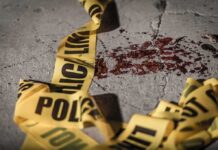
The core event is straightforward enough. Toronto police said officers heard gunfire near the U.S. consulate, found physical evidence consistent with a shooting, and observed a white vehicle leaving the scene. Reporting from CBC, AP, the Washington Post, and the BBC converges on the same basic picture: two suspects or two individuals fired toward the building, and investigators documented shell casings or damage at the facade. The exact language varies by outlet, but the substance does not. This was not rumor, not a panic, and not a vague disturbance outside an embassy district. It was a real shooting at a heavily protected diplomatic site.
That setting matters. Consulates are not ordinary commercial buildings; they are hardened facilities where security posture is part architecture, part protocol, and part international obligation. In this case, the building’s fortification likely limited harm, and police reporting indicated that people inside were not injured. Some coverage said the presence of security personnel inside may have meant the shots were not even immediately obvious to them. That detail is important because it explains a recurring feature of these incidents: the public hears “shots fired,” imagines chaos, and then discovers that the physical event and the human consequence can be quite different. A shot can be operationally grave and still produce no casualties.
Why Police Moved So Quickly Into National-Security Language
Authorities did not treat the consulate shooting as a routine street crime. Toronto police and the RCMP explicitly described it as a national security incident, and multiple outlets repeated that formulation. That label is not a legal verdict; it is a way of signaling that the case may intersect with protected targets, foreign interests, intelligence leads, or coordinated violence rather than a simple local offense. In practical terms, it changes who gets involved. Reporting named the Toronto Police Service Integrated Gun and Gang Task Force, the RCMP’s federal policing units, the Counterterrorism and Security Unit, and international partners.
That inter-agency response is exactly what one would expect when a diplomatic site is fired upon. The police are not only asking who pulled the trigger; they are asking whether the attack was meant to intimidate, signal affiliation, test security, or connect to something larger than the immediate scene. NBC’s reporting also noted that police were still investigating whether the shooting related to events in the Middle East. That does not establish motive. It does, however, show the range of possibilities authorities had to consider before the record was complete. The important distinction is between an official hypothesis and a proven explanation. The supplied sources support the former, not the latter.
Why the High-Speed Chase Was Stopped
One of the more consequential operational details is the police decision to suspend pursuit of the suspect vehicle. Global News reported that officers followed the vehicle as it sped to more than 140 km/h before discontinuing the chase under procedure because of the danger posed by the speed and the road conditions. That choice is not an admission of weakness; it is standard risk management. A pursuit at that speed on dense urban roadways can easily turn a suspect into a secondary casualty generator, injuring pedestrians, other motorists, or officers themselves. In a matter involving a consular site and no immediate threat to the public, police clearly judged that containment and later investigation were safer than a continuing chase.
That tradeoff tells you something about modern urban policing. The goal is not always immediate apprehension. In a setting where the suspect has already demonstrated willingness to use a firearm, the threshold for abandoning a pursuit drops sharply once the hazard to the broader public rises. Global’s footage summary also reported that officers found one shell casing and damage to the front facade, and that two security personnel were inside the building at the time. Those details matter because they show the event was treated as both a crime scene and a protection problem: gather evidence, secure the area, and reduce the chance of a second casualty event somewhere else on the route.
What the Record Supports, and What It Does Not
The strongest claim in the public record is that gunfire occurred and was documented. The weaker claim is everything beyond that. The supplied material does not include a primary police occurrence report, ballistic laboratory file, or sworn affidavit. That means the public is relying on briefing-level statements and secondary reporting for the exact number of shots, the chain of custody for recovered evidence, and the full accounting of physical damage. The shooting itself is well supported; the granular forensic story is not yet visible in the material at hand.
The same limitation applies to motive and attribution. Early reporting said police had not yet determined why the shooting occurred, aside from exploring whether it related to broader regional tensions. Later BBC coverage suggested investigators were probing possible foreign ties and that a suspect had been arrested in connection with the March shooting, but that is still not the same as a fully public evidentiary record. In other words, the incident can be real, serious, and criminal without the motive being settled. That is not a contradiction. It is how investigations usually work when the first public phase is driven by security necessity rather than judicial disclosure.
#NationalSecurity: Toronto Police Investigate After Shots Fired Outside U.S. Consulate In📍Toronto. Suspect(s) Fled In A White Sedan Was Seen Fleeing.🇨🇦🇺🇸
Previous Shooting At The Consulate Was A Terrorist Attack Alleged To Be Directed By Kata’ib Hezbollah Commander Mohammad… https://t.co/5djUJYQIRi pic.twitter.com/1Z8HkxcbEY
— 401_da_sarpanch (@401_da_sarpanch) July 27, 2026
Why This Incident Keeps Reappearing in the Public Conversation
The reason this story persists is that it belongs to a larger pattern, and the pattern is more revealing than the headline. The Toronto consulate shooting was later linked in coverage to arrests, related raids, and a broader discussion of “criminals for hire” in the city. That does not mean every later development retroactively explains the original shooting. It means the first incident became part of a widening investigative frame. Once that happens, public understanding often blurs the boundary between what was directly observed, what was inferred, and what was only later alleged.
That blur is especially strong when the target is diplomatic. A consulate shooting invites immediate geopolitical interpretation, which is precisely why careful language matters. The basic facts are firm enough: shots were fired, evidence was found, no one was injured, and police treated the matter as a national security incident. The unresolved part is the most important one for any deeper reading: whether the shooting was a standalone criminal act, part of organized hired violence, or tied to some broader political or foreign-directed purpose. Until primary records or court filings become public, the honest position is narrower than the speculation around it.
What This Means for Understanding Security Incidents
Incidents like this expose a central truth about public safety in major cities: the first duty of officials is to prevent escalation, not to satisfy curiosity. That is why the early record is often sparse, why agencies coordinate behind the scenes, and why labels such as “national security incident” appear before the underlying theory is fully proven. In the Toronto case, that caution appears justified. The scene evidence, the police description of gunfire, the multi-agency response, and the absence of injuries all point to a serious event that was contained before it became worse.
What should not be overstated is clarity. The public record is strong on the existence of the shooting and weak on the final story behind it. That gap is not trivial. It is the difference between knowing that a protected site was attacked and knowing who ordered, enabled, or intended the attack. For readers trying to separate signal from noise, the disciplined reading is simple: treat the gunfire as established, the threat assessment as official but provisional, and the motive as unresolved until documentary evidence or court proceedings make it public.
Sources:
insiderpaper.com, bbc.com, nytimes.com, youtube.com, abcnews.com, washingtonpost.com, cbc.ca