

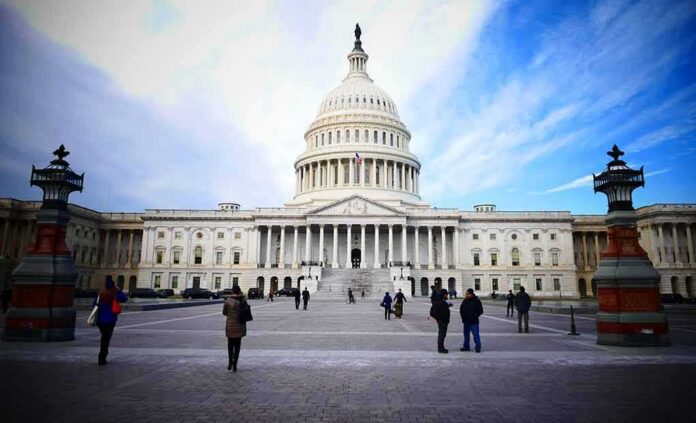
The central political fact is not that House Democrats are gearing up to impeach President Trump immediately; it is that the party’s leadership is trying to make impeachment a later-stage instrument, not the opening move, if it wins the House back.
Key Points
- House Democratic leaders are publicly and privately describing investigations, subpoenas, and document demands as the first order of business.
- Impeachment remains on the table, but only as a downstream option if those inquiries surface evidence that clears a high threshold.
- The strategy reflects institutional math: a House majority can investigate, but it cannot remove a president without a Senate conviction.
- This is a familiar congressional pattern for Trump-era oversight—build the record first, then decide whether impeachment is worth the political cost.
Why Democrats Are Treating Impeachment as a Second Step
House Democrats who are gaming out a return to power are not describing impeachment as the headline move. Reuters reported that senior Democrats and committee aides are planning hearings, subpoenas, and document requests aimed at companies, donors, contractors, and other entities in Trump’s orbit; one senior aide put it bluntly: “We’re not going into this to impeach,” adding that no one wants a failed vote on day one. That is the political logic in its purest form. A House majority can gather facts, apply pressure, and shape the public record. It cannot, by itself, finish the job.
That distinction matters because impeachment is not merely a symbolic censure; it is a formal constitutional process that looks strongest when it follows a documented evidentiary trail. In the planning described by Reuters, Democrats see investigations as the mechanism for building that trail, not as a detour around it. The idea is to use committee power to force records into the open, identify the financial and operational network around the White House, and only then decide whether the material meets the threshold for articles of impeachment.
The conditional language is important. Reuters also reported that Democrats involved in the planning say impeachment remains possible if investigations uncover evidence of an impeachable offense, but not as a first move. That is a different posture from the more maximalist talk that often circulates in activist and media spaces. It is the language of institutional caution, and it reflects a realistic reading of what a House majority can actually deliver.
The Long Game Is the House’s Natural Operating Mode
There is nothing especially novel about the sequence Democrats are now describing. House oversight has always worked best as an evidentiary ladder: request, subpoena, hear testimony, press for documents, then decide whether the facts justify escalation. AP described the current Democratic approach as a “long-game strategy” moving from stern letters to subpoenas to contempt votes, with some Democrats openly saying the White House’s resistance leaves them little choice but to consider an impeachment inquiry as leverage for compliance. That is not the same as deciding on impeachment in advance. It is a recognition that the investigation itself can become the pressure point.
That same pattern shows up in earlier reporting as well. The Washington Post said House Democrats were already charting an aggressive investigative strategy that could include subpoena power directed at Trump himself and possible impeachment proceedings against a cabinet official. CNN and CNBC likewise described leadership as steering the caucus toward affordability and anti-corruption messaging rather than a front-loaded impeachment fight. The political calculus is obvious: Democrats want the first months of a majority to look like competence and control, not a spectacle that can be dismissed as reflexive vengeance.
That is also why the public posture from leaders has been carefully noncommittal. Jeffries has said Democrats are not focused on impeachment “at this moment,” while also leaving the door open and emphasizing anti-corruption priorities if the House flips. Earlier coverage from CNN and PBS found the same basic pattern: leaders were shying away from impeachment in the near term because they understood the institutional reality and the risk of handing Trump an easy mobilizing tool.
Why the Senate Math Still Shapes the House Debate
The Senate is the gravitational force behind every modern impeachment strategy. Ilhan Omar captured that reality in plain language in the social research: impeaching Trump is pointless unless Democrats also have conviction votes in the Senate. That is not cynicism; it is arithmetic. A House impeachment may satisfy a faction of the party, but if conviction is unattainable, the process can become a self-inflicted political dead end. That is why the Reuters framing—investigate first, impeach only if the evidence demands it—fits the actual incentives of governing.
This is where older precedent matters. In Trump’s first term, House Democrats did not leap straight to articles of impeachment. They investigated, held hearings, assembled records, and then impeached in 2019 after weeks of testimony and document production. That earlier sequence established the playbook for how a House can build legitimacy for an impeachment case; it also demonstrated that the public is more likely to absorb the argument when it comes after a process, not before one. The current Democratic strategy looks like an attempt to replicate that evidentiary discipline while avoiding the impression of acting on impulse.
There is a second layer to the Senate problem: if impeachment begins too early, it can dominate the political conversation before Democrats have made their affirmative case on issues voters consistently rank higher, such as costs and pocketbook pressure. That is why leadership keeps returning to affordability and anti-corruption. Those themes let Democrats define themselves by what they would govern on, not only by whom they would punish.
The Real Disagreement Is Over Timing, Not Principle
The dispute inside the Democratic coalition is not whether Trump could become the target of impeachment proceedings; it is when, and under what evidentiary standard. Axios reported that some House Democrats were already urging colleagues to prepare the case for a Day 1 vote by accumulating evidence now. That is the aggressive end of the party’s spectrum. On the other end are leaders and cautious members who do not want to spend the opening days of a new majority on a symbolic vote that may fail, backfire, or consume political oxygen better spent elsewhere.
Those positions are not mutually exclusive. In practice, they form a sequencing debate. The evidence-first faction wants the groundwork laid now so that, if the majority comes, the caucus can move quickly. The leadership faction wants to preserve discretion and avoid locking itself into a theatrical first act. Both positions accept the same basic premise: if impeachment comes, it should come with a record behind it. That is why the Reuters formulation is the most telling. It does not rule impeachment out; it simply refuses to make it the opening move.
What This Means If Democrats Retake the House
If Democrats win control of the chamber, the first tests of their strategy will be procedural, not rhetorical. Will they issue subpoenas quickly? Will they target the corporate and financial ecosystem around Trump rather than only the executive branch itself? Will they use hearings to establish a coherent narrative of corruption, abuse, or misuse of power before entertaining articles of impeachment? Reuters’ reporting suggests that this is exactly the architecture being discussed. That is a more durable approach than a dramatic opening salvo, because it allows Democrats to let the evidence dictate the endpoint.
It also gives them a way to manage the internal politics of the caucus. Members who want immediate confrontation can point to the investigative buildout as proof that the party is not standing still; leaders can tell swing-district members that the House is governing first and escalating only if the facts warrant it. That balance is fragile, but it is the sort of compromise Congress repeatedly lands on when impeachment is possible but conviction is not.
So the important takeaway is straightforward: the emerging House Democratic strategy is not “never impeach.” It is “prove the case first.” In congressional terms, that is often the difference between an act of oversight and an act of performance. The leadership appears determined to stay on the oversight side of that line until the evidence forces a different conclusion.
Mark Levin calls it “Stalinist tactics.”
Strip away the rhetoric for a moment and look at what Democrats are reportedly preparing to do if they retake the House:
Investigations. Hearings. Subpoenas. Demands for corporate and financial records. Scrutiny of Trump, his family,… pic.twitter.com/b9oIfQ7KXQ
— Olena Rohoza (@OlenaRohoza) August 10, 2026
Sources:
townhall.com, reuters.com, axios.com, apnews.com, washingtonpost.com, cnn.com, youtube.com, pbs.org, apmresearchlab.org