The fight over why a sitting president marks 9/11 where he does is not a scheduling footnote; it is a revealing test of how motive, symbolism, and sourcing collide in modern political reporting—and how quickly a narrow factual dispute hardens into a proxy war over credibility.
The Short Version
- The uncontested fact pattern: President Trump planned to mark the 9/11 anniversary at the Pentagon rather than at Ground Zero.
- The point of contention: whether a denied request to deliver remarks at Ground Zero drove that change.
- The White House framed the decision as logistical and tied to Vice President Vance’s attendance; Trump denied any interest in speaking.
- The New York Times stood by reporting sourced to multiple people involved in planning that Trump wanted to speak and then changed course.
What is settled, and what is actually in dispute
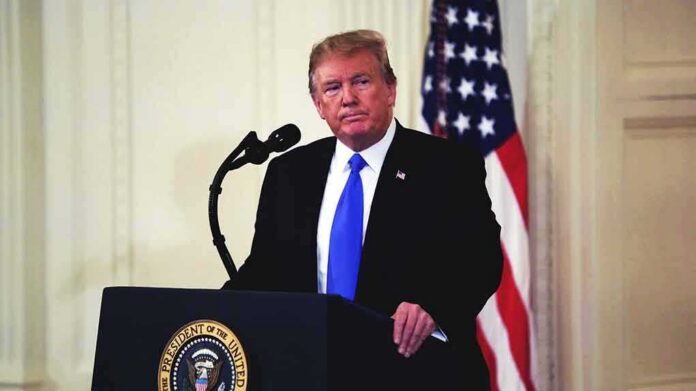
Strip away the invective and the core sequence is straightforward. Multiple outlets reported that President Trump would commemorate the anniversary at the Pentagon, not in New York. Trump himself confirmed the destination—“Because I’m going to the Pentagon”—and denounced the claim that he sought a speaking slot at Ground Zero as fabricated. The White House separately cast the venue choice as a logistics call linked to Vice President JD Vance’s presence in New York, asserting they could not be in the same location simultaneously. Those statements align on location but diverge on motive: was the pivot driven by a desire to speak at a ceremony that prohibits speeches, or by security choreography and division of principal duties?
The New York Times reported, citing multiple people involved with planning, that Trump initially intended to give remarks at Ground Zero and changed plans when informed that the memorial’s run-of-show does not include political speeches. Haberman later said the White House was informed of that specific reporting line before publication and did not initially push back on the “he wanted to speak” component. After publication, Trump publicly rejected the story as “made up,” while maintaining he would be at the Pentagon. On the factual ledger, the appearance is uncontested; the motive remains the live issue.
Why Ground Zero speeches are rare—and why that matters here
The National September 11 Memorial and Museum’s reading of names is intentionally solemn and tightly structured. Over years of practice, organizers have resisted turning the ceremony into a platform for political addresses; presidents attend, lay wreaths, meet with families, and sometimes deliver brief, carefully calibrated remarks at adjacent venues or at different commemorative sites. That constraint is not unique to President Trump; it is the institutional preference of the ceremony’s stewards. Against that backdrop, the Times’ claim—that an interest in giving formal remarks collided with the ceremony’s no-speeches norm—fits the event’s known operating rules. Trump’s denial goes to intent, not to the ceremony’s format, which multiple outlets summarized in explaining the reporting.
Experts who work advance for principals treat 9/11 as a three-site mosaic—New York, the Pentagon, and Shanksville—assigning principals across locations to balance symbolism, security, and logistics. When a president and a vice president split sites, the choice can be defended on those ordinary grounds without implying slight to any location. The White House’s post-report rationale fits that template. The unresolved question is narrower: did anyone on the president’s team ask for, or signal a desire for, a Ground Zero speaking role contrary to custom? On that, the record in public view consists of one side’s sourced reporting and the other side’s categorical denial, with no documentary trail yet disclosed.
Weighing the evidence: location is clear; motive evidence favors the reporters, narrowly
When adjudicating motive in a planning dispute, two things matter: contemporaneous documents and corroborated process accounts. Neither side has produced emails, schedules, or written guidance. The Times cites multiple people familiar with discussions; that is thin gruel if standing alone, but it is not nothing—particularly when the White House, according to Haberman, did not initially contest the “he wanted to speak” claim before publication, and only later framed the decision as a logistics split. Trump’s rebuttal is unequivocal but self-referential; he denies wanting to speak and emphasizes the Pentagon plan. On balance, with location uncontested and process sourcing running one way, the reporters’ account holds a slight evidentiary edge on the motive question, though it remains inherently provisional absent documents or on-the-record participants.
Readers should resist a false binary. It is entirely plausible both that the White House divided sites for legitimate logistical reasons and that the president preferred to speak in New York, which the ceremony format does not accommodate. These are not mutually exclusive explanations; they can coexist within a planning process that iterates as constraints surface. The dispute has hardened because public communications demanded a single, definitive motive, and because both sides now treat the question as a referendum on credibility rather than as a routine advance wrinkle.
How we got here: the Trump–press conflict pattern
This skirmish fits a familiar pattern: aggressive, personality-forward denials meeting process-based reporting sourced to staff and liaisons. Since 2015, Trump-related media and defamation disputes have not just multiplied; they have become a tactic in their own right. Analyses by Axios found a marked run-up in media and defamation cases involving Trump or his businesses during the last decade, a signal of a strategy that treats legal threats and public attacks as tools of narrative control as much as avenues for ultimate courtroom victory. That backdrop primes both sides for maximal framing the moment a story touches symbolism as fraught as 9/11.
The collateral damage in such cycles is often documentary clarity. When planners and organizers keep their counsel—and when the institution running the memorial stays out of political crossfire—the only public record becomes anonymously sourced accounts and on-camera denials. That is survivable for a gossip item; it is corrosive when the subject is civic ritual. The cure is simple but rare: contemporaneous calendars, liaison notes, and run-of-show correspondence that show who asked for what, and when. Without those artifacts, the public is left to weigh credibility and incentive structures, which is an imprecise enterprise.
🔴 BREAKING · trump_world
Trump Demands Retractions, Says He Was at Ground Zero After 9/11Trump attacks New York Magazine and reporter Maggie Haberman over their 9/11 coverage, demands retractions and cites video clips of himself at the World Trade Cente……
— Zenger News Inc (@zenger_news_inc) September 9, 2026
What would settle the question—and what to watch in future commemorations
Three categories of records would meaningfully resolve the motive dispute. First, liaison communications between the White House advance team and the National September 11 Memorial and Museum: any request for a speaking role and any reply referencing policy would be dispositive. Second, internal White House scheduling artifacts—drafts, staff emails, and Secret Service advance summaries—time-stamping when New York was in, and when it fell out. Third, coordinated statements from named officials who participated directly in the decision. Absent these, the argument will continue to rest on asymmetric claims—multiparty sourcing on one side, a blanket denial on the other.
Looking ahead, the durable lesson is about process transparency around civic rites. When the stakes are symbolic, process itself is the safeguard: publish, in real time, which principals are assigned to which sites and why, tethered to established ceremony norms. Do that, and speculation about ego and access to a microphone has less oxygen. Do not, and each year will reproduce the same fight, with the same incentives to litigate motive in public after the fact rather than document it beforehand.
Sources:
mediaite.com, youtube.com, nydailynews.com, yahoo.com, 911memorial.org, npr.org