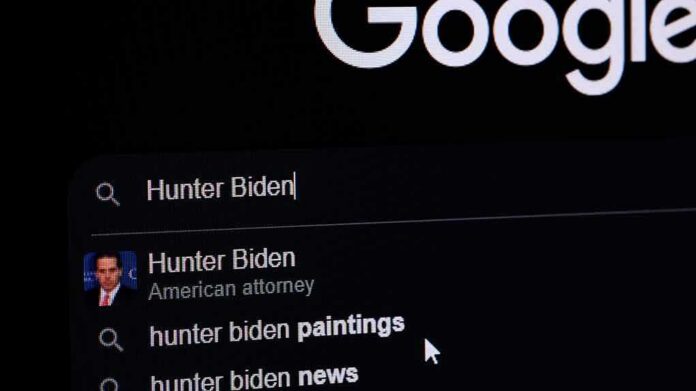
False statements prosecutions against federal officials are not about relitigating politics; they are a narrow test of truth, clarity, and consequence. The Justice Department’s charges against two former FBI officials over their congressional testimony on Hunter Biden investigations turn on that test — and on the statutory architecture that makes lying to Congress a federal crime even when testimony is not under oath.
The Short Version
- DOJ filed one criminal count each against former FBI officials Nikki Cole Floris and Bradley Benavides for allegedly making materially false statements to Congress about Hunter Biden-related investigations.
- Prosecutors allege Floris denied involvement despite task-force engagement, and Benavides claimed he first learned of the laptop from Wikipedia, contradicting DOJ’s evidence of earlier awareness.
- The statements were made in formal House Judiciary appearances in July and September 2023 and are charged as material to congressional oversight.
- The case was initiated by criminal complaint with an FBI statement of facts; prosecutors had not yet secured a grand-jury indictment at the time of filing.
What DOJ Alleges — And Why It Matters
The Justice Department charged Floris and Benavides with making materially false statements to Congress about their knowledge of, and engagement with, FBI investigations touching Hunter Biden. According to the charging announcement, Floris was asked in a July 19, 2023 House Judiciary proceeding whether she had involvement in the Hunter Biden investigation; she answered “I did not.” Prosecutors allege that answer was false because the Foreign Influence Task Force — where Floris served — engaged with and communicated about the Hunter Biden investigations. For Benavides, DOJ points to his September 2023 testimony that he first learned the FBI possessed Hunter Biden’s laptop from a 2023 Wikipedia article, which prosecutors say conflicted with his earlier knowledge or involvement identified in the government’s evidence. The government frames both statements as material because, in its view, they concealed task-force engagement and impeded legislative oversight of the FBI’s handling of politically sensitive matters.
These are not sprawling conspiracies; they are focused allegations that specific answers were false, known to be false, and capable of influencing Congress’s inquiry. That is the statutory core. The filing attaches an FBI-drafted statement of facts and charges one count against each defendant, signaling a theory calibrated to the elements the government must prove.
The Legal Framework: False Statements And Materiality
Congressional testimony occupies an unusual legal lane. Perjury statutes address false sworn statements; separate federal law, 18 U.S.C. § 1001, criminalizes materially false statements in matters within federal jurisdiction — including congressional proceedings — even when the witness is not under oath. To convict under § 1001, the government must establish falsity, knowledge (the defendant knew the statement was false), and materiality (the statement had a natural tendency to influence the proceeding). The Supreme Court has made clear that materiality is an element for the jury and requires more than triviality; it asks whether the lie could influence the decision-maker, not whether it actually did.
That standard is calibrated for oversight contexts, where committee actions — whom to subpoena, which records to compel, what follow-up to pursue — turn on witness candor. The DOJ’s public rationale maps onto that structure: had Congress received accurate accounts of task-force engagement, it could have directed investigative energy differently. Whether the proof ultimately meets the “materiality” and “knowing falsity” thresholds is a trial question; the charging theory, however, is squarely situated within established doctrine.
Mechanics Of The Case: From Complaint To Potential Indictment
The government initiated the case by criminal complaint supported by an FBI statement of facts, rather than by grand-jury indictment. A complaint secures a swift charging vehicle on probable cause; it does not adjudicate guilt. Many federal cases begin this way, particularly when prosecutors prefer to file contemporaneously with an investigative milestone and then present to a grand jury for indictment on the same or refined counts. Reporting indicates prosecutors had not yet obtained a grand-jury indictment at filing, which is a procedural posture, not an evidentiary concession.
What happens next typically follows a familiar arc: initial appearance and conditions of release; production of discovery (transcripts, emails, task-force records, audit logs); litigation over the exact questions posed and the defendants’ roles; and, if not resolved, a jury trial focused on falsity, knowledge, and materiality. Because the alleged statements are tethered to specific dates and committees, the documentary record — full hearing transcripts and internal FBI communications — will likely carry outsized weight.
What The Record Says About The Alleged Contradictions
For Floris, the reported contradiction is direct: a categorical denial of involvement set against DOJ’s claim of task-force engagement with Hunter Biden matters. The charge does not require proof that Floris personally handled evidence; it requires that her statement, as made, was false and material to the committee’s line of inquiry. The government’s articulation — that the Foreign Influence Task Force engaged with or communicated about relevant matters — supplies the connective tissue for materiality, because it bears on the breadth of the FBI’s institutional handling.
For Benavides, the alleged conflict is temporal and knowledge-based: Congress heard that he first learned of the laptop via Wikipedia in 2023; prosecutors counter that he had earlier awareness tied to FBI investigations. If supported by contemporaneous records or witness accounts, that delta can satisfy falsity and support materiality by showing Congress was deprived of accurate chronology on who knew what, when — a staple axis of oversight in election-adjacent cases.
How We Got Here: Oversight, Election-Year Pressures, And Institutional Stakes
Congressional oversight of criminal investigations is inherently fraught: lawmakers seek accountability; investigators protect equities; and political oxygen fuels both. The Hunter Biden-related inquiries intersected with the FBI’s Foreign Influence Task Force, a unit designed to detect, assess, and mitigate foreign interference — an arena where rumor, counterintelligence sensitivities, and open-source narratives collide. That collision made precise testimony especially consequential. In this environment, a false statement charge is both narrower than the political theater and more potent than a contempt citation; it speaks the language of elements and proof rather than partisan inference.
Timing considerations always draw attention. Contemporary coverage noted that the charges were filed close to November elections and highlighted the political salience. But proximity on the calendar neither proves nor disproves the elements of a § 1001 case; those rise and fall on the words used, the records behind them, and the decisions Congress might have taken if told the truth.
𝐃𝐎𝐉 𝐂𝐇𝐀𝐑𝐆𝐄𝐒 𝐄𝐗-𝐅𝐁𝐈 𝐎𝐅𝐅𝐈𝐂𝐈𝐀𝐋𝐒 𝐍𝐈𝐊𝐊𝐈 𝐅𝐋𝐎𝐑𝐄𝐒 𝐀𝐍𝐃 𝐁𝐑𝐀𝐃 𝐁𝐄𝐍𝐀𝐕𝐈𝐃𝐄𝐙 𝐖𝐈𝐓𝐇 𝐋𝐘𝐈𝐍𝐆 𝐓𝐎 𝐂𝐎𝐍𝐆𝐑𝐄𝐒𝐒 𝐎𝐕𝐄𝐑 𝐓𝐇𝐄 𝐇𝐔𝐍𝐓𝐄𝐑 𝐁𝐈𝐃𝐄𝐍 𝐋𝐀𝐏𝐓𝐎𝐏
The “𝘭𝘢𝘱𝘵𝘰𝘱 𝘧𝘳𝘰𝘮 𝘩𝘦𝘭𝘭” is back in federal court — and this… pic.twitter.com/JaKSHyewGY
— M.A. Rothman (@MichaelARothman) October 24, 2026
What To Watch Next: The Evidence And The Elements
The central questions are legal, not rhetorical. First, precision of the questions and answers: juries distinguish between an unequivocal falsehood and an imprecise or ambiguous reply — a line that often turns on transcripts, not headlines. Second, knowledge: emails, briefings, access logs, and meeting notes can establish whether a witness knew their answer was false when given. Third, materiality: staff memoranda and committee work plans can demonstrate how truthful answers would have redirected subpoenas, witnesses, or document requests. The DOJ’s public summary sketches these through-lines; litigation will put them under evidentiary light.
Sources:
theatlantic.com, cnn.com, justice.gov, cbsnews.com, whro.org, congress.gov, law.cornell.edu