
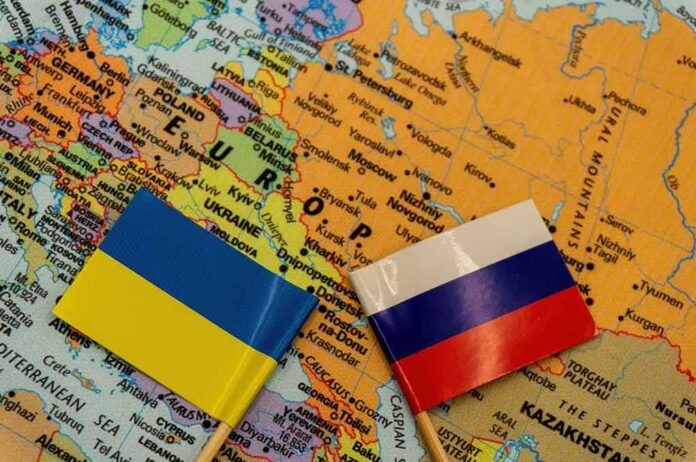
The decisive shift in Moscow’s Ukraine policy is not rhetorical but structural: Russia now ties any “negotiations” to a permanent settlement on its terms while explicitly rejecting a ceasefire-first track, a sequencing choice that preserves battlefield leverage and narrows the space for compromise.
The Short Version
- Moscow says it is open to talks but sees no near-term path to resume them; it rejects a ceasefire as the price of diplomacy.
- Russian rhetoric hardens around “durable” outcomes, not pauses in fighting; Ukraine and European partners anchor diplomacy to an immediate ceasefire and current lines.
- The clash is about sequencing—ceasefire first versus terms first—because the side confident in continued fighting seeks to negotiate from force, not parity.
- Limited U.S.-mediated steps and niche “energy” or humanitarian pauses have not scaled into a lasting truce, reinforcing both sides’ skepticism.
What Moscow is actually signaling
Across several on-record statements, the Kremlin drew a bright line: Russia remains “open” to negotiations in principle but sees no immediate prospect of resuming peace talks and will not suspend operations to enable them. Dmitry Peskov captured the first half of that duality—no practical pathway back to talks, openness retained as posture—while Foreign Minister Sergey Lavrov has supplied the second, rejecting a pre-negotiation ceasefire and insisting discussions must aim at a sustainable, “just” peace as Moscow defines it. That pairing matters. “Openness” operates as a diplomatic hedge; the refusal to pause fighting sets the operational reality. In practice, it means Russia will keep prosecuting the war while requiring any talks to start from the leverage that ongoing combat generates.
When pressed about reported U.S.–Ukraine ideas for discrete de-escalation measures—such as limiting aerial strikes—the Kremlin called them premature or intangible, framing media coverage as speculation and the proposals as lacking specifics. That posture serves a purpose: it avoids owning outright rejection of Western initiatives while denying them procedural traction. In a negotiation ecosystem where process can be power, refusing to recognize a process is a form of power in itself.
The core dispute: ceasefire first or settlement first
Kyiv and its European partners have set a clear entry sequence for diplomacy: immediate and complete ceasefire, negotiations that begin from the current line of contact, and security guarantees to prevent a sham pause. Ukrainian officials have also floated freezing the fighting along the present frontline—an armistice logic that prioritizes halting civilian harm and stabilizing conditions for real talks. Moscow rejects that structure. It casts ceasefire-first formulas as invitations to rearm, points to past pauses that failed to produce strategic closure, and demands that any negotiation address end-state issues before the guns fall silent. Hence Lavrov’s formula of talks about a “sustainable” peace but no suspension of military operations during talks.
This is not an abstract philosophical difference; it is the most consequential variable in modern war termination. The actor that believes time and attrition favor it will resist freezes and instead anchor diplomacy to a final political settlement. The actor facing time pressure will push for a truce that arrests losses and resets momentum. Analysts tracking the war since 2022 have repeatedly located the impasse in this sequencing fight—more than in whether either side is “for” or “against” negotiations writ large.
How we arrived here: accumulated precedent and failed mini-deals
Multiple attempts to bend the conflict toward restraint have proven narrow or short-lived. U.S.-mediated tracks since 2025 produced modest steps—navigation assurances in the Black Sea, brief pauses, targeted limits on energy strikes—but not a durable ceasefire or a pathway to comprehensive talks that both sides owned. More granular proposals, including “energy truces,” looked workable on paper, yet previous iterations were either unimplemented or quickly overtaken by battlefield incentives; neither belligerent trusted the other not to exploit a pause, and verification architectures proved politically fragile. Each failed or fleeting arrangement deepened Moscow’s claim that ceasefire-first is a trap and reinforced Kyiv’s argument that only a verified, comprehensive cessation can create conditions for credible bargaining.
That feedback loop has hardened positions. European leaders, sensitive to the risks of a cosmetic truce, now write verification and starting-lines into their conditions; Russia, pointing to the same record, dismisses ceasefire prerequisites as unserious and insists on end-state parameters before it will concede operational pauses.
Competing frames—and the evidence that carries weight
Ukraine and European partners publicly argue that an immediate ceasefire is the non-negotiable first step toward a just peace and that talks should begin from where forces actually stand—both to cap harm and to prevent de facto rewards for aggression. Their case is intuitive and ethically compelling; it also aligns with practical needs to stabilize civilian infrastructure before winter or major offensives. Russia’s case is openly instrumental: it says it will negotiate only for a permanent outcome and will not halt operations while “talking,” citing bitter experience with pauses that calcify advantages or invite rearmament. On the record, the Russian side has repeatedly restated these points and has formally downplayed or declined external “initiative” news when specifics were absent. Given the documentary clarity on both sides’ conditions, the stronger evidentiary claim is not who wants “peace” but how each defines the on-ramp to it—and there the record is unambiguous: Moscow rejects a ceasefire-first framework; Kyiv and its partners demand it.
Mechanics and consequences of Moscow’s hardened line
Operationally, refusing a ceasefire-first track does three things. First, it ensures that any future negotiating table is set by the last map drawn in combat, not by a mutually agreed freeze. Second, it forces intermediaries to pitch “durable settlement” blueprints rather than truce management—raising the political price of mediation and shrinking the menu of confidence-building measures. Third, it weaponizes ambiguity: staying “open” to talks while declaring no prerequisites are met allows Moscow to calibrate international pressure without surrendering initiative. For Ukraine and Europe, the mirror image is equally stark: tying talks to an immediate ceasefire caps losses and asserts a principle against territorial revisionism, but it also requires enforcement guarantees robust enough to deter a renewed offensive should talks stall—no small ask given the conflict’s scale.
These mechanics explain why smaller humanitarian arrangements—POW exchanges, local evacuation corridors, limited body-recovery pauses—can occur even as the top-line stance remains rigid. Such steps are compartmentalized and do not alter the strategic sequencing dispute; indeed, both sides treat them as tactical hygiene rather than strategic momentum.
What realistic pathways remain
In the near term, do not expect a formal ceasefire that precedes political terms; Moscow has said as much, and repeating cycles of mistrust have made verification-heavy truce architectures politically radioactive in Russia’s system. Conversely, do not expect Kyiv and its European partners to abandon a ceasefire-first demand; they view any other order as validating coercion and inviting relapse. The plausible space is therefore narrow and incremental: limited, monitored domains where mutual restraint is verifiable and self-enforcing—air-defense engagement zones over critical infrastructure, maritime traffic corridors with third-party sensors, standardized POW exchange calendars. These do not settle the war; they reduce its worst externalities while the strategic map continues to evolve.
The strategic implication for outside actors is equally sobering. Mediation that pretends the sequencing fight does not exist will fail. Efforts that respect it—by designing measures that either do not advantage force regeneration or that pair any pause with immediate, automatic penalties for breach—have a chance to endure. But as long as Russia believes sustained offensive pressure yields better bargaining power, its “open to talks” will remain conditional on terms-first. And as long as Ukraine and Europe define justice as stopping the guns before bargaining, they will continue to close the door on any process that begins in the middle of a barrage. The gap is not semantic; it is structural—and, for now, durable.
Sources:
zerohedge.com, reuters.com, themoscowtimes.com, aa.com.tr, npr.org, kyivindependent.com, intellinews.com, understandingwar.org, bbc.com, uatv.ua