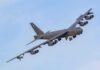
In the Baltic security game, nuclear rhetoric is a signaling tool as much as a warfighting threat: Moscow uses stark warnings to raise the political price of NATO moves, while Vilnius is removing legal handcuffs to maximize allied deterrence options without committing to any deployment.
The Short Version
- Russia has stated plainly it would target Lithuania with nuclear forces if NATO nuclear weapons were stationed there; this is classic coercive signaling, not a new doctrine.
- Lithuania’s leadership is advancing a constitutional change to lift a domestic ban on hosting nuclear weapons, creating legal latitude for deterrence but not authorizing deployment.
- The back-and-forth fits a long-running pattern: Russian nuclear threats meet Baltic efforts to tighten alliance integration and credibility of defense.
- Strategic effect hinges less on hardware placement and more on perceptions of resolve, timelines, and alliance readiness in the Baltic theater.
What Russia said, and why it matters
Kremlin spokesman Dmitry Peskov tied any hosting of NATO nuclear weapons in Lithuania directly to Russian nuclear targeting, saying Lithuanian territory would come “into the sights” of Russia’s arsenal if such arms were stationed there. The remark, carried by wires and Russian state media, is unambiguous: Moscow is warning that NATO nuclear sharing on Russia’s doorstep would be met by symmetrical—or at least declaratory—retargeting and posture adjustments. In strategic terms, this is a coercive message designed to shape upstream decisions in Vilnius and allied capitals. Russia does not need to move a single launcher to achieve part of its objective; by declaring a red line, it raises domestic and alliance-level political costs for any nuclear basing step in the Baltics.
That message rests on a long-standing Russian playbook. Since the late 1990s, Russian planning has integrated limited nuclear options for “de-escalation”—a concept of using or brandishing non-strategic nuclear weapons to compel an adversary to back down in a regional war—making nuclear signaling a routine instrument around NATO posture debates in the Baltic region.
What Lithuania is actually doing
Vilnius is not announcing a deployment. The Lithuanian president initiated a constitutional amendment to remove a categorical ban on hosting nuclear weapons and foreign bases; Article 137, adopted in the early post-independence era, currently blocks such options outright. The stated intent is to align domestic law with alliance deterrence needs and eliminate a legal contradiction as Lithuania deepens NATO integration, including a permanent German brigade and enhanced forward presence on its soil. Officials have cast the change as building a legal framework, not a unilateral basing decision—and any eventual deployment would still require NATO political consensus and practical arrangements.
In plain terms, Lithuania is repositioning itself from “cannot” to “could, if the alliance decides.” For a frontline state abutting Kaliningrad—a heavily militarized Russian exclave—this matters because deterrence credibility depends on both capability and perceived willingness. A constitutional prohibition undercuts the latter; removing it strengthens signaling to Moscow that allied options are not self-limited by Lithuanian law.
How NATO nuclear sharing works—and why the Baltic case is different
NATO’s nuclear sharing has historically centered on a handful of allied hosts in Western and Southern Europe, with U.S. dual-capable aircraft and gravity bombs under strict custody and elaborate consultation mechanisms. Moving that architecture to the Baltic rim would compress warning timelines and proximity to Russian forces, but it would also complicate survivability, basing security, and escalation management. Geography cuts both ways: a nearer presence increases signaling power yet magnifies crisis instability, as Moscow might fear decapitation or rapid-strike windows and adjust to launch-on-warning postures.
This is why legal latitude is not the same thing as strategic wisdom. Even strong supporters of deterrence enhancements tend to distinguish between integrating Baltic states into planning, exercises, and enabling infrastructure versus physically stationing nuclear warheads on their territory. Expert assessments in recent years have generally judged the immediate risk of nuclear use in Europe to be low, but explicitly conditions-based—sensitive to perceived red lines, battlefield reversals, and miscalculation. A Baltic basing leap could alter those conditions quickly and not always in predictable ways.
Pattern recognition: signaling cycles in the Baltic region
The present exchange fits a familiar arc: Russia declares that a prospective NATO move would trigger countermeasures; Baltic leaders tighten legal and policy integration with the alliance to harden deterrence; Moscow points to those steps as proof of encroachment, and the rhetorical spiral continues. The dynamic is not mere theater. Russian forces in and around Kaliningrad include capabilities—dual-capable aircraft, air defenses, and systems assessed as nuclear-capable—that enable Moscow to calibrate pressure without formal basing changes, while its declaratory policy leaves room for “demonstrative” nuclear signaling in crisis.
For Lithuania, the constitutional reform is the mirror image of that strategy: by stripping out categorical prohibitions, it narrows the gap between alliance plans and national law; by speaking in the language of collective deterrence rather than national nuclearization, it aims to anchor any future step inside NATO’s consensus rather than a Lithuanian solo act.
🇷🇺🇱🇹RUSSIA warns Lithuania over hosting west Nuclear weapons on its territory.
Lithuania is considering to change its constitution to lift a ban on Nuclear weapons and foreign military bases that has been in place since its independence in 1918.
Kremlin spokesperson Dmitry… pic.twitter.com/zREOY5nfvf
— Global Surveillance (@Globalsurv) September 11, 2026
Where the real disagreement lies
There is no factual dispute that Russia issued the warning, nor that Lithuanian leaders are advancing the amendment. The disagreement is over consequence: Moscow frames hosting as an automatic pathway to being targeted and to higher regional danger; Vilnius frames legal readiness as essential to prevent aggression by making NATO deterrence more credible. Both are rational within their own security logics. The strategic question is which path reduces net risk. Critics of Baltic basing argue that physical warhead presence is unnecessary to achieve deterrence and may heighten crisis instability; proponents counter that visible, proximate capabilities and nuclear consultation roles distribute risk and thus strengthen resolve, which deters conventional adventurism.
The likely equilibrium, at least near term, is incrementalism: legal alignment, deeper participation in nuclear consultation and exercises, and conventional force reinforcement—especially air and missile defenses and rapid reinforcement corridors—while leaving actual warhead basing to future contingencies. That approach preserves signaling value and alliance flexibility without locking in the most escalatory piece of hardware positioning.
Implications for policymakers and the public
First, treat Russian nuclear warnings as part of an established signaling grammar, not a policy outlier. They are meant to shape allied debates before decisions congeal—and they often succeed when allies over-interpret rhetoric as inevitability rather than pressure. Second, distinguish legal capacity from deployment choice. Lithuania’s amendment, if adopted, removes a self-imposed veto; it does not commit NATO to basing in Vilnius or Šiauliai, and any such decision would still pass through rigorous alliance procedures and political scrutiny. Third, focus resources where deterrence payoff is highest per unit of escalation risk: resilient command-and-control, integrated air and missile defense, mobility corridors from Germany and Poland into the Baltics, and hardened infrastructure for rapid reception of forces. These are the capabilities Moscow must respect in any crisis calculus, and they do not require nuclear warheads north of the Suwałki Gap.
Sources:
rt.com, bssnews.net, voennoedelo.com, cnbc.com, meduza.io, en.iz.ru, hamerintel.com, constitutionnet.org, straitstimes.com