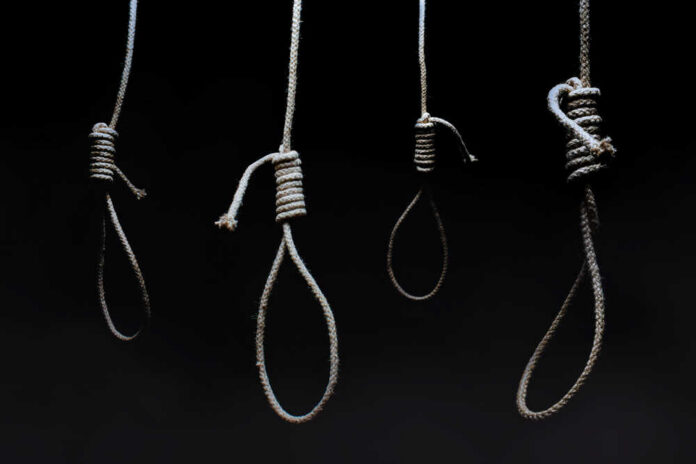
Iran’s execution of a 29-year-old satellite specialist accused of CIA and Mossad spying shows how fast “national security” can become a death sentence when courts operate in the dark.
Quick Take
- Iran hanged Erfan Shakourzadeh, a 29-year-old aerospace and satellite-technology graduate, after convicting him of espionage.
- Iranian judiciary-linked media said he confessed to passing sensitive satellite-related information; no public evidence or trial details were released.
- Human rights groups circulated a prison note attributed to Shakourzadeh alleging months of torture and solitary confinement to force a confession.
- The case lands amid heightened Iran-US-Israel tensions and a reported rise in executions tied to “security” allegations.
What Iran Says Happened—and What the Public Still Can’t See
Iranian authorities announced that Erfan Shakourzadeh was executed at dawn on May 11, 2026, after being convicted of working as a “joint” spy for the CIA and Israel’s Mossad. State-linked reporting described him as tied to the “satellite field” and claimed he leaked classified information about his workplace, duties, and access level. Iran’s judiciary messaging leaned heavily on an alleged confession, but the underlying evidence and trial record were not made public.
Basic biographical details reported by multiple outlets portray Shakourzadeh as a high-performing young engineer: he was 29, had studied electrical engineering, and earned a top-ranked master’s credential in aerospace engineering and satellite technology. Reporting also places his arrest in February 2025 by Islamic Revolutionary Guard Corps (IRGC) intelligence. From there, the case moved through Iran’s security court system with little transparency for outside observers, even as his execution date approached.
A Smuggled Prison Note Claims Torture—and Highlights Due-Process Risks
Human rights organizations publicized what they described as a smuggled note from Shakourzadeh in the days before his execution. In that account, he denied the espionage charges and said authorities forced a false confession after roughly 8.5 to 9 months of torture and solitary confinement. Those claims cannot be independently verified from the court file because Iran did not release detailed proceedings. Even so, the note became central to international attention, underscoring the risk of coerced confessions in closed systems.
Reporting said Shakourzadeh was moved from Tehran’s Evin Prison to Qezel Hesar Prison in Karaj shortly before he was hanged. Human rights groups warned the transfer signaled an imminent execution, and family access appeared limited as the timeline accelerated. Iran’s judiciary messaging presented the outcome as a legitimate counterintelligence win. The competing narratives—state claims of a proven spy versus rights groups’ claims of torture and forced confession—collide on one unavoidable point: the public has no way to scrutinize the evidence.
Why Satellite Expertise Raises the Stakes in Iran’s Security Crackdowns
Iran’s focus on satellite and aerospace expertise gives this case wider meaning than a single criminal conviction. Satellite technology has obvious civilian uses, but it is also strategically valuable for military reconnaissance and for improving guidance and communications capabilities. When a government treats technical talent as a counterintelligence battleground, the result can be a chilling effect across universities and research organizations. For ordinary citizens, it also becomes harder to trust prosecutions that are framed as “national security” while remaining sealed from review.
What This Signals During a Wider Conflict—and Why Americans Should Pay Attention
Several outlets tied Shakourzadeh’s execution to a broader surge in Iranian executions linked to security allegations during a period of heightened regional conflict. State-run and state-adjacent messaging often uses these cases to project strength and deterrence. From an American perspective—especially after years of watching institutions lose legitimacy at home—the Iranian model is a stark reminder of what happens when courts, intelligence services, and state media operate as a single pipeline with limited accountability. The absence of transparent evidence is the story.
For conservatives who prioritize rule of law, the key takeaway is not sympathy for Iran’s regime, but clarity about how authoritarian systems can turn “espionage” into an uncheckable label. For liberals who worry about discrimination and abuse of power, the case similarly illustrates the danger of closed proceedings and coerced admissions. With no public record to evaluate, outside observers are left weighing claims instead of facts. That vacuum is exactly what enables state power to expand, whether the target is a dissident—or a scientist.
Sources:
Iran executes young aerospace engineer over CIA and Mossad espionage allegations
Iran hangs grad student accused of spying for CIA, Mossad
Iran executes young aerospace engineer over CIA and Mossad espionage allegations