When gunfire erupts in a crowded commercial corridor, what begins as a fragmentary breaking story quickly hardens into the public record; the Twin Falls, Idaho In‑N‑Out shooting is a textbook case of how an active‑shooter incident, early uncertainty, and evolving casualty counts converge into a clear but still incomplete picture of a modern mass shooting.
Key Points
- A gunman opened fire at a newly opened In‑N‑Out Burger in Twin Falls, Idaho, killing three people and injuring at least two others, before dying at or near the scene.
- Police and city officials treated the attack as an active‑shooter incident, locked down the surrounding shopping district, and ultimately confirmed that the immediate threat to the community had ended.
- Early reports varied on injury counts and suspect status, reflecting the normal volatility of breaking‑violence coverage rather than a substantive dispute over the core facts.
- Witness video and social‑media clips captured the shooter wielding an AR‑style rifle and the chaotic flight of bystanders, supplementing but not replacing official briefings.
- The investigation into motive, precise sequence of shots, and full victim identities remains incomplete, underscoring how much is typically unknown in the first 24–48 hours after such an attack.
What We Know About the Twin Falls In‑N‑Out Shooting
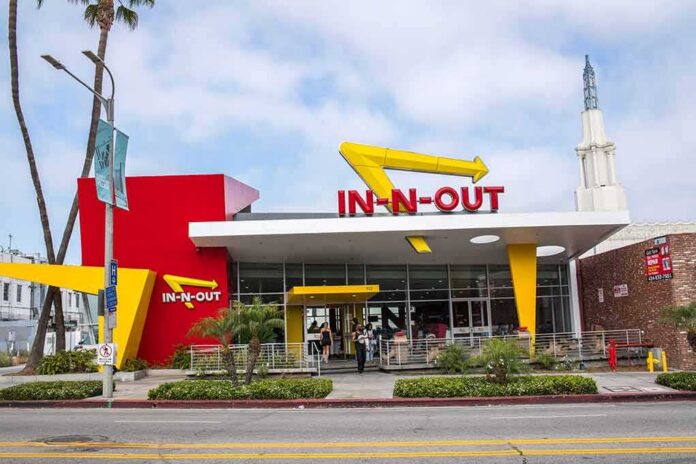
The broad factual backbone of the Twin Falls incident is now well established across local, national, and international outlets. On the afternoon of August 1, 2026, a gunman opened fire in and around a newly opened In‑N‑Out Burger on Blue Lakes Boulevard in Twin Falls, a busy commercial strip that includes other retailers and access to the Perrine Bridge. Multiple authorities and outlets converge on the same core casualty picture: three people died and at least two others were injured in the attack. Later reporting indicates that the suspected shooter is among the dead, which both resolves early uncertainty about an at‑large gunman and explains why police lifted shelter‑in‑place orders after securing the scene.
City spokesperson Josh Palmer told CNN and Reuters that at least three people had been killed and at least two injured, framing the incident explicitly as a mass shooting near the In‑N‑Out restaurant. Twin Falls Police Chief Matthew Hicks, speaking at a press conference, confirmed that there were multiple fatalities and that the suspected shooter was deceased, while cautioning that the exact death toll would only be released after next‑of‑kin notifications and coordination with the coroner and local hospital. This combination—city communications staff providing provisional numbers, the police chief emphasizing process and limits—matches standard practice in major incidents where casualty counts are still being reconciled.
The Shooter, the Weapon, and the Scene
Even in the absence of a complete investigative file, a fairly clear picture of the attack mechanism has emerged. Witnesses and video repeatedly describe a single shooter armed with an AR‑style or AK‑style rifle, firing rapidly in the parking lot and toward vehicles and the restaurant itself. Social‑media clips published by the Associated Press show people fleeing the In‑N‑Out location as shots ring out and an observer exclaims that the gunman is carrying “an AK,” underscoring that this was not a discreet, targeted shooting but a conspicuous, semi‑automatic attack in a crowded public space.
Local broadcast interviews add further texture. One witness, interviewed by KTVB, describes a “shooting rampage” in which a young man with glasses and dark hair stood near the drive‑through lane firing multiple magazines into a nearby car and randomly into other vehicles, as well as through the restaurant’s drive‑through window. That witness reports that an armed citizen in the drive‑through lane returned fire with a handgun, potentially distracting or suppressing the shooter long enough to prevent additional casualties in passing traffic. While full forensic reconstruction—trajectory analysis, casing distribution, and surveillance video from surrounding businesses—has not been released publicly, these eyewitness accounts and videos converge on a scenario of a lone rifle‑armed assailant moving within the immediate vicinity of the restaurant rather than across the broader shopping center.
Law Enforcement Response and Threat Containment
Officials treated the attack as an active‑shooter incident from the outset. The Twin Falls Police Department issued a public safety alert on social media instructing residents and visitors to avoid the area around In‑N‑Out so that officers and first responders could work safely; roads and the nearby bridge were closed, and alternate routes were recommended. Emergency dispatchers reported being overwhelmed with 911 calls, many describing “multiple people down,” which is typical in a mass‑casualty event where callers cannot distinguish between the dead, wounded, and those sheltering in place.
As the response unfolded, multiple agencies converged on the scene, including Twin Falls police, neighboring departments, and state authorities; FBI assistance was requested, largely to support evidence handling and investigative scope, though local police remained the lead agency. School buses were used to evacuate people from the immediate area, and St. Luke’s Magic Valley hospital treated the wounded, at least one outlet describing the hospital as sufficiently busy to ask the public to avoid non‑emergency visits. By the time Chief Hicks addressed the public, law enforcement assessed that “the threat to the community is over,” a conclusion grounded in the confirmation that the suspected shooter was dead near the scene.
Casualty Counts and the Volatility of Early Reporting
One of the more striking features of the Twin Falls coverage is the way casualty counts moved in the first news cycle. Initial briefings and early wire reports settled on three dead and two injured, a figure echoed by NBC, CNN, Reuters, and multiple regional stations. The Wikipedia summary of the event—drawing on these sources—likewise lists three deaths and two injuries as the eventual consensus. At roughly the same time, other outlets and social‑media commentary noted that injury figures might be higher; Hindustan Times, citing what it described as updated information from AP via an X post, reported that the number of injured had risen to seven while the death toll remained at three.
That kind of variation is not unusual in the first hours of a mass shooting. Hospitals often receive more people than ultimately count as shooting victims, and police spokespeople must distinguish between direct gunshot wounds, secondary injuries (for example, those sustained while fleeing), and people initially believed to be hurt but later discharged. In Twin Falls, the convergent, later‑stage reporting coalesces around three dead and two injured—numbers that match both the city’s own language and international summaries—but the existence of a seven‑injured figure in some coverage is a useful reminder that early counts are provisional by design.
Suspect Status: From Uncertainty to Confirmation
In the earliest TV segments and online posts, there was genuine uncertainty about whether the shooter remained at large. NBC reported a Twin Falls police spokesperson saying there was “no active search for a suspect” but that it was unclear whether a suspect was among the deceased, a carefully hedged formulation that reflects incomplete information at that moment. CBS, drawing on a separate set of comments, initially stated that the suspect was at large. Local posts from KMVT and others referenced “one shooter possibly dead behind” the restaurant while explicitly noting that official information on deaths and injuries was still lacking.
Within hours, that ambiguity resolved. Chief Hicks told media that the suspected shooter was deceased and that there was no ongoing threat to the public. International summaries—from CGTN, NDTV and others—frame the event as a shooting in which multiple people were killed “including the suspected gunman,” indicating that later briefings explicitly placed the shooter among the dead. Here again, what looks like apparent contradiction in the compressed timeline of breaking news is better understood as the normal evolution of an investigation: different outlets spoke to different officials at different times, each of whom had varying levels of confidence in their information.
The Role of Eyewitnesses and Social Media
The Twin Falls shooting also illustrates the double‑edged role of eyewitness video and social platforms in contemporary mass‑violence reporting. Short clips posted to X, Facebook, Instagram, and YouTube showed people sprinting away from the restaurant, cars backing up or attempting to flee, and audio of sustained gunfire. Some clips focused on the shooter himself, including zoomed footage of a man with an AR‑style rifle near the drive‑through lane; others captured only the panic and confusion of bystanders.
Livestreamers monitoring police scanners—such as the iCkEdMeL channel—commented in real time on rumors of “two to three shooters,” debated possible motives ranging from personal grievances to gang‑related conflict, and highlighted what they saw as AI‑enhanced or mis‑identified images of suspects.[USER SOCIAL TRANSCRIPTS] None of those speculations have been substantiated by official reports to date. Authorities have consistently described a single shooter, now deceased, and have not publicly tied the incident to organized crime or a specific ideological motive. The gap between the speed of online commentary and the slower, more methodical pace of official confirmation is central to understanding how public narratives form around events like Twin Falls.
Unanswered Questions and Investigative Next Steps
Despite the consolidated picture—three dead, at least two injured, a single shooter with a rifle, threat contained—important questions remain open. Police have not released the identities of the victims or the shooter, pending notification of families and completion of coroner work. No detailed motive has been made public, beyond references to an ongoing investigation and the acknowledgement that the In‑N‑Out was part of a busy commercial area rather than an isolated site.
Key evidence streams still sit behind investigative walls: full incident reports from Twin Falls Police, dispatch logs and 911 audio, hospital intake and discharge summaries from St. Luke’s, and any forensic ballistics analysis used to reconstruct the shooter’s movements and firing sequence. Surveillance footage from the restaurant and adjacent businesses will also be central to a complete reconstruction. As those materials are compiled, they will clarify whether every injury and death occurred within the immediate In‑N‑Out footprint, how long the shooter fired, whether the armed citizen’s return fire directly contributed to neutralizing the threat, and whether any procedural lessons emerge for law enforcement and emergency medicine.
Why This Case Illustrates the Realities of Mass‑Shooting Reporting
Viewed in context, the Twin Falls In‑N‑Out shooting is not an evidentiary controversy so much as a vivid example of the structural challenges in covering mass violence. The core facts—three fatalities, multiple injuries, a rifle‑armed shooter at a fast‑food restaurant, threat neutralized—are backed by a broad array of independent outlets citing named officials and on‑scene video. Counter‑evidence does not dispute those fundamentals; it mostly reflects the thinness of publicly released investigative records and the normal variability of early numbers and suspect descriptions.
For readers trying to make sense of such events, the key is differentiation: casualty counts and suspect status are appropriately treated as settled only once multiple official channels align, while motive, detailed timelines, and accountability questions often take weeks or months to resolve. In Twin Falls, the alignment has largely occurred on the basics of who was hurt and where; the deeper questions—why it happened here, and what it reveals about risk in everyday commercial spaces—will be answered, if at all, in the slower, quieter phase of the investigation that follows after the cameras leave the parking lot.
Community Impact and the Broader Pattern
The shooting also sits within a larger pattern of violence affecting Idaho communities, including other fatal incidents in Twin Falls and surrounding cities in recent years. Local coverage has documented previous deadly shootings in residential areas and drive‑by attacks that, while different in scale from the In‑N‑Out incident, share the same underlying dynamic: sudden gunfire interrupting ordinary life. For residents, the accumulation of such events erodes the sense that violence is a distant, metropolitan problem; the Twin Falls shooting unfolded in broad daylight at a brand‑new restaurant, precisely the kind of setting people assume is safe.
From a policy and public‑health perspective, the case underscores several persistent themes: the lethality of semi‑automatic rifles in confined public spaces, the importance of rapid police and EMS response, and the complicated role of armed civilians who may intervene before officers arrive. It also highlights the informational responsibilities of local agencies in the era of ubiquitous video: clear, timely briefings can reduce the space for rumor, but officials must balance that against the need not to lock in numbers or narratives before they are fully verified.
"In-N-Out Burger President Lynsi Snyder releases statement on deadly mass shooting which left 3 dead and 7 injured in Twin Falls, Idaho" https://t.co/xj0wHeqC5t
— Miss Mary (@DivintyMary) August 2, 2026
Sources:
feedpress.me, independent.co.uk, youtube.com, ksl.com, gbnews.com, facebook.com, abc7.com, x.com, kmvt.com, instagram.com, ktvb.com, idahonews.com, post-gazette.com