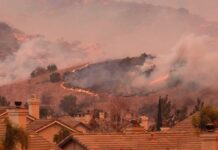
A powerful offshore earthquake has turned General Santos City into the latest warning sign of how fragile infrastructure, global supply chains, and disaster readiness really are in a world already on edge.
Story Snapshot
- A magnitude 7.8 earthquake off Mindanao struck near General Santos City, collapsing multiple commercial buildings and killing at least several people.
- Tsunami warnings rippled across the region, briefly threatening key Pacific sea lanes and tuna export routes that American consumers quietly rely on.
- Footage shows a fast‑food restaurant and other commercial structures reduced to rubble in General Santos, a major coastal hub.
- Early reports highlight how developing countries struggle with building standards and preparedness while still depending on foreign aid and global agencies.
Major Quake Slams a Key Philippine Coastal Hub
A magnitude 7.8 earthquake struck off the southern coast of Mindanao, hitting hardest around General Santos City, a major commercial hub of more than 700,000 residents known for its tuna industry.[6][2] Philippine and international seismology agencies reported the offshore epicenter south or southwest of the city, with shaking that lasted around 30 seconds and triggered at least 138 aftershocks, some above magnitude 6.0.[6][1] Authorities quickly warned of possible tsunami waves and ordered evacuations along the southern coastline.[1][6]
Newsrooms around the world soon carried images of collapsed structures in General Santos City, confirming what early reports feared: commercial buildings had failed under the intense shaking.[3][7] Video verified by international media showed a shopping center that included a Jollibee fast‑food outlet reduced to rubble, along with a separate school building that crumpled, though officials said it was unoccupied.[3] Local authorities estimated that dozens of buildings, mostly commercial, suffered damage as first responders started rescue operations.[1]
Casualties, Building Collapses, and an Ongoing Rescue Effort
Official casualty figures are still evolving, but Philippine disaster officials and international outlets report that the death toll has reached at least several people, with more than a hundred injured and others missing.[6][1] The Office of Civil Defense stated that seven people were killed in General Santos alone, with additional deaths in nearby South Cotabato and Davao Occidental.[6] Police in the city described many damaged buildings, while stressing that they were too engaged in active rescues to provide a full inventory.[1]
Local and foreign coverage converges on one hard reality: multiple buildings in General Santos City either collapsed or partially collapsed under the quake, including a commercial structure and a school facility.[3][4][5] One international report described a “small commercial structure” suffering a partial collapse before business hours, while staff managed to escape to the ground floor without injuries.[2] In other cases, responders are still working through debris, with reports of students potentially being trapped in a two‑story school.[6] The city’s airport was shut down, complicating outside assistance and medical evacuation.[3]
Tsunami Fears, Regional Ripples, and Global Supply Concerns
Following the main shock, the Pacific Tsunami Warning Center and regional agencies issued tsunami alerts, warning of waves potentially reaching up to about ten feet on some Philippine coasts.[2][1] The Philippine Institute of Volcanology and Seismology urged people in coastal communities to move to higher ground, and regional disaster officials later reported that roughly 80 percent of the local population had done so.[3][6] Recorded tsunami waves along parts of Mindanao’s southern coast were generally lower than the most alarming projections but still strong enough to justify the rapid evacuations.[1][6]
A powerful 7.8-magnitude earthquake caused buildings to collapse in General Santos City, Philippines #Philippines #SantosCity #earthquake #78magnitude #tsunami pic.twitter.com/lTPL8uBImR
— VIRAL VOLT (@ViralVolT1) June 8, 2026
For American readers, General Santos City may seem far away, but it is deeply tied into global commerce, particularly seafood exports that ultimately land in United States grocery stores.[2][3] Any extended damage to port facilities, processing plants, or power infrastructure there could further strain already fragile supply chains shaped by years of globalist policy, pandemic disruptions, and energy price volatility. While detailed assessments are still underway, the quake underscores how events in one coastal city can cascade into higher prices and fresh uncertainty for families thousands of miles away.
Infrastructure Lessons and the Limits of Global Institutions
Preliminary engineering details are limited, but the pattern is familiar: crowded coastal cities in developing countries often struggle with uneven building standards, aging commercial structures, and limited enforcement of safety codes.[6][3] Early disaster reporting notes that “collapsed buildings” headlines usually arrive before any full technical survey, and the Philippine case appears no different.[6] Nonetheless, the confirmed failures in multiple structures during this quake highlight yet again the human cost when basic resilience takes a back seat to rapid urban growth and political priorities.
International agencies and non‑governmental organizations will likely frame this event as another reason to expand multilateral disaster frameworks and climate‑linked funding, even though the quake itself was driven by tectonic forces along the Cotabato Trench.[6] According to seismologists, the earthquake resulted from thrust faulting on that undersea fault system, not from any atmospheric or emissions‑related factor.[6] As aid conversations unfold, conservatives can watch closely whether funds go toward practical hardening of schools, hospitals, and commercial buildings—or get absorbed into bureaucratic overhead, public relations campaigns, and new layers of global governance.
Sources:
[1] YouTube – Building collapses in General Santos City during 7.8 magnitude …
[2] YouTube – Buildings collapse after powerful earthquake strikes off Philippines
[3] Web – Philippines earthquake kills at least eight and triggers tsunami …
[4] Web – Buildings collapse, GenSan airport shuts after 7.8-magnitude quake
[5] YouTube – Commercial building collapses from 7.8-magnitude earthquake in …
[6] Web – 2026 Mindanao earthquake – Wikipedia
[7] Web – Magnitude 7.8 earthquake strikes southern Philippines, triggering …