
In wilderness search and rescue, survival often turns less on heroics than on timing and coordination; the weeklong search for a 70-year-old solo hiker on Isle Royale is a case study in how multi-agency systems, backcountry users, and aircraft crews convert a narrow window into a life saved.
At a Glance
- A 70-year-old solo hiker missing on Isle Royale National Park was found alive by backpackers and evacuated by the U.S. Coast Guard and Michigan State Police.
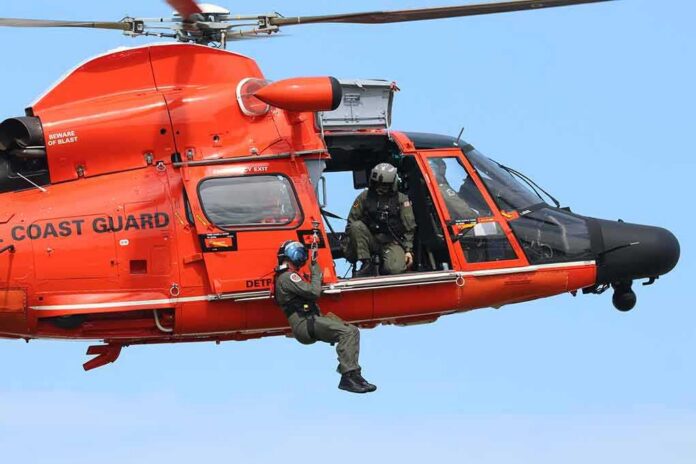
- The Coast Guard confirms he disappeared Sept. 5 and was hoisted out by an MH-60 Jayhawk helicopter the following Saturday, then transferred to EMS care on the mainland.
- Backpackers’ discovery and rapid agency coordination bridged the hardest gap in SAR work: initial location to definitive care.
- The incident aligns with broader SAR patterns: solo hikers, particularly men, are overrepresented in rescues, and swift location strongly improves outcomes.
What Happened: A coordinated search ends in a successful hoist and medical transfer
According to the U.S. Coast Guard, the hiker went missing on Sept. 5 while on Isle Royale National Park, a remote archipelago in Lake Superior accessible only by boat or seaplane. After days of searching, backpackers on the island located the man alive; responders then executed an air evacuation. A Coast Guard MH-60 Jayhawk helicopter crew conducted the hoist and transported him to Marquette Regional Airport in Michigan’s Upper Peninsula, where EMS took over for hospital care. Video from the operation shows the deliberate choreography of a standard maritime-air rescue translated into backcountry terrain: trail line control, basket stabilization in rotor wash, verbal cadence between flight mechanic and pilots, and a final “patient is inside the cabin” to confirm a clean transfer.
Public updates from regional outlets and park-linked posts tracked the arc familiar in wilderness incidents: initial overdue report, expanding ground and aerial search, and—crucially—a sighting by fellow hikers that narrowed the search box from miles of forested ridgeline to a precise location. The Coast Guard release described the man as injured and ailing; ABC News reported he presented with hypothermia, consistent with prolonged exposure in Lake Superior’s rapidly changing early-fall conditions.
Why Isle Royale is different: remoteness magnifies every decision
Isle Royale is among the most remote units in the U.S. National Park system. There are no roads to drive onto the island, and once on the trails, communications vary from patchy to nonexistent. That isolation is the park’s draw—wolf and moose studies, quiet ridgelines, inland lakes—and its principal hazard. A routine stumble, a navigational error in thick spruce, or a cold snap rolling off Lake Superior can compound quickly when the nearest ranger station is a day’s hike and the last ferry of the week has left. Helicopter access remains the most reliable definitive link to care, but only once a patient is found and stabilized enough for a hoist window.
For responders, the park’s geography dictates tactics. Aerial platforms can see over canopy breaks and shorelines, but the interior is laced with timber and narrow clearings; hoists demand room, rotor discipline, and communications that hold under gusting winds. Ground teams read spoor, disturbed duff, and water sources to vector search segments; backpackers, anglers, and paddlers become force multipliers when they report sightings accurately and promptly. In this case, that civilian-to-agency handoff likely made the difference between a prolonged search and a same-day extraction.
The pattern behind the rescue: who needs help, and why
Search-and-rescue data across U.S. national parks shows consistent patterns: incidents cluster among hikers, occur frequently on weekends, and often stem from fatigue, insufficient gear, or off-trail travel rather than dramatic calamities. A peer-reviewed analysis of national parks reported more than 12,000 SAR operations over a four-year span, with thousands of injuries and saves; hiking was the activity most commonly associated with assistance, underscoring how ordinary backcountry travel can tip into distress without a single catastrophic trigger.
Solo status concentrates both risk and responsibility. SAR practitioners and analysts have long observed that people hiking alone represent a disproportionate share of lost-person cases—approaching or exceeding half of incidents in some datasets—despite being a minority of trail users. The effect is not simply about recklessness; it is about redundancy. A partner can fetch help, stabilize an injury, or correct a navigational lapse; alone, the margin narrows markedly. Older hikers, especially men, appear frequently in SAR case files for reasons that are less about capability than about physiology and probability: age-related susceptibility to hypothermia, slips with higher consequence, and a lifetime’s habit of going it solo intersect with remote terrain. In that sense, Isle Royale’s rescue is statistically unsurprising and operationally exemplary.
How the rescue machinery works: from overdue report to rotor wash
Every successful SAR on a remote island starts with a signal—sometimes a beacon activation, sometimes a missed rendezvous that triggers concern. Rangers assemble a timeline: last known point, intended route, supplies, experience level. That feeds an initial operations plan: hasty teams sweep obvious corridors; air assets, if weather allows, reconnoiter shorelines and ridges; incident command segments the map and prioritizes probabilities based on terrain and behavior profiles. When a sighting comes in, the plan compresses: confirm identity, assess condition, choose the fastest safe extraction method. On Isle Royale, that often means calling in a Jayhawk or a state police helicopter trained for maritime and wilderness hoists.
The MLive rescue footage captures that pivot—from search to rescue—through terse, practiced language. The flight mechanic manages the hoist drum, the crew keeps the aircraft in stable hover with small positional calls, and the ground contact ensures the basket rides a trail line to dampen spin. It is not flashy; it is meticulous, because at twenty feet, a quartering gust can turn a clean pick into a risk event. The basket comes aboard, hands move the patient inside, doors slide shut, and the aircraft noses toward the mainland, where EMS can warm a hypothermic core, treat injuries, and begin the slower work of recovery.
Lessons for backcountry travelers: margin, signaling, and partners
Most rescues do not hinge on heroics; they hinge on margin—food, warmth, navigation, and signaling capacity that turn a mistake into a bivy, not a calamity. The national-parks study and practitioner interviews echo the same counsel: carry essentials appropriate to distance and weather, know your route and outs, and respect how fatigue degrades judgment long before it announces itself. For solo hikers, the math is unforgiving but manageable: tell someone your itinerary, carry a satellite communicator or PLB, and build in time buffers that acknowledge that Isle Royale is not a place to race dusk to a distant camp.
The Isle Royale rescue also reaffirms an underappreciated truth: other hikers are part of the system. The backpackers who found the missing man played a decisive role; they were attentive, they engaged, and they handed off to professionals who could finish the job. In remote parks, that vigilance is not nosiness; it is stewardship.
70-Year-Old Solo Hiker Found Alive After Missing for a Week in One of America’s Most Remote National Parks
A 70-year-old solo hiker has been found alive after spending a week missing in Isle Royale National Park, one of America’s most remote national parks. Craig Berg was… pic.twitter.com/Z2kk2OvIRA
— CSB News USA (@csbnewsus) September 14, 2026
Why this one ended well—and what it says about the system
When a septuagenarian is located on a remote island after a week alone and leaves it in a helicopter basket rather than a body bag, many things went right: a family or ranger recognized an overdue threshold, search managers framed the problem quickly, aircraft crews found a weather window, ground and air teams worked the plan, and fellow hikers closed the last mile of uncertainty. The Coast Guard’s concise after-action line—rescued, transferred, cared for—belies the complexity behind it and reinforces why interagency training matters on islands like Isle Royale where every mile of water is a logistical tax.
The broader SAR record offers sober perspective. Thousands of wilderness incidents each year resolve without headlines because responders practice relentlessly and backcountry users, more often than not, help one another. The Isle Royale rescue fits that pattern—statistically familiar, humanly remarkable—and reminds anyone heading for the quiet places that survival is a chain. Strengthen any link—planning, gear, route discipline, or communication—and you improve your odds. When that fails, the system built to find you knows what to do next.
Sources:
facebook.com, abcnews.com, wtip.org, freep.com, upnorthlive.com