President Trump threatens to obliterate Iran’s power plants and bridges if it rejects peace talks, exposing the regime’s defiance as the ceasefire clock ticks down to zero.
Story Snapshot
- Trump dispatches VP JD Vance, Jared Kushner, and Steve Witkoff to Islamabad for urgent second-round talks as ceasefire expires in under 48 hours.
- US Navy seizes Iranian cargo ship Touska attempting to breach Strait of Hormuz blockade, prompting Iran’s retaliation vows.
- Iran rejects negotiations, blaming US “excessive demands” and naval blockade, heightening strike risks.
- Trump’s stark warning underscores America First resolve against Iranian aggression, protecting global energy security.
Trump’s Ultimatum Amid Ceasefire Deadline
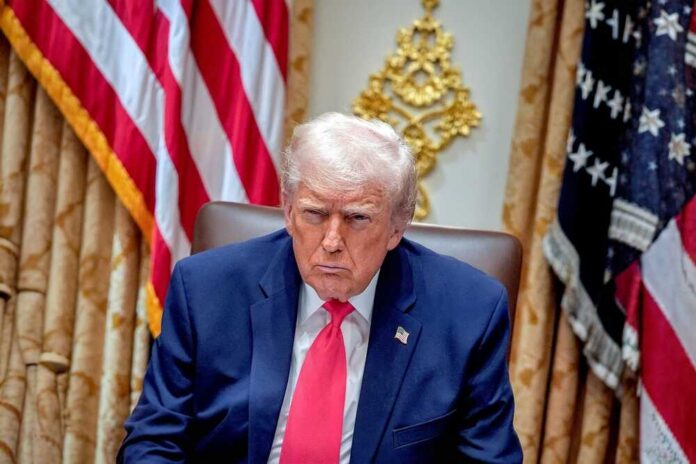
President Donald Trump warned Iran on Sunday that the US will “knock out every single power plant and every bridge” if Tehran refuses a fair peace deal. This follows the US Navy’s seizure of the Iranian cargo ship Touska, which attempted to breach the American naval blockade of Iranian ports and the Strait of Hormuz. The blockade enforces ceasefire terms established after recent US-Iran clashes under Operation Epic Fury. With the ceasefire expiring by Wednesday, Trump’s rhetoric positions the US to project unyielding strength, echoing his criticism of past weak deals like Obama’s JCPOA. Americans weary of endless foreign entanglements see this as necessary toughness to prevent Iran from threatening global oil flows through the Hormuz chokepoint, which handles 20 percent of world oil transit.
US Delegation Heads to Pakistan Despite Iranian Rejection
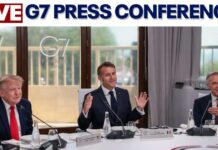
VP JD Vance leads a high-level US team including special envoys Jared Kushner and Steve Witkoff to Islamabad, Pakistan, for the second round of indirect peace talks. Trump announced the mission on Fox News and Truth Social, framing it as Iran’s last chance before potential strikes. Hours after the announcement, Iran’s state news agency rejected participation, citing US excessive demands, the naval blockade, and the Touska seizure as ceasefire violations. Pakistan serves as a neutral host amid mutual distrust. This standoff tests Trump’s deal-making prowess in his second term, where Republicans control Congress and prioritize America First policies over globalist appeasement.
Escalation Roots in Historical Animosity and Recent Clashes
US-Iran tensions trace back to the 1979 Revolution, hostage crisis, and nuclear disputes, exacerbated by Trump’s 2018 JCPOA exit and sanctions. Pre-ceasefire fighting included US strikes and Iranian attempts to close the Strait of Hormuz. The fragile truce allows the US blockade to pressure Iran’s economy through disrupted oil exports. Recent precedents like 2019-2020 tanker seizures and the 2020 Soleimani strike inform the current dynamics. Both conservatives frustrated by past liberal weakness and liberals wary of elite-driven wars share concerns over federal overreach in foreign policy, yet Trump’s approach aims to end the “Iran killing machine” without open-ended commitments.
Power dynamics favor US military superiority, with munitions dominance and blockade enforcement. Iran relies on defiance, proxies, and Strait threats. Experts like Prof. Robert Pape describe a “zero-sum escalation” lacking off-ramps, warning Trump lacks leverage for a shift despite the blockade. Pro-Trump views hail the posturing as essential toughness; Iranian narratives decry aggression. Consensus points to high strike risks if diplomacy collapses.
Trump Just Gave Iran a Big Warning Ahead of the Second Round of Peace Talks https://t.co/nNtz3cPaUB
— Rachel Morse (@rm36863307) April 20, 2026
Global Stakes and Domestic Frustrations
Short-term risks include US infrastructure strikes, Iranian Strait closure, proxy attacks, oil price surges, and shipping halts. Long-term, escalation could spur regime change efforts or nuclear advances. Iran faces economic collapse and civilian hardships; global markets brace for energy crises. US allies like Israel and Gulf states heighten security. Politically, failure bolsters hardliners on both sides, straining neutral Pakistan. Americans across the spectrum, from conservatives decrying overspending on weak policies to liberals eyeing growing divides, increasingly view distant wars as elite distractions from the American Dream. Trump’s high-stakes gamble reinforces limited government abroad, prioritizing citizen prosperity over endless interventions.
Sources:
Trump sending Vance, Witkoff and Kushner to Pakistan for …
Trump sends Vance, Witkoff and Kushner to Pakistan for …
Donald Trump Sends JD Vance to Islamabad for High- …