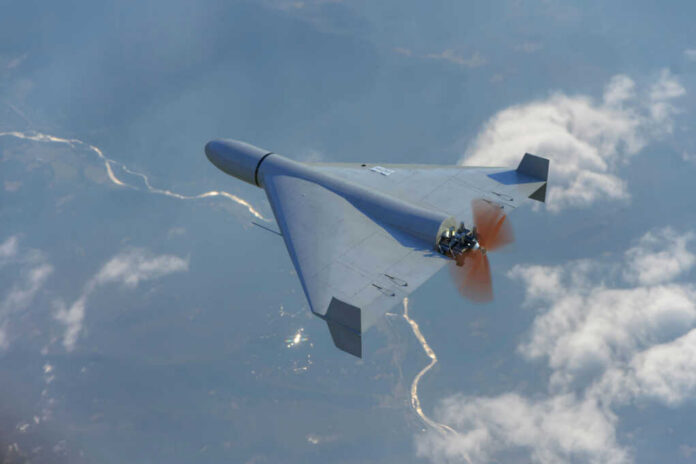
While Washington still argues over aid and deficits, Ukraine’s new “flying HIMARS” drones are quietly rewriting how modern wars drain taxpayers, stockpiles, and great‑power armies.
Story Snapshot
- Ukraine is using cheap mid-range “flying HIMARS” drones to hit Russian fuel, ammo, and command hubs 20–300 km behind the front, areas once struck mainly by U.S.-made HIMARS rockets.[1][2]
- These drones are restoring a HIMARS-style deep-strike effect at far lower cost and with less reliance on Western supply, by targeting trucks, depots, and air defenses in Russia’s rear.[1][3]
- Analysts say the campaign has helped Ukraine force Russia to pull logistics farther back and even lose net territory in spring 2026 for the first time in over a year.[2]
- Russia is racing to copy the same playbook with its own mid-range drones, showing that cheap unmanned weapons are reshaping warfare faster than big governments can adapt.[5]
New “Flying HIMARS” Drones Fill the Gap Western Rockets Left
For years, Western High Mobility Artillery Rocket Systems gave Ukraine a precise deep-strike punch, but rocket stocks were limited and Russian countermeasures made their use harder over time.[3] Ukrainian engineers and officers responded by building mid-range strike drones that cover roughly 30 to 300 kilometers, a band once dominated by HIMARS rockets and similar guided rounds.[1][3] These new drones fly like small planes, carry sizable warheads, and can loiter over rear areas hunting for fuel trucks, command posts, and air-defense vehicles in real time.[1][3]
Business Insider reports that operators are now “consistently” striking Russia’s rear areas with these drones, restoring a capability Western artillery once provided but could not sustain at scale.[1] One Institute for the Study of War analyst argues that Ukraine’s mid-range drone campaign is “heralding a new phase of the war,” because it lets Ukraine blunt Russian advances by choking logistics before units ever reach the line.[1] In simple terms, Ukraine is turning cheap airframes and basic electronics into a precision strike network, without waiting for Congress or NATO to sign off on every rocket.[1]
How Mid-Range Drones Turn Russia’s Rear Into a Kill Zone
Ukraine’s new fixed-wing strike drones are hitting what planners call the “middle range” — about 20 to 300 kilometers from the front — going after warehouses, transport hubs, fuel columns, and reserve formations that once parked safely out of standard artillery reach.[2][3] A Ukrainian commentator noted that Russia had viewed this belt as a safe zone, but now it has become a “new kill zone” that forces Moscow to move depots and staging areas even farther back.[2] That shift makes every shell, rocket, and fuel load take longer to reach the front, slowing attacks and raising costs for Russia’s already strained economy.[2]
Ukrainian sources say mid-range drones are hitting priority targets like command posts, logistics hubs, and air-defense radar dozens of miles behind the line, where Russian units tend to gather vehicles and sensitive gear.[3][4] One Ukrainian defense source told Ukrainska Pravda that if they can build around 1,000 airframes a month and fly them systematically, they can “significantly weaken” Russian logistics feeding the front.[4] Analysts cited by Business Insider add that in some sectors these strikes are already making Russian infiltration tactics less workable by steadily cutting resupply and backup.[1] This is classic attrition — but done with cheap drones instead of massed artillery.
Drones vs. HIMARS: Cost, Flexibility, and U.S. Stockpiles
For American readers watching our own ammunition stocks and budget deficits, the cost angle matters. A single precision rocket for HIMARS is expensive and slow to replace, while many mid-range drones can be built with commercial parts and local industry for a fraction of the price.[7] Reporting on Ukraine’s FP-2, Bulava, and RAM 2X drones describes them as “HIMARS in the sky,” delivering similar precision against air defenses, oil depots, and supply hubs deep inside Russia, at costs reportedly tens of thousands of dollars per strike instead of hundreds of thousands.[7]
These drones also do things rockets simply cannot. Operators can retask a drone in flight, loiter over a road, and then dive on a moving fuel convoy, something HIMARS rockets are poorly suited to do.[1] Some mid-range drones now carry simple artificial intelligence systems that keep guiding the warhead even if Russian jamming breaks the radio link in the final seconds.[1] For Washington, that means Ukraine is less dependent on constant new rocket deliveries, and U.S. leaders can think more carefully before dipping deeper into our own war stocks in a dangerous global environment.
Russia Copies the Playbook, and the Drone Arms Race Grows
Ukraine is not the only one learning. A defense analysis group notes that Russia’s elite Rubicon drone unit has shown video of mid-range drones hitting targets 60 to over 200 kilometers behind Ukrainian lines, including in Mykolaiv and Poltava regions.[5] Those attacks use fixed-wing “kamikaze” drones to flatten treelines, logistics hubs, and rear facilities, mirroring the same concept Ukraine is now using against Russian depots.[5] In other words, mid-range drone warfare is becoming a two-way street, not a magic bullet for either side.[5]
Broader research on drone warfare warns that new systems often change the tempo and cost of fighting without guaranteeing quick victory. In Ukraine and other wars, drones lower the financial and political cost of launching strikes, which means leaders can use force more often, but air defenses still shoot many of them down. Analysts estimate that by the mid-2020s drones account for a large share of battlefield losses, yet they rarely end conflicts by themselves. For U.S. conservatives worried about endless wars and open-ended aid, that is a key point: drones are transforming warfare, but they do not replace strategy, diplomacy, or clear limits on American commitments.
Sources:
[1] Web – Ukraine’s newest attack drones are delivering the kind of strikes that …
[2] Web – Ukraine’s new mid-range strike drones are turning Russia’s once-safe …
[3] Web – Hitting the rear and easing the load on HIMARS: Ukraine’s new mid …
[4] Web – Hitting the rear and easing the load on HIMARS: Ukraine’s new …
[5] Web – Ukraine Needs New Mid-Range Strike Drones
[7] YouTube – Ukraine Can’t Get Enough HIMARS – So It Invented a Flying Version That …