

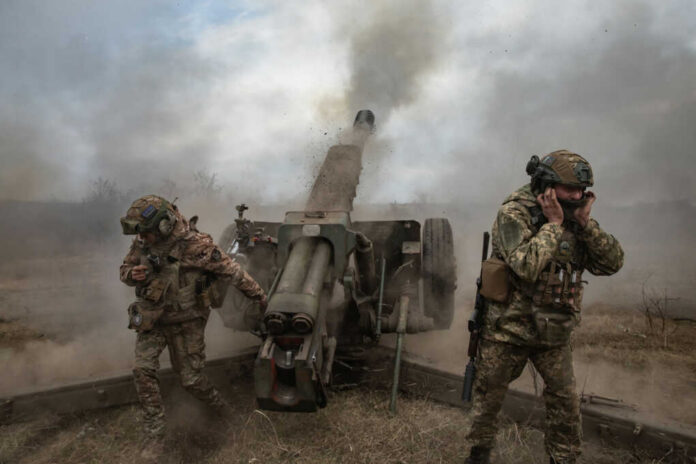
As Belarus rehearses nuclear warfighting with Russia on NATO’s doorstep, Europe rattles its sabers while American taxpayers quietly wonder who will end up paying for this dangerous game.
Story Snapshot
- Belarus and Russia staged Zapad‑2025 drills that openly practiced planning and simulated use of tactical nuclear weapons near NATO borders.
- Minsk insists the exercises were “defensive” and aimed at a hypothetical enemy, but the scenarios and locations point straight toward Poland and Lithuania.
- The drills showcased systems like the Iskander‑M and the Oreshnik missile, deepening concerns about Russian nuclear assets now stationed in Belarus.
- NATO went on alert, underscoring how quickly a regional exercise can spiral into a continental crisis that could drag in the United States.
Belarus Calls It Defensive, But the Battlefield Says NATO
Belarusian Defense Minister Viktor Khrenin described the Zapad‑2025 exercise as a defensive drill, saying units near the borders with Poland and Lithuania would practice repelling a “hypothetical enemy” and retaking lost territory.[2] Official statements stressed readiness and defense, not a strike on any named state.[2] Yet the very choice of terrain tells a different story. When troops rehearse assaults and urban operations near the Polish and Lithuanian borders, that “hypothetical” enemy is not hard to guess.[1][2]
The Moscow Times reported that the core scenario involved testing Belarus and Russia’s ability to repel an enemy attack, counterattack, and seize back territory, including training to assault populated areas.[2] That combination blurs any neat line between defensive doctrine and offensive intimidation. The drills were also billed as scaled down and held deeper inside Belarus, but reporting confirms that smaller units still operated uncomfortably close to NATO territory, ensuring that Western governments would see the exercise as direct pressure on their eastern flank.[2][4]
Nuclear Planning Moves From Theory to Practice
What separates Zapad‑2025 from a normal war game is the explicit nuclear content. Belarusian armed forces chief of staff Pavel Muraveiko said the two sides practiced “planning and the consideration of the application of non‑strategic nuclear weapons,” indicating detailed staff work on when and how to employ battlefield nuclear arms.[3] He also cited “evaluation and deployment of a mobile missile complex Oreshnik,” a new Russian intermediate‑range system that can reach deep into Europe from Belarusian soil.[3]
Belarusian leader Alexander Lukashenko confirmed that his forces practiced launching tactical nuclear weapons alongside Russian units, not merely talking through theory on a whiteboard.[3] Arms‑control reporting ties these drills to the broader deployment of Russian nuclear assets in Belarus starting in 2023, including warheads for Iskander‑M missile systems and aerial bombs for Belarusian fighter aircraft. Those weapons, with yields in the single‑ to double‑digit kiloton range and ranges of several hundred kilometers, put key NATO infrastructure within rapid strike distance if tensions ever spill over.
From 2022’s Invasion Playbook to 2025’s Nuclear Signal
Analysts and defense outlets repeatedly connect Zapad‑2025 to a dangerous precedent: Russia’s use of major exercises as cover before launching its 2022 full‑scale invasion of Ukraine.[4] Defense News notes that earlier large‑scale Russia‑Belarus drills were quickly followed by Moscow sending forces across the Ukrainian border, a pattern that now colors every subsequent maneuver.[4] Even if Belarus insists the 2025 drills were routine, its own record and Russia’s history give neighbors reason to doubt those assurances.[2][4]
NATO states reacted accordingly. The Moscow Times reported that the nuclear‑linked exercise put alliance members on alert, particularly Poland and other Eastern European countries that already conducted their own drills earlier in the summer due to the deteriorating security climate.[2][4] When a nuclear‑armed Russia stations weapons in Belarus, rehearses their use, and moves troops near NATO borders, even a “simulated” nuclear strike becomes a live geopolitical message. The result is a constant escalatory spiral that makes miscalculation more likely and raises the stakes for any border incident.[2][3]
Russian Warheads in Belarus: Permanent Leverage on Europe
The nuclear drills cannot be separated from the larger reality that Russia has now redeployed tactical nuclear weapons into Belarus for the first time since the early post‑Cold War years. Reporting by arms‑control advocates describes completed warhead storage facilities, confirmed transfers beginning in 2023, and deployment of warheads for Iskander‑M systems and free‑fall bombs for Belarusian aircraft. Moscow formally brought Belarus under its nuclear umbrella in 2024, binding Minsk more tightly into Russia’s strategic posture.[3]
🇧🇾🇷🇺Belarus and Russia begin joint nuclear weapons drillshttps://t.co/DAXfDwBksI
— tut0ugh (@tut0ugh) May 19, 2026
Crucially, Russia retains control over the warheads while promising Belarus some role in target selection during a crisis, a hybrid arrangement that gives the Kremlin flexibility and deniability.[4] For Belarusians, analysts argue this has turned their country into a hostage of Russia’s nuclear strategy rather than a fully sovereign actor. For Americans and our allies, it means another forward operating location for Russian nuclear assets, compressing warning times and complicating any future defense of NATO territory should deterrence ever fail.
What It Means for U.S. Conservatives Watching From Afar
Belarus’s nuclear drills underline why many American conservatives oppose endless foreign commitments that invite escalation without clear benefit to the United States. European governments grow more dependent on Washington’s security guarantees as Russia pushes nukes toward their borders, and every crisis becomes another justification for new spending, deployments, and entanglements. At the same time, the exercises show how fragile peace becomes when authoritarian regimes rely on nuclear theatrics instead of genuine diplomacy.[3]
For readers at home, the lesson is twofold. First, a strong America with a focused, well‑funded defense is essential, but so is restraint in writing blank checks for foreign security while our own border is porous and our debt climbs. Second, nuclear brinkmanship in Eastern Europe can impact energy prices, inflation, and global markets, affecting everyday American families. Staying informed about these drills helps voters insist that any U.S. response safeguards our sovereignty, constitutional responsibilities, and economic stability first.
Sources:
[1] YouTube – Zapad 2025 | Russia & Belarus Unleash Massive Nuclear-Linked Drill
[2] Web – Russia and Belarus Stage Simulated Nuclear Strike During Zapad …
[3] Web – Belarus, Russia Practice Nuclear Operations
[4] Web – Russia-Belarus military drills start this week. Here’s what to know