

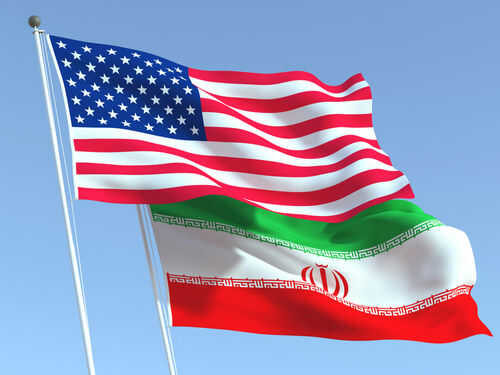
A fragile new Iran memorandum may reopen the oil lanes and end a war, but only if Trump can force Tehran to accept real limits instead of another weak Obama-style giveaway.
Story Snapshot
- The United States and Iran have signed a 60-day memorandum that pauses fighting and aims to reopen the Strait of Hormuz.
- Key nuclear and terror-financing issues are delayed to later talks, raising fears of an empty “framework” instead of a real deal.
- Trump’s team says there will be no secret side payments and that Iran must prove it will not seek nuclear weapons.[3]
- Conservatives worry confused terms and media spin could let Iran claim victory while America carries the risk.
What Trump’s Iran Memorandum Actually Does
President Donald Trump has signed a short-term memorandum with Iran that stops active fighting for sixty days and is supposed to reopen the Strait of Hormuz, the narrow sea lane that carries a major share of the world’s oil.[4][5] A senior United States official says the document calls for an immediate end to attacks “on all fronts” and the full opening of the strait to traffic, at least for the pause period.[4] Global markets cheered the news because tankers and insurance traders see any reopening as a relief valve on energy prices.[5]
Trump and Vice President J.D. Vance signed the memorandum digitally, with a formal ceremony expected in Geneva later this week.[4] Reports describe a roughly fourteen-point text that locks in the ceasefire and lays out what both sides must talk about over the next two months.[5] Pakistani and Qatari mediators helped broker the outline, which includes lifting the United States naval blockade of Iranian ports once commercial shipping restarts and Iran removes mines from the sea lanes.[3][5] In simple terms, Trump has traded a temporary halt in fighting for a test of whether Iran will bargain.
The Rough Edges: Nuclear Delays, Sanctions Cash, and Competing Narratives
The biggest concern for conservatives is that the hard stuff has been kicked down the road. Nuclear questions are not solved in this memorandum; they are delayed into the sixty-day window that follows.[1] Analysts say the framework simply promises future talks about Iran’s enriched uranium stockpile, an enrichment pause, and the possible dismantling of nuclear sites, with no final numbers or time limits locked in.[5] That means Iran can pocket sanctions relief and shipping access now while haggling later over what it will really give up.[1]
Sanctions and money raise another red flag. Reports from United States and Iranian media say Iran could gain limited oil sales and even access to frozen assets during the talks, if it keeps to the ceasefire and lets ships move safely.[1] One Iran-based outlet described a draft plan to free up about twenty-four billion dollars in blocked funds during the sixty-day period. Trump officials insist there are no “side deals” or secret wire transfers, but the basic trade is clear: some economic breathing room for Tehran in exchange for good behavior and a promise to keep negotiating.[3] That sounds better than the Obama cash airlifts, yet many readers will hear echoes.
Is This Strength or Another Temporary Patch? How Conservatives Should Read It
For Trump supporters, the key test is whether this memorandum keeps maximum pressure on Iran or slides back toward the old “pay now, verify later” playbook. Trump’s earlier demands were tough: a fully open Strait of Hormuz, removal of nuclear material, a dismantled nuclear program, no funds for terror groups, and no release of money until Iran complies.[2] The new memorandum repeats some of that language by stressing verification that Iran is not building a nuclear weapon or financing radical groups before its economy can truly reopen.[4] That aligns with the conservative goal of stopping terror dollars and protecting Israel, not rewarding the regime.
At the same time, experts at the Atlantic Council warn that this is not a full peace deal but a basic outline, and that a sixty-day window is probably too short to crack every nuclear and sanctions issue. History also tells us that United States–Iran talks are shaped by deep mistrust and gamesmanship, with both sides using half-public “frameworks” to win headlines at home without giving much away. Iranian hardline media already frame the memorandum as a tactical pause, not a surrender of any “red lines,” while more moderate outlets sell it as a way to ease economic pain without admitting defeat. In other words, both sides are claiming victory—exactly the moment when conservatives should read the fine print.
What This Means for Energy Prices, American Leverage, and Constitutional Concerns
For American families, the most immediate effect will be felt at the gas pump. The Strait of Hormuz is a choke point for nearly one-fifth of global oil and gas, so even a partial reopening can push energy prices down and calm inflation pressures.[5] Trump’s team hopes that “Ships of the world, start your engines” is not just a slogan but a path to cheaper fuel and more stable markets.[5] That would be a win for middle-class drivers who suffered through high energy costs under earlier green and globalist schemes.
⚡️🇺🇸🇮🇷 — Multiple White House advisers were blindsided by President Trump’s sudden Truth Social announcement of a completed "great deal" with Iran, with internal terms still actively under negotiation — The Wall Street Journal.
➡️ Administration officials confirm top national…
— MaxOsint Intel (@maxosintintel) June 16, 2026
Still, conservatives should keep asking hard questions. Does this sixty-day pause strengthen American leverage over a hostile regime, or does it signal that Washington is tired of the fight and ready to settle for less than full denuclearization and an end to terror funding?[5] Are Congress and the American people getting full transparency on any sanctions relief or asset releases, as the Constitution’s checks and balances require, or will career diplomats and international elites try to lock in terms that tie the hands of this and future presidents? Trump has clearly changed the conversation by forcing Tehran to the table under pressure; whether that becomes a durable victory or just another temporary patch depends on what he demands, what Iran truly concedes, and how closely patriotic citizens keep watch over the next sixty days.
Sources:
[1] Web – Trump Just Changed the Conversation About Iran
[2] Web – Iran and U.S. reach deal, Trump and Pakistani prime minister say, as …
[3] Web – 2025–2026 Iran–United States negotiations – Wikipedia
[4] Web – U.S. and Iran reach deal but need Trump’s final approval, officials …
[5] Web – Trump, Iran agree to memorandum of understanding opening Strait …