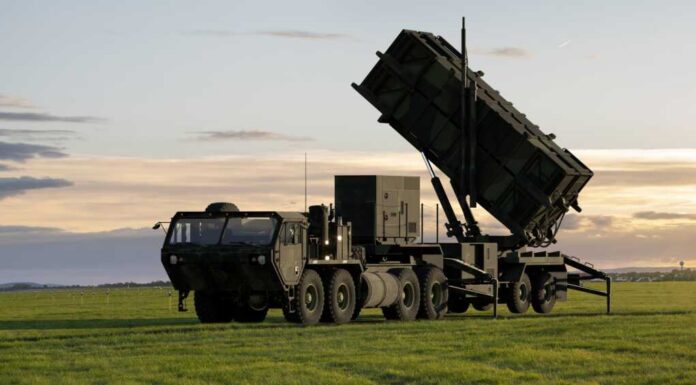
Britain is racing to field new 500km‑plus strike weapons for Ukraine, and the rush should make every American who cares about peace and limited government stop and pay attention.
Story Snapshot
- The United Kingdom is testing long‑range strike weapons that can hit targets at least 500km away, with hopes of sending them to Ukraine within about a year.
- This new system, tied to “Project Brakestop,” is meant to be cheaper and faster to build than older cruise missiles like Storm Shadow.
- The weapons are part of a wider British and NATO push to build deep‑strike missiles that can hit far inside Russian territory.
- Critics warn this kind of steady escalation risks a wider war while taxpayers on both sides of the Atlantic keep footing the bill.
UK’s new 500km strike weapons and why they matter
British media report that the United Kingdom has already test‑fired new long‑range strike weapons at a range in the Hebrides, off Scotland’s west coast, with each round able to hit targets at least 500 kilometers away and carry a warhead of about 225 kilograms.[3] Officials say these systems are meant to be cheaper and quicker to build than the Storm Shadow cruise missile, which has been used in Ukraine since early in the war.[3] Put simply, London wants mass‑produced, long‑reach firepower.
The new weapons sit under a wider effort known in British defense circles as “Project Brakestop,” which aims to deliver ground‑launched strike systems that can be produced and fielded at high speed.[3][5] According to the reporting, companies in the United Kingdom have been awarded follow‑on contracts of about £15 million each to build improved versions of these munitions, as well as launchers and support vehicles.[3] The goal is to move from test shots on British ranges to operational trials overseas, including in Ukraine itself.[3]
Timeline: “within a year” versus long‑term programs
Officials quoted in the coverage say they hope to have these 500km‑class weapons ready to send to Kyiv within roughly a year, after more testing abroad.[3] That is a much faster promise than the United Kingdom’s separate Project Nightfall ballistic missile, which is still in early competition and not expected to deliver operational systems to Ukraine until around the end of 2027.[2][5] In practice, Brakestop is being treated as the near‑term deep‑strike answer, while Nightfall and larger NATO programs remain long‑range projects.
This fast timeline fits a familiar pattern: leaders talk about “rapid” capabilities when the system is still in trials, and media headlines can make it sound like the weapons are already rolling off the line. In this case, only test shots have taken place, and the British Ministry of Defence is still funding further development and overseas trials.[3][5] For American readers, that should sound familiar after years of “urgent” Pentagon programs that slipped right past original dates while costs rose and oversight lagged.
How Brakestop fits into the UK and NATO deep‑strike push
British defense outlets describe Project Brakestop as a “one‑way effector heavy” system—a kind of long‑range attack munition launched from mobile ground platforms to hit targets more than 500 kilometers away.[5] That essentially makes it a cruise‑missile‑style system, designed to fly deep into enemy territory and destroy high‑value assets like depots, command posts, and air bases.[4][5] Forces News and other coverage add that the United Kingdom is building Brakestop alongside its own Project Nightfall ballistic missile and a larger European effort for a 2,000km‑range strike weapon with Germany.[4][6]
In short, Britain is not just arming Ukraine; it is rebuilding its own long‑range strike portfolio after years of underinvestment.[4][6] British sources say the country wants to close a “serious gap” in its ground‑launched missile reach and give its army a deep‑strike role inside the North Atlantic Treaty Organization.[4][6] To many conservative Americans, that raises a hard question: is this mainly about helping Ukraine today, or about using the war as a test bed for new European weapons that Washington may later be expected to help fund or support?
Escalation risks and what this means for U.S. interests
British reports admit these new systems are meant to be able to hit “deep inside Russia,” not just at the front line.[1][8] That kind of reach has real strategic weight. Hitting fuel depots or command centers hundreds of miles from the battlefield can weaken Moscow’s war machine, but it also blurs the line between aiding defense and becoming a direct party to a wider regional conflict. Americans remember how fast “limited” missions can grow once new weapons and new promises are on the table.
The independence of American policy is also at stake. While the Trump White House is trying to rein in globalist habits and put U.S. security and budgets first, European capitals are pressing ahead with deep‑strike projects they assume Washington will politically back and, in a crisis, help sustain.[4][6][8] For readers who worry about open‑ended foreign entanglements, the lesson is clear: every new 500km missile sent to Ukraine by an ally increases the pressure on our own leaders to keep matching that escalation, even as our national debt climbs and our own border remains under strain.
Sources:
[1] Web – New UK strike weapons can hit targets up to 500km away – and they …
[2] Web – Nightfall Over Russia—UK Builds 500-km Ranged Missile to Help …
[3] YouTube – UK to Develop Long-Range Ballistic Missile for Ukraine
[4] Web – UK to develop new deep strike ballistic missile for Ukraine – GOV.UK
[5] Web – No plan for UK to procure its own Nightfall missiles – Army Technology
[6] Web – UK Project Nightfall missiles for Ukraine not expected before 2027
[8] Web – Britain launches Project ‘NIGHTFALL’ for ballistic missile – Reddit