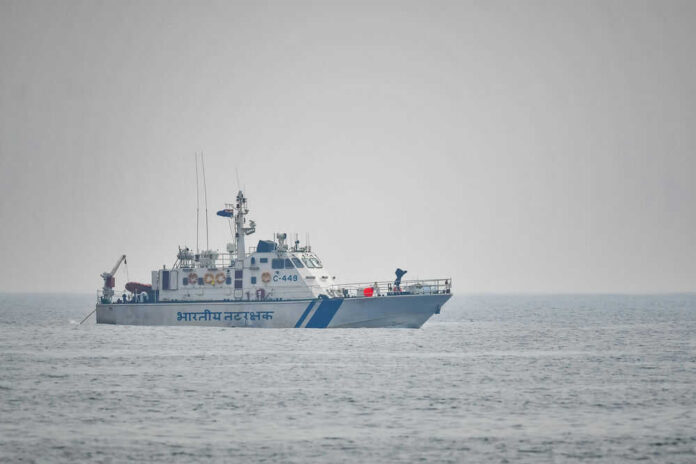
When Iranian Revolutionary Guard gunboats opened fire on Indian-flagged commercial vessels in the Strait of Hormuz, India’s response was swift and unusually sharp, turning a single maritime incident into a revealing test of how New Delhi defends its economic lifelines and its seafarers in one of the world’s most dangerous waterways.
At a Glance
- Iran’s Revolutionary Guards fired on two Indian-flagged merchant vessels in the Strait of Hormuz, forcing them to abandon their transit and raising serious safety concerns for commercial shipping.
- India summoned Iranian Ambassador Mohammad Fathali for a formal protest, with Foreign Secretary Vikram Misri conveying “deep concern” and demanding the rapid restoration of safe passage.
- This episode fits a broader pattern of Iranian asymmetric maritime coercion in Hormuz—gunfire, seizures, and threats of closure used as leverage amid Iran’s confrontation with the United States.
- Because Indian sailors crew a large share of global shipping, Iran’s actions in Hormuz translate directly into risks for Indian lives and India’s energy and trade security.
India’s Protest: What Happened in the Strait of Hormuz
On 18 April 2026, two Indian-flagged vessels attempting to transit the Strait of Hormuz came under fire from Iranian forces linked to the Islamic Revolutionary Guard Corps (IRGC), according to multiple government and maritime reporting channels. One was a large crude carrier carrying Iraqi oil to India; the other was a container vessel moving through the same corridor. Gunboats approached at close range and opened fire—one ship reported machine-gun bursts, another reported being hit by an “unknown projectile” that damaged some containers, though both ships and their crews ultimately remained physically unharmed.
The firing had immediate operational consequences. The vessels aborted their planned transit and turned back toward safer waters instead of continuing through the strait. For shipowners and charterers, those decisions meant delayed cargoes, disrupted schedules, and higher insurance exposure. For the Indian government, they signaled a direct threat to the safety of ships sailing under its flag through what is supposed to be an internationally used sea lane.
Within hours, India’s Ministry of External Affairs (MEA) called in Iranian Ambassador Dr. Mohammad Fathali for a formal meeting—not the quiet, off-record consultation often used for routine frictions, but an explicit diplomatic summons designed to signal displeasure. Foreign Secretary Vikram Misri led the demarche and, in the MEA’s published account, conveyed India’s “deep concern” over the incident, underscored the priority New Delhi attaches to the security of merchant shipping and mariners, and urged Tehran to “resume at the earliest the process of facilitating India-bound ships” across the Strait of Hormuz.
The ambassador, according to the same accounts, undertook to communicate India’s position to authorities in Tehran. Iranian officials later announced that the incidents were under investigation, but no immediate public reversal of IRGC behavior or formal apology followed.
Iran’s Maritime Playbook: Coercion Through the Strait
The Hormuz firing on Indian vessels was not an isolated aberration; it was one episode in an extended campaign in which Iran has used maritime pressure to gain leverage amid confrontation with the United States and its partners. Since Iran announced the closure or “intense management and control” of the Strait in response to U.S.-Israeli strikes and blockade measures, data compiled by the International Maritime Organization and independent analysts have recorded roughly ten attacks on vessels in or near the waterway over a matter of weeks. Several of those attacks involved explosives or missile strikes and have resulted in deaths and serious injuries.
Iran’s own narrative has typically framed IRGC actions as a mix of retaliation and regulation: officials speak of enforcing “maritime rules” and requiring clearance for transit, even as gunboats fire on or seize foreign vessels that they associate with sanction enforcement or hostile naval activity. Strategically, this is classic asymmetric coercion. Iran cannot match the conventional naval power of the U.S. and its coalition partners, but it can threaten the choke point through which roughly one-fifth of global seaborne oil trade passes, raising insurance rates, slowing traffic, and injecting volatility into energy markets.
Analyses of Iran’s naval posture show a deliberate shift away from large conventional platforms toward fast-attack craft, small armed speedboats, drones, and swarming tactics optimized for harassment and disruption rather than blue-water battle. The IRGC’s operations in Hormuz—warning shots, direct gunfire, occasional seizures, and highly publicized “closure” declarations—fit squarely within this concept. They are designed to be deniable enough to stop short of formal war, but dangerous enough to force governments and shipowners to pay attention.
Why India Reacted So Sharply
For India, the incident touches three critical interests at once: energy security, the safety of Indian nationals at sea, and the principle of free navigation.
First, energy. Indian-flagged crude carriers transiting Hormuz often carry millions of barrels of oil headed for Indian refineries. Even a non-lethal firing that forces a vessel to turn around can delay deliveries, add costs, and feed volatility into domestic fuel markets. India has diversified its energy import routes over the past decade, but Hormuz remains central to its supply of Middle Eastern crude and LNG.
Second, people. Indian seafarers constitute a significant share of the crews that keep global shipping moving; they are present not only on Indian-flagged vessels but on foreign-owned tankers and container ships.[US-Iran War video summary] Since the broader West Asia conflict intensified, successive missile and drone attacks on merchant ships have killed or injured multiple Indian nationals. Indian officials have responded by summoning not only Iranian diplomats but also American ones when U.S. strikes have harmed Indian sailors.[US-Iran War video summary] The pattern is clear: any incident that endangers Indian seafarers, whoever the perpetrator, triggers a visible diplomatic reaction.
Third, principle. India has long endorsed the standard international law position that commercial shipping should enjoy safe and unimpeded transit through international straits. In public remarks around the same time as the Hormuz firing, External Affairs Minister S. Jaishankar emphasized that attacks on merchant shipping are “completely unacceptable” and that India is committed to safe transit passage. By firing on Indian-flagged ships that had previously received assurances of safe passage from Iran’s envoy, the IRGC not only endangered specific vessels but also undermined the diplomatic understandings India had painstakingly assembled.
Iran’s Internal Dynamics: IRGC Power Versus Diplomats
The timing and nature of the Hormuz incident highlighted a persistent tension inside Iran’s own state structure: the gap between what its diplomats promise abroad and what the IRGC does on the water. In New Delhi interviews shortly before the firing, Ambassador Fathali had reassured Indian media that the strait would remain open to Indian ships and that coordination mechanisms were in place to allow their safe transit. Within days, IRGC gunboats attacked exactly those kinds of vessels, effectively reversing the practical value of the ambassador’s assurances.
Analysts tracking Iran’s civil–military balance argue that the IRGC has steadily accumulated autonomy in the maritime domain, particularly in contested zones like Hormuz. The formal government, including the foreign ministry and ambassadors, retains authority over treaties and speeches; the IRGC, however, controls the gunboats, sets the operational rules in practice, and is often driven by its own ideological and strategic priorities. The result is a two-level system in which foreign diplomats can promise restraint but cannot reliably deliver it if the Guards see coercive opportunity.
For India, this duality complicates diplomatic engagement. Summoning the ambassador and lodging a protest remains necessary for signaling and for the formal record. Yet when the ambassador must promise to “convey India’s views to the authorities in Iran” without being clear whether those authorities include the IRGC chain of command, it underscores that the real decision-makers on maritime coercion may sit outside the conventional diplomatic channels.
Global Shipping Risk and India’s Wider Pattern of Demarches
India’s protest over the IRGC firing fits into a broader pattern of how it has responded to attacks on merchant vessels that affect its nationals. When U.S. forces fired on a Palau-flagged ship carrying Indian crew off Oman, leaving three Indian sailors missing, New Delhi summoned a senior American diplomat and expressed strong concern. When cruise missiles believed to be Iranian struck UAE-owned tankers in Omani waters, killing and injuring Indian seafarers, India summoned the Iranian deputy ambassador and pressed for accountability.[US-Iran War and Iran Diplomat WION summaries]
This pattern suggests that India’s threshold for formal protest is less about flag or ownership and more about impact: deaths, serious injury, or direct endangerment of Indian-flagged vessels. The Hormuz incident meets that threshold even without casualties because it involved gunfire on ships sailing under India’s own flag in a strait that Iran had lately declared closed and then partially reopened under contested terms.
The global shipping industry watches such demarches closely. Formal protests signal to shipowners, insurers, and captains that India is monitoring the safety of its flagged vessels and crews and is willing to push back diplomatically when they are targeted. In a context where coalition warnings have raised the threat level for Hormuz transit to “severe” and described deliberate hostile action by Iran as “likely,” such signaling can shape route planning, convoy decisions, and underwriting.
Legal Norms and the Question of Maritime Rights
There is an unresolved legal tension beneath these exchanges. Iran claims enhanced control over Hormuz, at times announcing its closure or asserting that transit is conditional on political developments, such as an end to U.S. “piracy” or sanctions. Yet under widely accepted interpretations of the law of the sea, international straits that connect two parts of the high seas or exclusive economic zones are supposed to allow transit passage that coastal states cannot arbitrarily suspend for peaceful traffic.
By firing at merchant vessels without warning, especially those that had sought or received clearance, IRGC units are not merely applying domestic regulations; they are challenging the operational reality of those global norms. The Indian protest language—emphasizing “safe and unimpeded” transit and treating the incident as a “serious” breach—places New Delhi firmly on the side of the conventional interpretation.
Whether this translates into formal legal steps—such as raising the issue in international maritime bodies or at the United Nations—depends on how often such incidents recur and how much support India finds among other affected states. For now, the demarches serve as a warning shot in diplomatic form: India is watching and is unlikely to accept IRGC coercion as business as usual.
Implications for India’s Strategy and Seafarer Safety
In practical terms, Indian policymakers face a triad of choices. They can reroute some energy imports away from Hormuz-dependent suppliers, diversify flags and ownership structures to manage risk, and deepen coordination with multilateral maritime security coalitions that patrol the Gulf. Each option has costs: longer routes mean higher freight charges, shifting flags does not automatically change risk exposure for Indian crews, and closer alignment with U.S.-led coalitions carries diplomatic implications for India’s balancing act between Washington and Tehran.
Meanwhile, the human dimension remains central. With seven to nine Indian seafarers reportedly killed in West Asia-related ship attacks since the latest phase of conflict began, Indian unions and families now see Hormuz and adjacent waters as occupational hazard zones.[US-Iran War and Iran Diplomat WION summaries] Training, hazard pay, and emergency protocols are being reassessed, and the expectation that New Delhi will intervene diplomatically after each fatal incident has become embedded.
In that light, the firing on Indian-flagged vessels without loss of life is both a warning and an opportunity: a warning that the next salvo could be deadlier, an opportunity for India to press Iran—through its diplomats and any remaining channels of goodwill—to rein in IRGC tactics before more Indians die at sea.
The Strait of Hormuz Going Forward
Looking ahead, the Strait of Hormuz will remain a place where commercial logic collides with geopolitical risk. Iran’s naval capabilities have been degraded by combat losses, but its IRGC still retains enough fast craft, missiles, and drones to keep shipping companies nervous. U.S. and allied navies can deter some attacks and keep lanes open, but they cannot erase the asymmetric threat without escalating into a broader war.
For India, the lesson of the April 18 incident is straightforward. Energy security and the safety of its seafarers can no longer be treated as purely economic matters; they are now directly contingent on how regional conflicts play out in narrow waters and on how much operational autonomy actors like the IRGC exercise. Summoning an ambassador does not change that reality. It does, however, signal that India understands the stakes—and that it is prepared to defend its ships, its sailors, and its share of global commerce in the most contested strait on earth.
Sources:
insiderpaper.com, wsj.com, facebook.com, youtube.com, reuters.com, business-standard.com, thehindubusinessline.com, caspianpost.com, indiatoday.in, timesofindia.indiatimes.com, instagram.com, al-monitor.com, cnbc.com, en.wikipedia.org, 2017-2021.state.gov, nytimes.com, aljazeera.com